
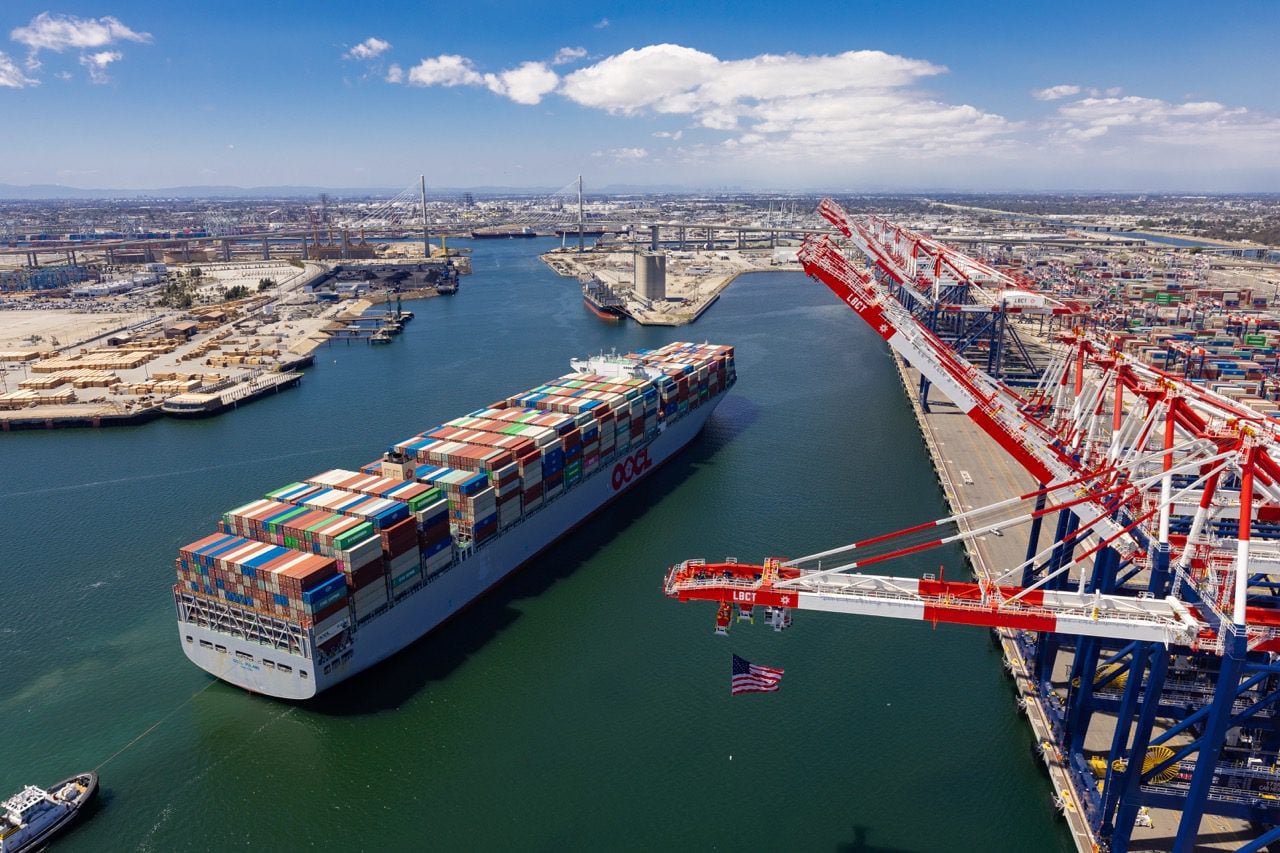
The Port of Long Beach saw another drop in cargo volumes in April. This decline is largely due to global market instability, increasing fuel prices, and ongoing uncertainty in supply chains affecting international trade.
Longshore workers and terminal operators handled 817,992 twenty-foot equivalent units (TEUs) in April, a 5.7% decrease from April 2025, which was the port's busiest month on record.
Even with this decline, the volume remains historically strong as Long Beach continues to be a key trade gateway in a challenging trade environment characterized by geopolitical tensions, changing trade patterns, and higher transportation costs.
“In our industry, the only certainty is uncertainty,” said Dr. Noel Hacegaba, CEO of the Port of Long Beach, in a statement released Thursday. “Recent supply chain disruptions have made global trade even more unpredictable. It’s vital for our port to be a safe harbor amidst this uncertainty to keep goods moving.”
These comments highlight growing worries in the shipping industry that ongoing global issues are starting to change cargo flows beyond just temporary disruptions.
The figures for April follow a slower March, when the port managed 774,935 TEUs, also lower than the previous year's record levels. For the first quarter of 2026, Long Beach was still the busiest container port in the United States, though volumes were below the historic highs from 2025.
Officials at the port have noted that rising fuel prices, tariff uncertainties, and geopolitical instability are significant challenges for supply chains.
The worsening security situation around the Strait of Hormuz is a major concern for the shipping market, leading to increased bunker costs, higher war-risk premiums, and longer shipping routes across global trade lanes.
“What happens in the supply chain doesn’t stay in the supply chain,” Hacegaba warned during a media briefing last month. “It ultimately affects the prices consumers see every day.”
Current pricing trends in the container market suggest that supply chains remain under pressure. Spot rates on major transpacific routes are still significantly higher than before recent conflicts, according to data from Xeneta and Drewry, largely due to increased fuel costs, operational delays, and ongoing uncertainty about shipping through the Middle East.
“The instability in global ocean container supply chains means it is rare for both shippers and carriers to be satisfied with freight prices. However, this seems to be true for transpacific trades, as average spot rates remain high due to the continued conflict in the Middle East,” said Peter Sand, Chief Analyst at Xeneta.
“Average spot rates from the Far East to the US West Coast are over 50% higher than pre-conflict levels at the end of February, but they have remained stable over the past month,” Sand added.