
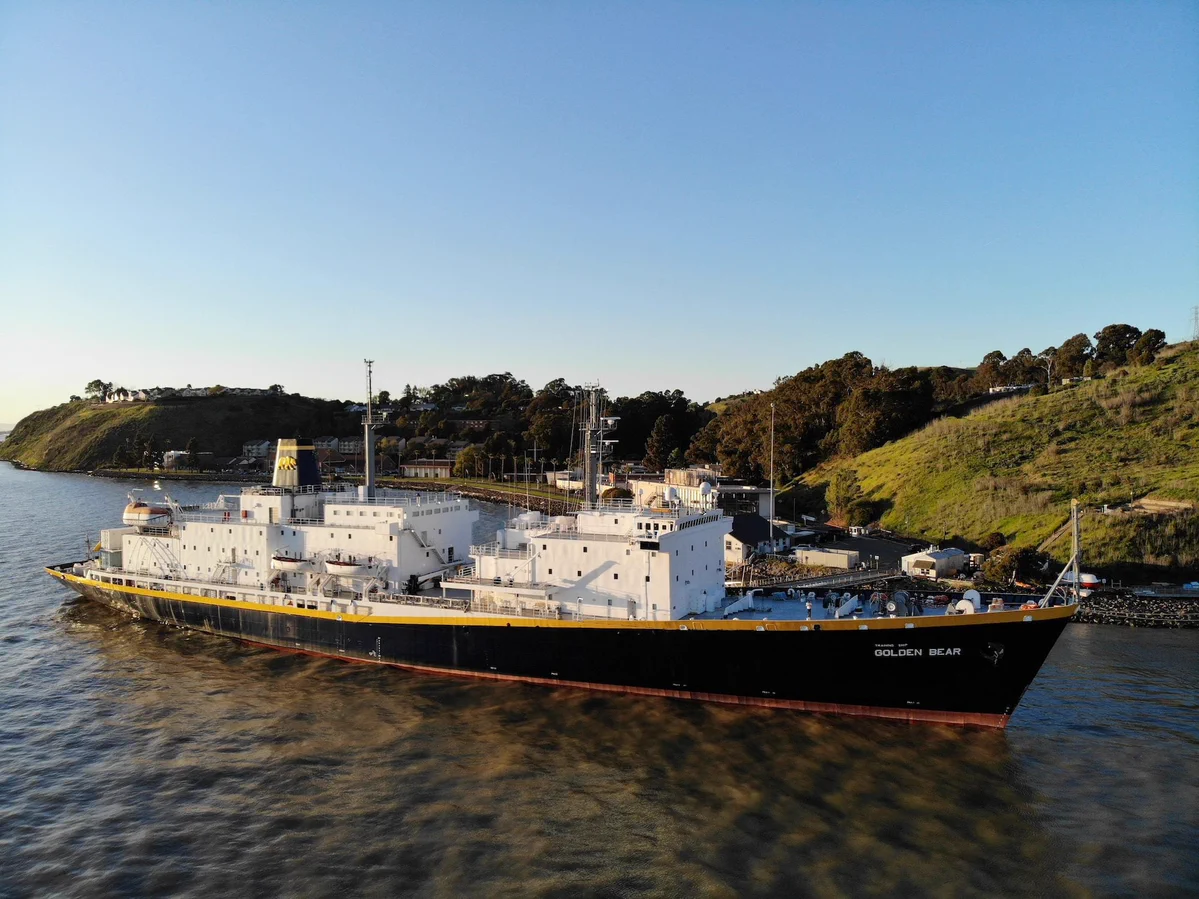
Two lawmakers from California are urging the Trump administration to drop plans for mass deportations using ships, including the former training vessel Golden Bear from Cal Poly Maritime Academy.
Representatives John Garamendi (D-Calif.) and Salud Carbajal (D-Calif.) wrote a letter to Homeland Security Secretary Markwayne Mullin, opposing this idea. They warned that deporting people by sea would face serious operational, safety, and legal issues, potentially costing taxpayers millions.
This letter comes after a report by The New York Times on October 8, which revealed that the administration was considering transporting migrants by ship to Central and South America. The discussions supposedly involved the 500-foot Golden Bear, along with ferries and possibly other vessels.
As of now, these plans are still in the early stages, and no decision has been made to use the Golden Bear or any other ships for deportations.
“Let me be clear, Donald Trump, Markwayne Mullin, and ICE will never use the Golden Bear for mass deportations,” Garamendi stated on October 28.
He further criticized the idea, saying, “Deporting migrants by ship is not only impractical but also extremely inhumane.”
The Golden Bear has just completed its last training voyage after 30 years of service at the California maritime academy. This ship, originally built as the U.S. Navy oceanographic survey vessel USNS Maury, has provided hands-on training for many generations of merchant marine officers.
Now, the ship is being retired from academy use and returned to the U.S. Maritime Administration (MARAD), raising concerns about its potential use in federal operations.
Cal Poly Maritime Academy is expecting a new training vessel, the Golden State, as part of MARAD’s National Security Multi-Mission Vessel program.
According to the Times, the administration has also considered acquiring other ships, including those based in Europe, for potential deportation efforts.
These proposed journeys could take several days to reach places like El Salvador, Honduras, and Venezuela, compared to just hours by air. They would also need a large amount of security staff and resources for housing, feeding, and supervising migrants throughout the trip.
The lawmakers pointed out that such requirements could push costs into the millions of dollars for each voyage. There are also concerns about the legal authority for these operations and the conditions for holding migrants on ships.
Carbajal, who is the senior Democrat on the Coast Guard and Maritime Transportation Subcommittee of the House Transportation and Infrastructure Committee, cautioned that using ships for immigration detention could lead to more oversight issues.
“ICE already lacks enough transparency and public accountability. Using maritime vessels as floating prisons will likely lead to even more abuses,” Carbajal added.
This debate also raises concerns about redirecting federal maritime resources toward immigration enforcement.
Garamendi argued that previous use of military resources for deportation efforts has already impacted military readiness and warned that using ships could put additional strain on U.S. sealift capabilities.
Both lawmakers have previously challenged the administration's use of military resources for immigration enforcement, including deportation flights from Travis Air Force Base in California.
At this time, there is no sign that the Golden Bear has been officially assigned to any deportation mission, nor that any maritime deportation operations have been approved. However, Garamendi has pledged to use congressional oversight to prevent that ship from being deployed for such purposes.