
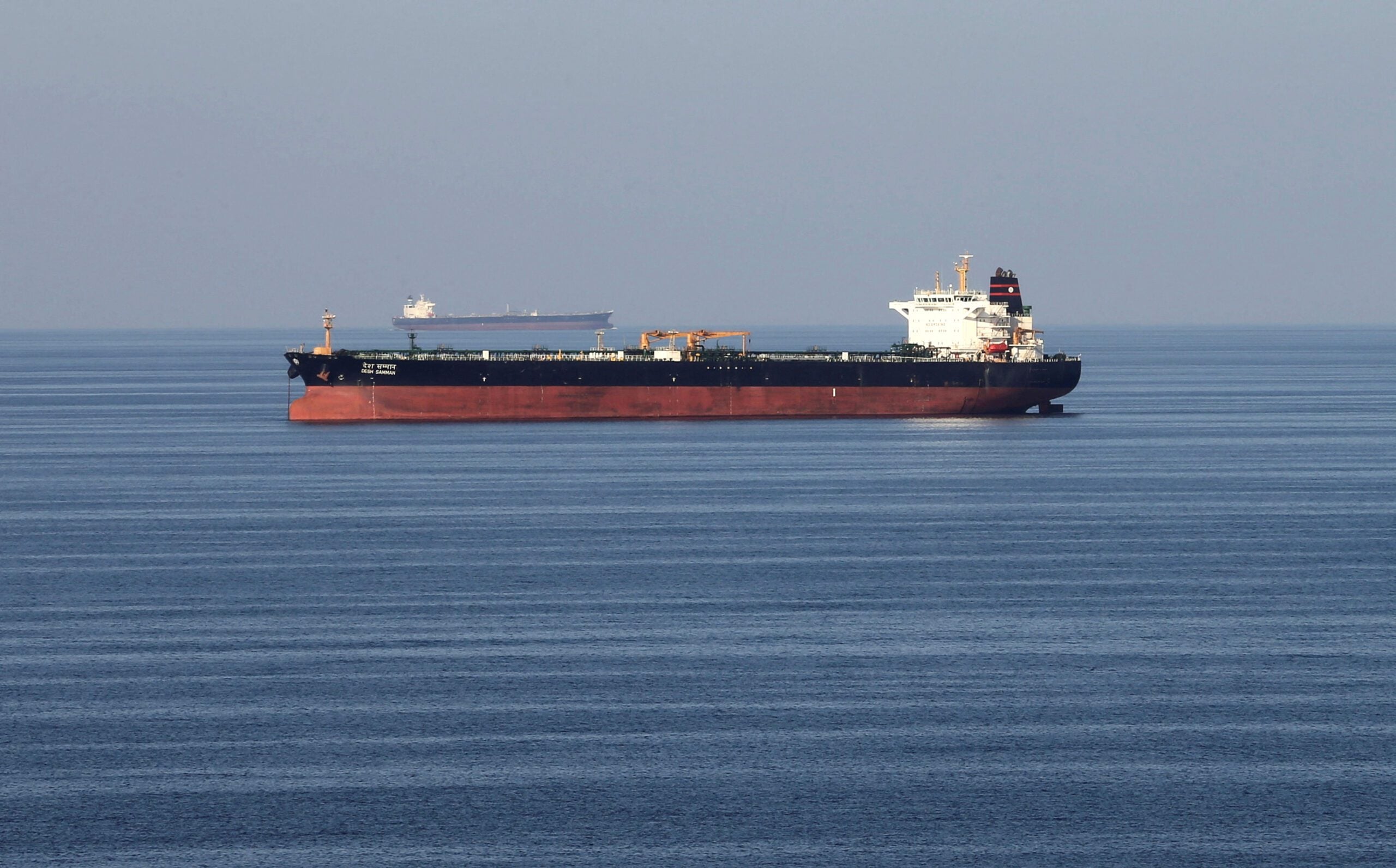
In recent days, the operator of an oil tanker stuck in the Persian Gulf received an interesting proposal. After spending weeks anchored while missiles and drones flew overhead, the tanker could finally leave safely through the Strait of Hormuz, escorted by the Iranian Navy. However, the operator needed to change the ship's registration to fly the flag of Pakistan, as revealed by a company executive who wished to remain anonymous due to the sensitive nature of the discussions.
The company could not accept the offer, which came from the Pakistani government. Iran agreed to allow 20 Pakistani vessels to pass through the strait, but Pakistan had only a few ships registered in the Gulf. As a result, Islamabad began contacting major commodity traders around the world to see if they had any vessels available that could temporarily sail under a Pakistani flag to transit Hormuz, according to insiders familiar with the talks.
One insider noted that Pakistan was searching for the largest ships in the region, including oil supertankers that can carry 2 million barrels each. Facilitating their passage would demonstrate the success of diplomatic efforts to resolve the ongoing conflict. At least two large oil trading companies have received this offer.
Pakistan's Ministry of Maritime Affairs has not commented on the situation.
This arrangement highlights the significant control the Iranian Islamic Revolutionary Guard Corps (IRGC) has over maritime activities in the Strait of Hormuz, a crucial chokepoint where a fifth of the world's oil and liquefied natural gas typically transits. Individuals in the shipping industry and government sources involved in the negotiations reported that the IRGC is already charging fees to vessels passing through and giving preferential treatment to ships from friendly nations while threatening those from countries considered adversaries.
Moreover, Iran’s National Security Committee has approved a bill for fees on passage through the Strait of Hormuz, according to the semi-official Fars news agency, citing a committee member.
A more formal system is starting to take shape, based on accounts from various sources who spoke anonymously due to the sensitivity of the issue.
Ship operators must contact an intermediary associated with the IRGC and provide details about their vessel, including its ownership, flag, cargo manifest, destination, crew list, and data from its automated identification system (AIS) — a device that records and broadcasts the ship's position.
This intermediary will forward the information to the IRGC Navy's Hormozgan Provincial Command for background checks to ensure that the vessel has no connections to Israel, the US, or other nations that Iran considers enemies.
If a ship passes the checks, discussions regarding tolls will begin. Sources noted that Iran uses a ranking system from one to five for countries, where ships from friendly nations are likely to receive better terms. For oil tankers, the starting negotiation price is typically around $1 per barrel of oil, to be paid in yuan or stablecoins — cryptocurrencies tied to the value of hard currency.
A very large crude carrier (VLCC) generally has a capacity of about 2 million barrels.
Once the toll is settled, the IRGC issues a permit code and route instructions. Ships are expected to fly the flag of the nation that arranged the passage, and in some cases, must change their official registration to that country. As the vessel approaches the Strait of Hormuz, it must broadcast its passcode over very high frequency radio channels and will be escorted by a patrol boat through the passage, navigating close to the coast between a series of islands that have been informally labeled "the Iranian tollbooth" by industry insiders.
Recent vessel tracking data shows a slight increase in ship transits through the Strait of Hormuz over the past week, but the numbers remain far below pre-war levels.
The legal foundation for Iran's toll imposition is ambiguous. Typically, countries have territorial waters extending 12 nautical miles (about 14 miles or 22 kilometers) from their coastlines, where they can inspect ships.
This month, Iran sent a letter to the International Maritime Organization, stating that ships from non-hostile nations could safely transit through Hormuz while restricting access to those it views as hostile.
In the letter, Iran claimed, “As the coastal state bordering the Strait, the Islamic Republic of Iran is fully exercising its rights to self-defense and inspecting vessels, which requires payment of a fee,” according to Jason Chuah, a professor of commercial and maritime law at City University London. He added that many experts believe this practice lacks legal standing.
Ship owners and operators face complex legal issues regarding whether to pay these tolls, what regulations and sanctions might apply from the US and Iran, and insurance coverage concerns.
Chuah remarked, “The Iranian conflict has raised numerous challenges for international law, particularly as both sides engage in actions that are highly controversial under established rules.”
Insurance rates for vessels wanting to traverse the Strait of Hormuz have drastically soared. Several ships have been hit by projectiles while anchored in the Persian Gulf or within the strait. For instance, a Kuwaiti oil tanker was struck by a drone near Dubai on March 31, leading to damage and fires. Despite US assurances of naval escorts and state-backed insurance, ship owners remain concerned about risking their crews.
Negotiating passage with the IRGC may not seem like a secure option either. Alongside the safety risks and insurance costs, making deals with the IRGC, which is under US, EU, and UK sanctions, could expose ships to potential violations of sanctions or anti-money laundering laws, experts have noted.
In a recent statement, US President Donald Trump indicated he wants the war with Iran to end in two to three weeks, regardless of whether the Strait of Hormuz is reopened. Following his remarks, both Israel and the US continued their strikes against Iran, which retaliated by launching missiles and drones targeting various sites, with an oil tanker in Qatari waters among the casualties. Trump later stated that a ceasefire was only attainable if the strait was reopened.
Despite a deal for safe passage being in place, shipping risks remain high, said Basil Germond, who chairs the international security department at Lancaster University and is a visiting fellow at the Royal Navy Strategic Studies Centre. He noted, “For this approach to succeed, Tehran must maintain the capacity to credibly threaten commercial shipping in the Strait and the Gulf. To be credible, Iran needs to occasionally attack tankers.”