
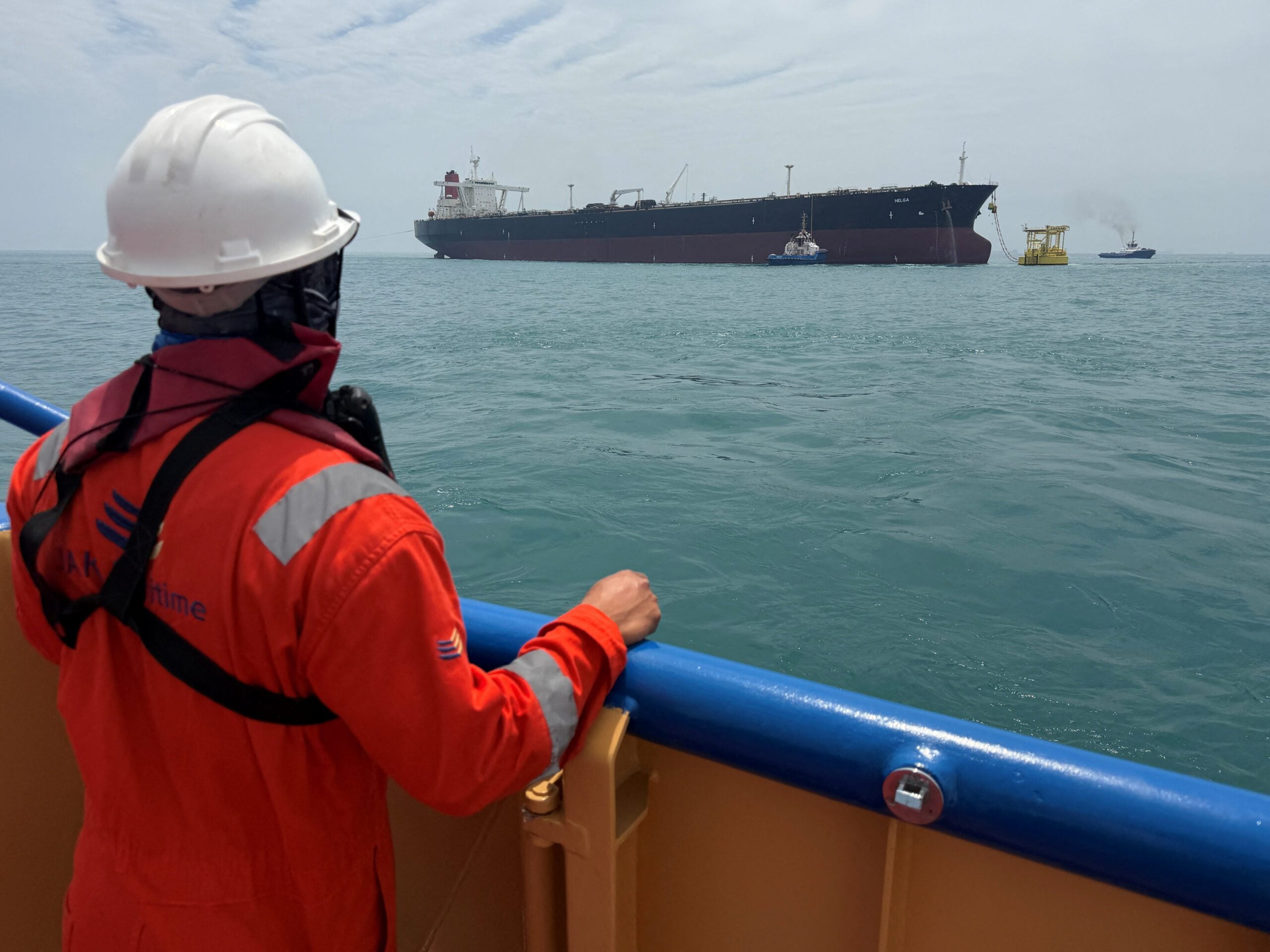
Iran's crude oil exports are starting to pick up again after being blocked for two months. Several tankers linked to Iran are now showing their positions on tracking systems and are leaving through the Gulf of Oman, just a few days after an agreement was announced between Washington and Tehran aimed at resolving their ongoing conflict.
Data from vessel tracking services like Kpler/MarineTraffic and TankerTrackers.com indicates that at least four tankers that loaded oil at Iran's Kharg Island earlier this year reactivated their signals on June 16 and are now moving away from the Strait of Hormuz.
Two of these ships, the VLCCs Hero II and Diona, belong to the National Iranian Tanker Company (NITC) and are each carrying about 2 million barrels of crude. They have been seen sailing southeast through the Gulf of Oman at speeds between 9.5 to 11 knots, moving past the area that had effectively become a U.S. Navy blockade.
Neither tanker has stated a destination.
Another tanker, the Suezmax Sonia I, has taken a similar route, and a tanker named Amber also reactivated its signal near the eastern entrance of the Strait of Hormuz, although there is limited data on its movement.
If confirmed, this would be Iran's first crude oil exports in about two months since the U.S.-led blockade was put in place amid tensions with Tehran.
These tanker movements follow President Donald Trump's announcement that the U.S. and Iran have come to a memorandum aimed at ending hostilities, lifting the blockade on Iranian ports, and reopening the Strait of Hormuz. The specifics of this agreement remain uncertain, despite speculation in the media.
It is also unclear how the agreement will be put into action. The legal status of the blockade hasn't been officially defined, and no details on sanctions relief have been made public. However, the recent activities suggest that conditions in the region may be shifting.
The latest update from the Joint Maritime Information Center (JMIC) has lowered the regional maritime threat level from “Severe” to “Substantial,” citing the new U.S.-Iran memorandum as a factor for creating a more stable operating environment. Nevertheless, the organization has cautioned that “an attack is a strong possibility,” and risks continue to exist.
Commercial traffic in the Strait of Hormuz is still “significantly reduced,” with most ships opting to avoid the usual Traffic Separation Scheme and instead passing south through Omani territorial waters, according to JMIC. The advisory also warns that mine risks are still present in and around the TSS and that electronic navigation interference is ongoing throughout the area.
JMIC's latest traffic statistics highlight how far the region is from normal operations. The Strait usually sees about 138 vessel passages each day. However, JMIC recorded no transits on June 14 and just seven on June 15.
For now, it seems that the early signs of recovery are coming from Iranian oil exports rather than the broader commercial shipping industry. As crude is starting to flow again, many shipowners remain hesitant, waiting to see if this diplomatic breakthrough will lead to lasting security and a true reopening of one of the world’s most critical maritime routes.