
DUBAI/WASHINGTON, July 13 (Reuters) – Over the weekend and into Monday, U.S. and Iranian forces engaged in intense missile and drone strikes. Iran attacked U.S. facilities in the Gulf and claimed to have closed the Strait of Hormuz again, which caused a spike in oil prices.
Iran's Revolutionary Guards announced that they targeted U.S. military sites in Bahrain and Kuwait, destroyed radar systems in Oman, and hit fuel tanks and ammunition at the Prince Hassan Air Base in Jordan in retaliation for U.S. attacks.
The U.S. military responded by hitting Iranian air defense systems, coastal radar sites, and missile capabilities using aircraft, naval forces, and drones.
These attacks represent a major escalation in the conflict, raising questions about a recent U.S.-Iranian agreement aimed at reopening the strait after 60 days of negotiations.
In a short phone interview with Reuters, U.S. President Donald Trump commented on the strikes against Iran, saying, “We’re beating them up.”
Trump indicated that he sees the ceasefire coming to an end but remains open to discussions.
Mohammad Baqer Qalibaf, Iran's chief negotiator, adopted a similar bold stance, stating on X, “The era of one-sided deals is OVER. We told you: keep your word or pay the price. Reality is knocking.”
The conflict that began with U.S. and Israeli attacks on Iran has created instability in the Gulf, leading to Iranian strikes on U.S. bases in several countries. Thousands have died, particularly in Iran and Lebanon.
Iran’s blockade of the Strait of Hormuz has increased energy prices and raised inflation fears globally.
OIL PRICES JUMP
The Revolutionary Guards asserted that the only way to restore normal shipping traffic through the strait is to halt U.S. military actions in the area, warning that ongoing interference could lead to larger disruptions in the global oil and gas sectors.
Iran is trying to set up a joint system with Oman to manage shipping through the strait, but U.S. pressure on Oman is slowing those talks, according to Foreign Ministry spokesperson Esmaeil Baghaei.
On Monday, Brent crude oil prices rose more than 3%, although still below the highs reached earlier in the conflict.
Rising energy costs, especially for gasoline, are a sensitive topic for Trump with the upcoming congressional elections in November.
STRAIT DISPUTE ESCALATES
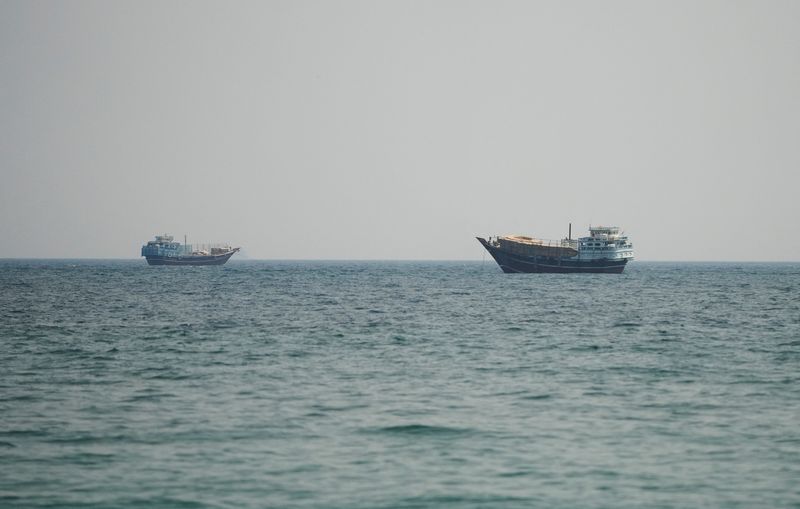
The situation in the Strait of Hormuz has become a key part of the conflict. Iran is seeking to implement a restrictive fee and permit system for vessels using the strait, which previously handled about one-fifth of the world’s oil and liquefied natural gas shipments.
Iran announced the closure of the waterway on Saturday after what it called an unauthorized passage. On Sunday, it confirmed that traffic remained halted and stated that permits would be issued when “stability and calm” return.
The U.S. revoked a sanctions waiver for Iranian crude sales last week after earlier attacks on shipping and reassured that its forces would protect navigation rights, labeling Iran's actions as “aggression, harassment, threats, and arbitrary declarations.”
“Iran does not control the strait. Traffic is flowing,” the U.S. asserted.
U.S. officials reported that around 20 vessels were escorted through the strait in the past 24 hours, although tracking sites indicated little movement.
The U.S. Navy-led Joint Maritime Information Center emphasized that despite the severe security threat, an “expanded” southern route near Oman remains open for two-way traffic.
On Saturday, U.S. Central Command stated that U.S. forces had targeted 140 Iranian military locations, with over 300 strikes occurring over three nights to diminish Iran's capability to attack commercial vessels in the strait.
Iran's Revolutionary Guards reported that they had destroyed a command-and-control center and drone facilities in Jordan, attacked U.S. radar systems in Kuwait, targeted U.S. naval operations in Oman, and destroyed maintenance centers in Qatar.