
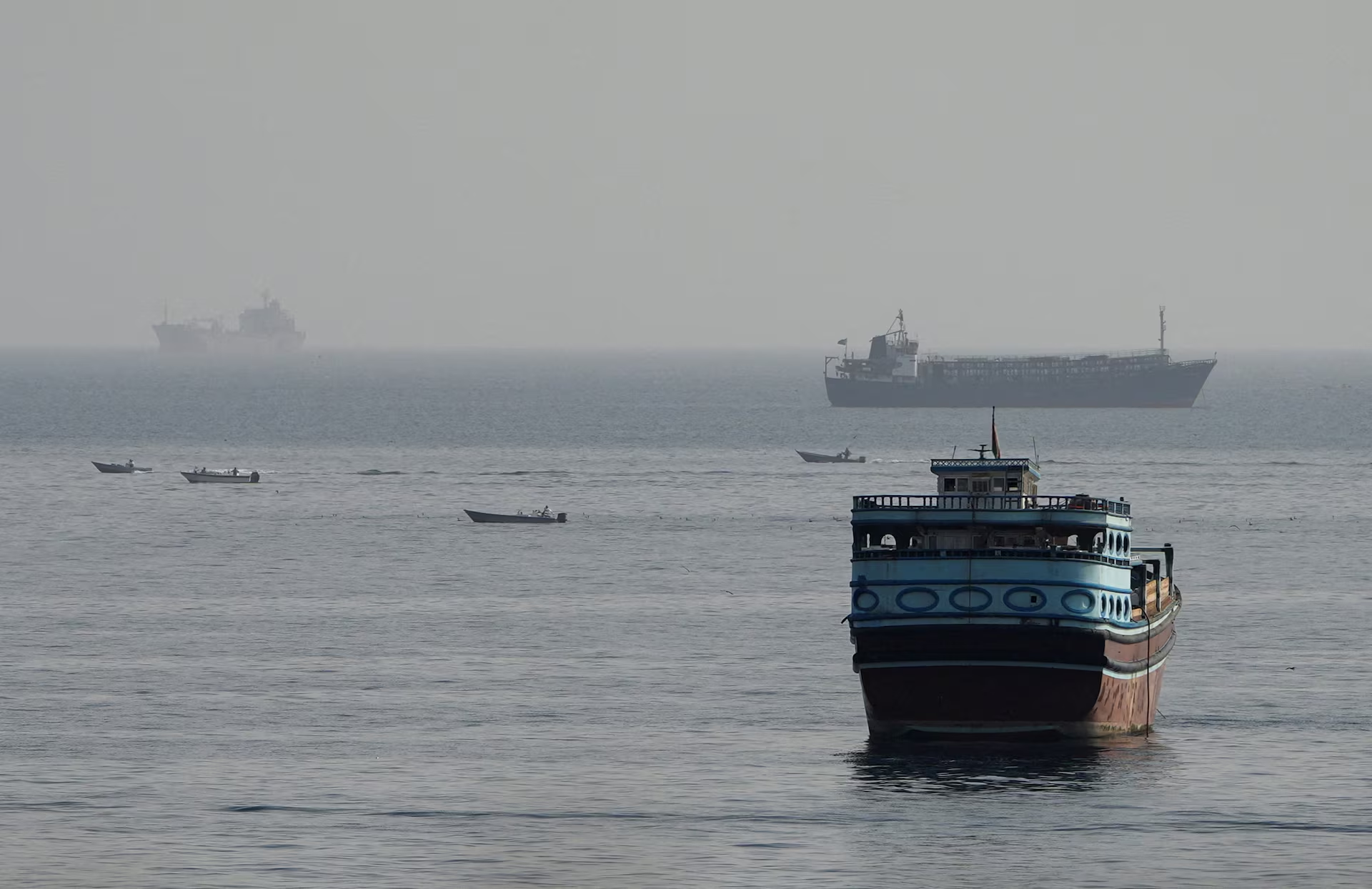
DUBAI, Aug 13 – The Strait of Hormuz is currently "under Iran's control and management," according to Hossein Taeb, the newly appointed head of Iran's Basij paramilitary unit. This statement came shortly after U.S. President Donald Trump claimed that the United States had "total control" over the crucial waterway.
Taeb stated that the U.S. has attempted to undermine Iran's influence in the region by instigating another conflict in the Strait of Hormuz, but they have been unsuccessful despite their assertions that Iran lacks an air force and navy.
He remarked, "Today you can see that the Strait of Hormuz is under the management and control of the Islamic Republic," as reported by the semi-official Fars news agency. He emphasized that Iran is continuing its operations securely.
Following the start of the war on February 28, following U.S. and Israeli strikes on Iran, Tehran effectively closed the strait, which previously facilitated the shipment of one-fifth of the world's oil and liquefied natural gas.
In response, the U.S. imposed a naval blockade on Iranian shipping and ports, while asserting that it would protect freedom of navigation for vessels going to and from non-Iranian ports.
Later on Thursday, Iran's joint military command, Khatam al-Anbiya Central Headquarters, announced that no vessel could pass through the Strait of Hormuz without permission from Tehran.
The command described the U.S. claims regarding safe passage through the Strait of Hormuz as "lies and falsehoods," according to a statement released by state media.
In June, both nations had an interim agreement that declared a permanent ceasefire and urged a quick return to freedom of navigation in the Gulf. However, the deal fell apart a few weeks later when Iran resumed limited attacks on vessels it claimed were violating the agreement, prompting the U.S. to resume strikes on Iran's southern provinces, aimed at diminishing Iran's capability to target vessels in the Gulf.
Additionally, senior military political official Rasoul Sanaei-Rad stated that Iran would not reopen the strait unless the opposing side fulfills its obligations under the interim deal, stressing that the reopening of the waterway cannot be achieved unilaterally by the U.S., as reported by Fars news.
Sanaei-Rad also warned that Iran would respond more aggressively in any future conflict, stating: "In a possible future war, we will stand more firmly and more offensively."