
DUBAI, Aug 28 (Reuters) - Iran criticized the new economic sanctions imposed by the United States, calling them "state terrorism." The country's supreme leader expressed concerns about maintaining "social cohesion" as the government fears that added financial stress could lead to unrest within Iran.
The sanctions are worsening the economic situation in Iran, where the annual inflation rate reached 66% last month. The ongoing tensions regarding the Strait of Hormuz are still the primary unresolved issue in the conflict.
The U.S. has warned other countries to sever their business relations with Iran or they will face secondary sanctions, although the Treasury Department has not yet enforced any penalties.
Iran's Foreign Ministry stated that all nations are required by international law to avoid implementing U.S. sanctions against Tehran, claiming that participating in these measures is an act of complicity in the unlawful imposition of one state's will on others.
The new U.S. sanctions were termed a "crime against humanity" by Iran, which argued that these actions jeopardize the health and livelihood of millions and called on other nations and United Nations entities to uphold the rule of law.
Supreme Leader Ayatollah Mojtaba Khamenei, who has been seen less frequently since he was injured in a February 28 attack that killed his father, issued a written statement on Friday forbidding officials from "doing anything that harms social cohesion." He stressed the need for authorities to refrain from making any "discouraging statements that could weaken national motivation," as Iran's leaders worry that increased financial pressure could lead to protests.
Khamenei also urged the government to effectively tackle economic issues such as inflation, unemployment, and the management of goods and services.
NEW MEASURES TARGET EGYPTIAN BANK
On the same day, a U.S. official told Reuters that the Trump administration intends to restrict Egypt's Banque Misr United Arab Emirates branches from conducting business with Tehran.
This proposed rule, if enacted, would prevent Banque Misr UAE from processing transactions through U.S. financial institutions.
Additionally, Treasury officials announced sanctions against a Hong Kong-based entity and an individual connected to Iran’s Bank Melli, according to a notice on the department's website.
While the U.S. continues its pressure campaign, others are looking to revive diplomatic talks aimed at resolving the conflict.
Mediators have been trying to facilitate the reopening of the Strait of Hormuz, a vital shipping route that previously handled 20% of global oil supplies before the outbreak of war six months ago, which currently poses a significant barrier to peace.
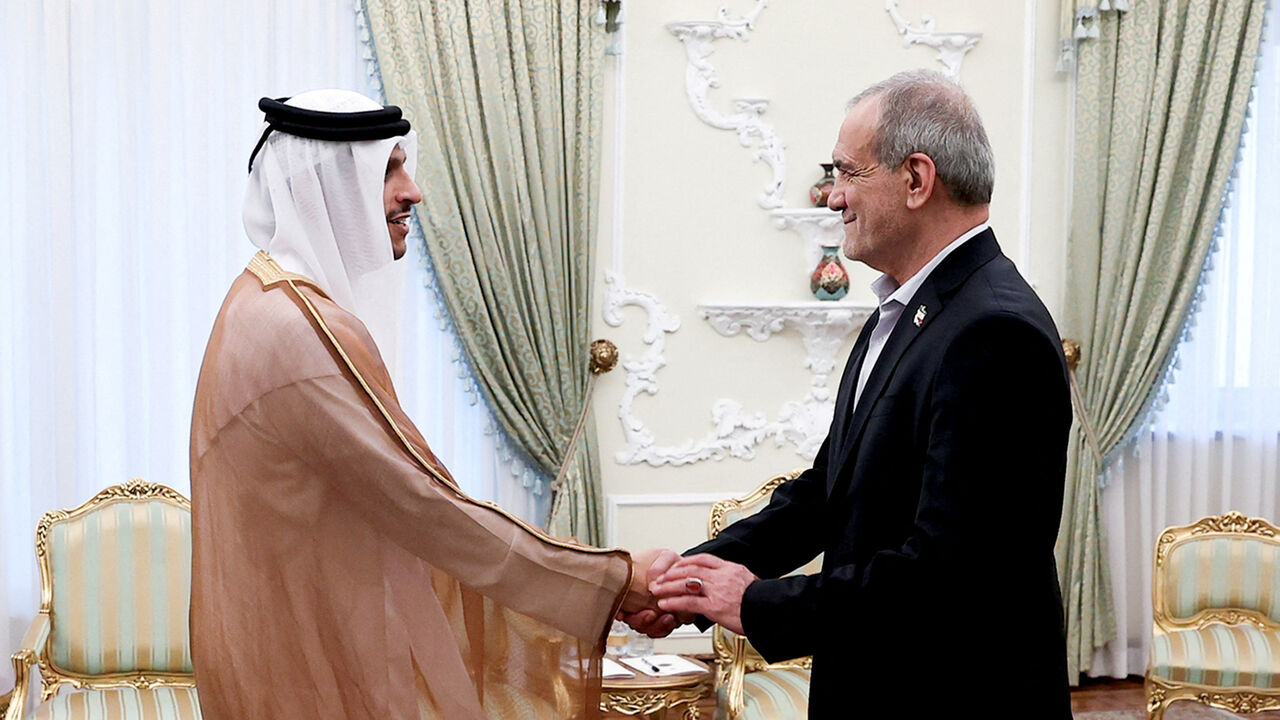
During discussions in Tehran on Thursday, Qatari Prime Minister Sheikh Mohammed bin Abdulrahman Al Thani emphasized the need to restore pre-war shipping conditions through the Strait of Hormuz.
'PRESSURE DOESN'T WORK,' IRAN TELLS U.S.
Iranian Foreign Minister Abbas Araqchi characterized the talks with Al Thani as "creative" and reiterated his appeal for the U.S. to halt its military and economic pressure and to resume negotiations.
Araqchi stated, "Bringing diplomacy back on track isn't impossible. It depends on the U.S. recognizing one simple fact: pressure doesn't work," he posted on X.
Qatar, a U.S. ally, along with Pakistan, helped broker a memorandum of understanding in June that led to a ceasefire, but this quickly fell apart due to disagreements between Iran and the U.S. concerning the Strait of Hormuz.
IRANIAN LEVERAGE
After the U.S. and Israel began the war on February 28, Iran threatened to attack any ships passing through the strait without its permission, reducing traffic and raising oil prices.
The U.S. maintains that the strait must remain an open international waterway.
Mohsen Rezaei, secretary of Iran's Supreme National Security Council, mentioned on Thursday that Iran is preparing a list of conditions to reopen the strait. Historically, these conditions have included lifting the U.S. blockade on Iranian ports, compensation, and the removal of sanctions.
U.S. military commanders reported that American forces have cleared sea mines in the strait that had been laid earlier by Iran's Islamic Revolutionary Guard Corps.
While Trump insists that the strait is open, many vessels have chosen not to pass through due to Iranian threats, and ship tracking services estimate activity at only 5% to 15% of typical levels.
Initial shipping data released on Friday showed that only seven commodity vessels traveled through the Strait of Hormuz on Thursday, down from 17 the previous day and below the 10-day average of 15.
Despite the diplomatic standoff, oil prices fell on Friday and appeared set for a weekly decrease, with analysts indicating that more oil seemed to be flowing through the strait as producers adapt to the evolving realities in the Gulf region.