
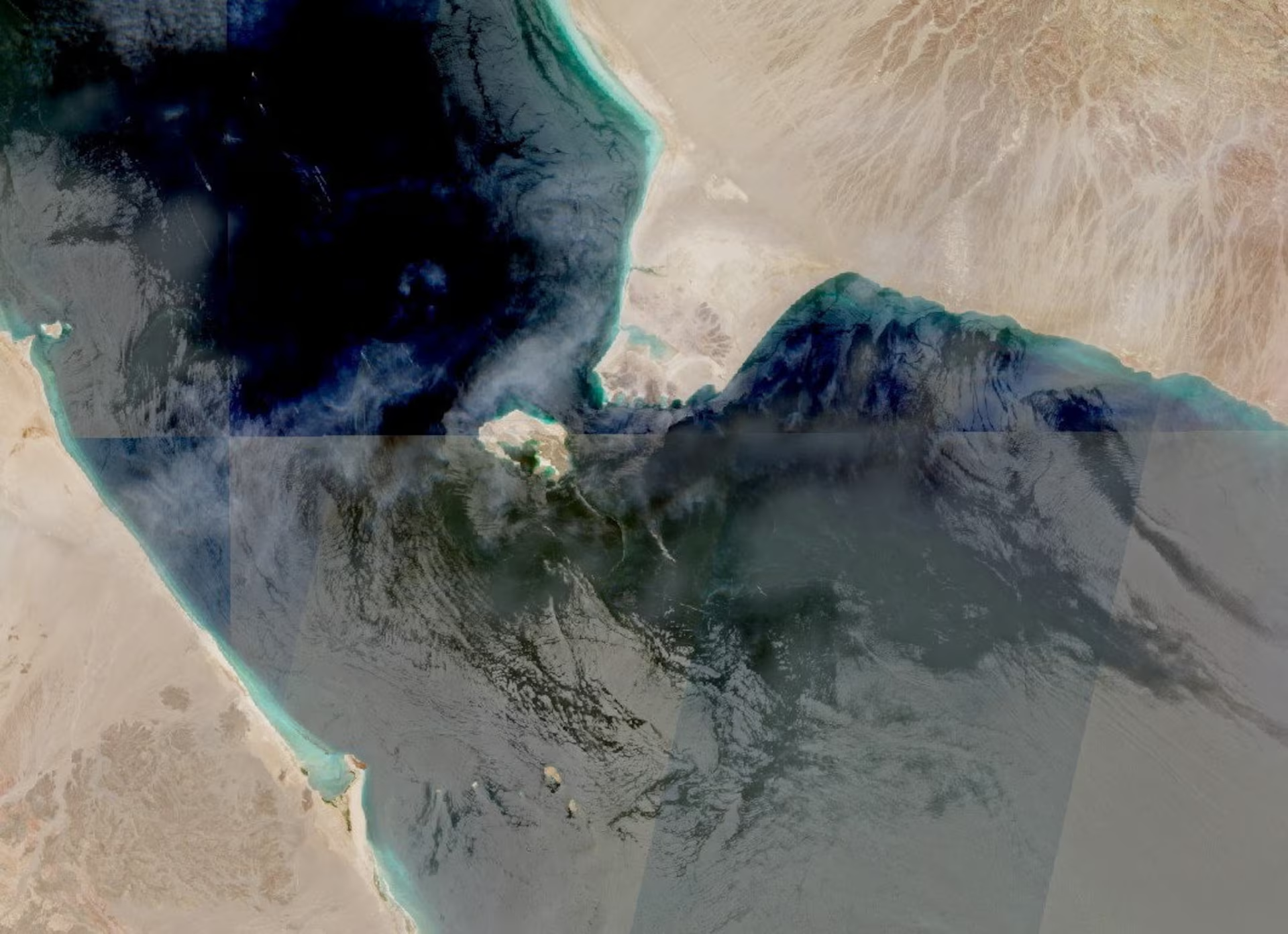
DUBAI, July 16 (Reuters) – Iran has requested that Yemen's Houthi movement be prepared to shut down the Red Sea oil route if the United States attacks its power infrastructure, according to three sources who spoke to Reuters on Thursday. This presents a significant new threat to global energy supplies.
Iran's leadership has discussed this strategy, and it has been communicated to their Houthi allies, as stated by two senior Iranian sources and a regional source, who wished to remain anonymous.
The Houthis were recently made aware of Tehran's request, which has not been reported previously.
The sources did not provide details on how the information was conveyed or if it was related to U.S. President Trump's recent threat to attack Iranian power facilities.
Iran's foreign ministry and a representative for the Houthi group were not available for comments when contacted by Reuters.
HOUSING DRONES NEAR BAB EL-MANDEB, SOURCES SAY
According to a source close to the Houthis, the group has completed its preparations to target shipping by positioning missiles and drones near the Bab el-Mandeb strait, which is the entrance to the Red Sea. They are ready and waiting for orders to start their actions.
Any threat to the Red Sea and the Bab el-Mandeb strait could significantly worsen the ongoing global energy crisis caused by Iran's closure of the Strait of Hormuz, highlighting the rising risks of a new conflict.
With the Strait of Hormuz already closed, any Houthi attacks on ships or ports in the Red Sea would disrupt both of the Middle East's primary oil export routes simultaneously, creating a new front in the energy crisis and Iran's ongoing conflict with the U.S.
Representatives from Iran's Islamic Revolutionary Guard Corps (IRGC) in Yemen will decide when to close the Bab el-Mandeb strait, according to the source close to the Houthis.
Tensions in the region have heightened after the Houthis fired missiles at Saudi Arabia, claiming that the kingdom had bombed an airport under their control, thus ending a four-year truce.
Torbjorn Solvedt, a leading Middle East analyst at Verisk Maplecroft, remarked that the conflict between the Houthis and Saudi Arabia has intensified at a particularly bad time.
“If fighting escalates and impacts Red Sea export infrastructure and shipping, it will threaten the only major alternative route for oil exports from the region,” he stated.
Two regional sources close to Riyadh mentioned that the kingdom is taking threats from Iran and the Houthis very seriously and is aware that the Yemeni group is coordinating closely with Iran over the Red Sea.
The conflict began on February 28 when Israel and the U.S. attacked Iran, prompting Tehran to close the Strait of Hormuz, which prior to the war was responsible for about 20% of global energy supplies.
Tensions increased after a fragile truce in June between Tehran and Washington collapsed, reviving fears of a large-scale war and disrupting energy flows through the Strait.
CLOSING THE RED SEA WOULD BE EASIER THAN EXPECTED, SOURCES CLAIM
Since then, a substantial amount of Gulf oil has been diverted to the Red Sea via a Saudi pipeline, with the waterway moving about 7% of global energy supplies.
When the Houthis attacked shipping during the Gaza war, many major shipping companies opted for the significantly longer and costlier route around Africa.
With Saudi Arabia diverting approximately 70% of its energy exports through its Red Sea port of Yanbu, any direct attacks there would pose a serious problem for oil markets.
One regional source claimed that Iran's leaders are looking to pressure the United States by increasing potential costs to the global economy, specifically threatening Red Sea shipping and the flow of Saudi oil exports through the area, which reflects "Iranian thinking."
Shutting down the strait would not be too challenging, according to the source, who added, “Anyone with a firing rifle can disrupt shipping. You don’t need sophisticated missiles to cause interruptions.”
Iran regards the Houthis as part of its regional "Axis of Resistance," which also includes Hezbollah from Lebanon and Shiite armed groups from Iraq that have joined the regional conflict between Tehran and Washington.
However, the Houthi rebels have not yet formally engaged in the conflict.
The United States claims that Iran has supplied the Houthis with weapons, funds, and training, including assistance via Hezbollah, which Tehran denies.