
CAIRO, Nov 8 (Reuters) - Iranian media reported that explosions in southern Iran on Saturday evening were likely linked to military activities rather than US airstrikes, as both nations claimed that ships were impacted in or around the Strait of Hormuz.
Iran’s state television mentioned that officials had not confirmed any missile attacks on Iranian land following reports of blasts in several locations, including Qeshm Island in the strait.
President Donald Trump had suggested a possible return to significant military action against Iran after the recent US midterm elections, although there have been no indications of a large-scale military operation. Iran has warned that it would retaliate against US and Israeli targets if such action occurred.
Despite the tensions, both nations have continued targeting vessels in the Strait of Hormuz, affecting energy exports and other essential commodities for the global economy.
Iran's state media noted that the evening explosions could be connected to military activity in the waterway, where Iran claimed that two vessels hit mines and a third vessel caught fire.
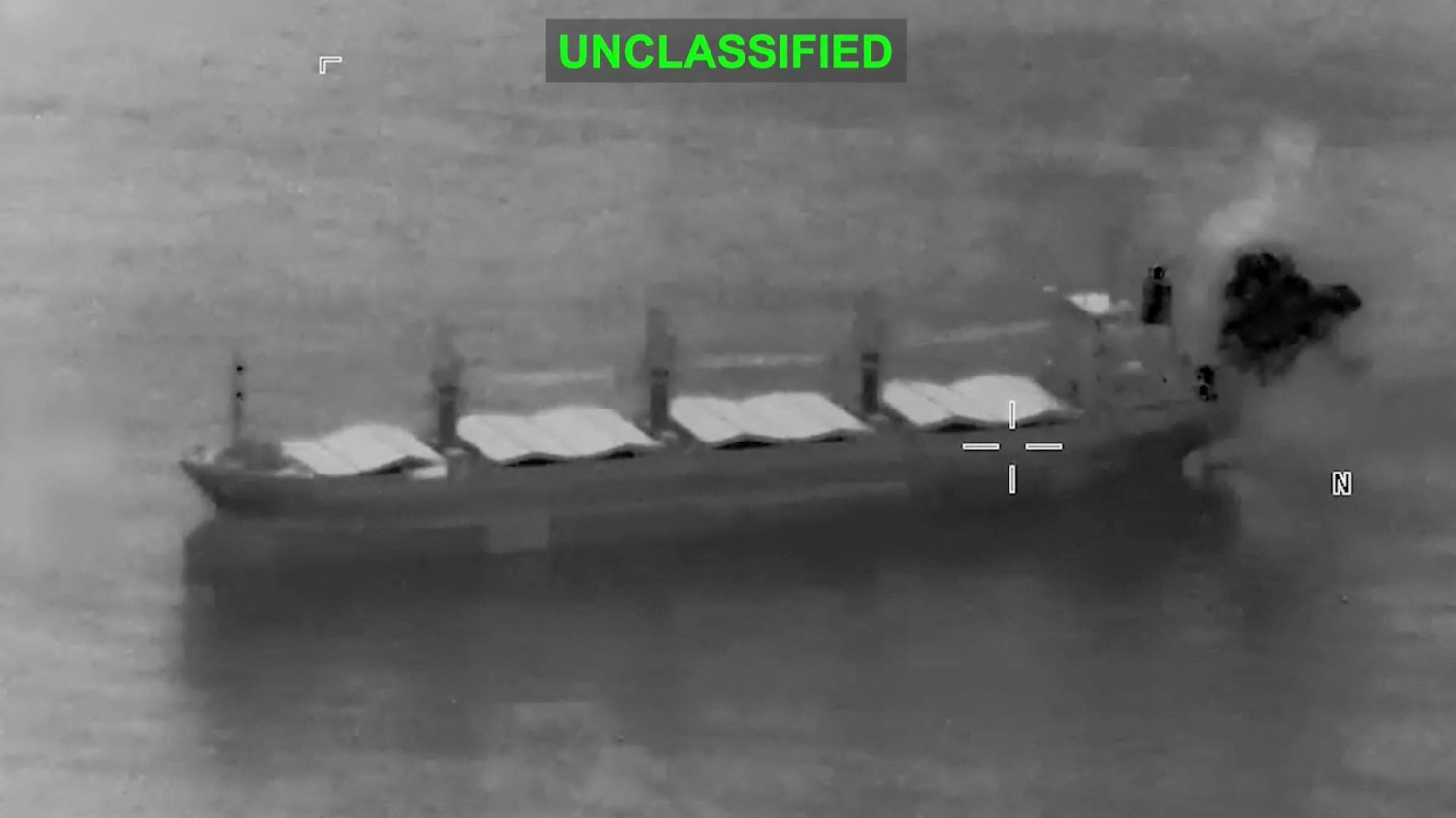
The US confirmed that its air force disabled a ship in the Gulf of Oman, which is beyond the strait.
Tasnim news agency reported that two missiles hit Qeshm Island, but there was no official information about any damage. Neither country has commented on this report. On November 2, the US stated that it had targeted the island in a limited defensive action against Iranian surface-to-air missile threats to US assets.
US AND IRAN BOTH CLAIM THEY TARGETED SHIPS
Since the US and Israel began their operations against Iran in February, Tehran has retaliated by targeting vessels in the Strait of Hormuz to block Gulf energy exports. Meanwhile, US forces have been enforcing blockades on movements to and from Iranian ports since April.
On Saturday evening, the US military reported that its air force fired at the back of a commercial vessel in the Gulf of Oman, disabling it while trying to pass through the blockade.
Iran's Revolutionary Guards Navy reported that two oil tankers caught fire after hitting mines while attempting to use an “unauthorized route” in the Strait of Hormuz. A third tanker was also reported to have suffered an explosion and caught fire, according to the semi-official Fars news agency.
Reuters could not confirm any of the reported attacks at this time.
Observers from the United Kingdom Maritime Trade Operations (UKMTO) noted an incident involving a bulk carrier and military forces in the Gulf of Oman, about 18 nautical miles east of Khor Fakkan, a city in the United Arab Emirates, but the extent of the damage is unknown. It remains unclear if this incident was connected to the reported US airstrike.
SAUDI STATE OIL COMPANY INJURED BY FALLING DEBRIS
Tensions have escalated this month between Iran-aligned Houthis in Yemen and Saudi Arabia, further intensifying the broader conflict in the Middle East.
On Sunday, Saudi Arabia's energy ministry reported that an administrative building of the state oil company, Saudi Aramco, in Riyadh suffered damage from falling debris after an attempted attack, but no injuries or fatalities were reported.
Qatar, which has been mediating negotiations to end the conflict affecting the global economy, denied claims on Saturday that US and Iranian talks had stalled.
The Qatari prime minister affirmed that both sides were still working toward an agreement.
Iran has submitted a nuclear proposal to Washington through Qatar, according to a senior Iranian official who spoke to Reuters on Thursday. The US is currently reviewing the proposal, but discussions will depend on Washington meeting Tehran's seven demands first.
These demands include easing sanctions, access to frozen assets, and war reparations, while the US insists that nuclear issues must be part of the initial talks.
On Saturday, the US military announced it would form a task force to tackle the movement of advanced weapons and other restricted materials toward Iran through its land borders and the Caspian Sea – a part of efforts to pressure Tehran economically.
Iran's Revolutionary Guards dismissed this initiative as mere "wordplay," stating that it would not succeed as Tehran is well-prepared and maintains close communication with its neighbors.