
By Steve Holland, Parisa Hafezi and Saad Sayeed
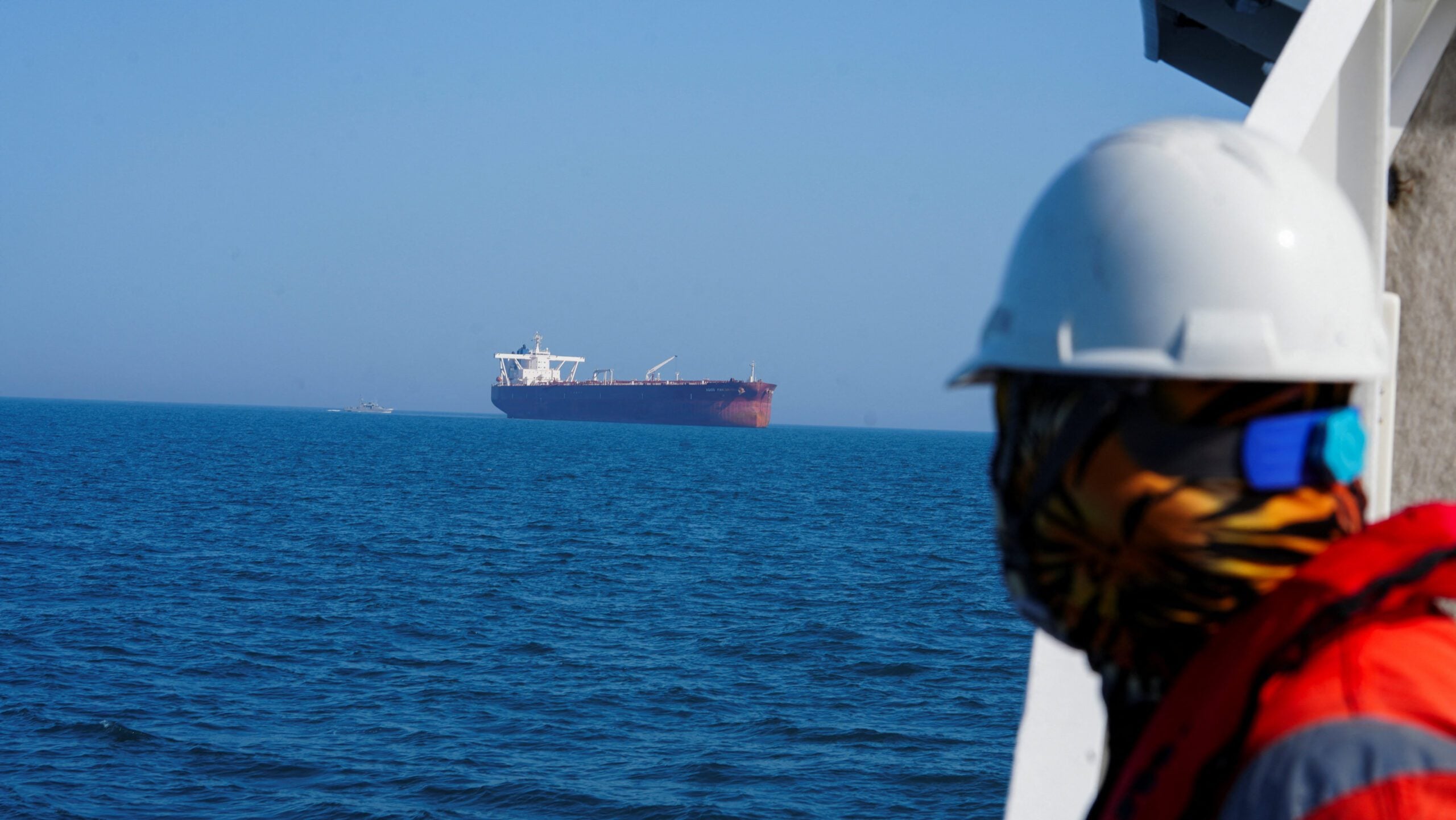
WASHINGTON/DUBAI/ISLAMABAD, April 22 — Iran has taken control of two ships in the Strait of Hormuz, tightening its hold on this critical waterway. This action comes after U.S. President Donald Trump canceled planned military actions, with no new peace talks in sight.
Despite Trump's decision to maintain a naval blockade on Iran's maritime trade, Mohammad Baqer Qalibaf, Iran's parliament speaker and chief negotiator, stated that a full ceasefire could only happen if the blockade was lifted. He emphasized that reopening the strait was impossible after such a "serious violation of the ceasefire," according to his post on social media platform X.
“You won’t achieve your goals through military aggression or intimidation. The only solution is to recognize the rights of the Iranian people,” Qalibaf commented in response to Trump’s decision to extend the ceasefire.
While Trump has backed off from previous threats to attack vital Iranian infrastructure, there has been little advancement in discussions to resolve the ongoing conflict that began with U.S.-Israeli strikes on February 28. As a result, the situation remains stagnant, with the Strait of Hormuz effectively closed and causing significant disruptions to global oil and gas supplies, impacting economies around the world.
Iran's semi-official Tasnim news agency reported that the Revolutionary Guards seized the two vessels for maritime violations and brought them to Iranian shores. This is the first instance of Iran seizing ships since the conflict began in late February.
The Revolutionary Guards also stated that any threat to safety in the strait would be viewed as a "red line," according to Tasnim.
Brent crude oil, a global benchmark, closed above $100 per barrel for the first time in two weeks. The ongoing blockade is increasing costs for businesses while major economies are depleting reserves and limiting consumption, as millions of barrels are unable to reach important markets.
NO NEW DEADLINE FOR CEASEFIRE
Trump mentioned on social media late Tuesday that the U.S. had agreed to a request by Pakistani mediators to delay military action against Iran until Iran's leaders could come up with a unified proposal, and discussions were completed.
There is currently no new end date for the extended ceasefire, according to White House press secretary Karoline Leavitt.
Leavitt indicated that Trump is looking for a "unified" response from Iran’s leadership regarding his proposals to end hostilities. U.S. officials believe Iran appears divided on how to react.
Pakistan, acting as a mediator, continues to try to facilitate talks after both sides failed to participate in discussions on Tuesday, just before the two-week-old ceasefire was set to expire.
“We were prepared for negotiations,” a Pakistani official familiar with the situation told Reuters. “Honest opinion, it was an unexpected setback. The Iranians never declined the invitation; they were ready to join, and they still are.”
SHOW OF DEFIANCE
In a display of defiance, Iran showcased its ballistic missiles at a parade in Tehran on Tuesday evening. State TV broadcast images of large crowds waving Iranian flags and a banner in the background depicting a fist constricting the strait.
Captions claimed: “Indefinitely under Iran's Control” and “Trump could not do a damn thing,” referencing Iran's effective closure of the strait to ships that don’t have its permission.
The Revolutionary Guards accused the two seized ships, the Liberia-flagged Epaminondas and Panama-flagged MSC Francesca, of operating without necessary permits and tampering with navigation systems.
Technomar Shipping, which operates the Epaminondas, confirmed the ship was captured. The vessel reported being fired upon about 20 nautical miles northwest of Oman, causing damage to its bridge, but without injuries.
Leavitt told Fox News that since the ships were not American or Israeli, their seizure did not violate the ceasefire. She labeled the act as “piracy” and noted that the use of small gunboats indicated that Iran's naval capabilities are compromised, highlighting that it doesn't fully control the Strait of Hormuz.
Typically, around 130 vessels navigate the strait daily, but this number has significantly decreased since the beginning of the war.
The U.S. military reported on Wednesday afternoon that it had already instructed 29 vessels to turn around or return to port as part of the blockade against Iran.
U.S.-IRANIAN DIFFERENCES REMAIN ON KEY ISSUES
In his announcement on Tuesday, Trump walked back warnings to bomb Iran's infrastructure, a threat criticized by the United Nations and others as potentially war crimes. Iran had declared it would respond against its Arab neighbors if its civilian infrastructure were attacked.
A peace talk session held 11 days ago did not result in any agreements.
The U.S. wants Iran to halt its enrichment of uranium and prevent any further advancements to ensure it does not develop nuclear weapons. In contrast, Iran insists that its nuclear program is peaceful and seeks the end of the war, lifting of sanctions, reparations for damages, and acknowledgment of its authority over the strait.
In related news, an Israeli airstrike killed two people in southern Lebanon on Wednesday, as reported by Lebanon's state news agency. Hezbollah also claimed to have launched a drone attack on Israeli forces in southern Lebanon, further complicating the ceasefire between the Iran-backed group and Israel.
This ceasefire in Lebanon was a crucial condition for Iran's agreement to engage in discussions.