
By Steve Holland, Elwely Elwelly and Parisa Hafezi
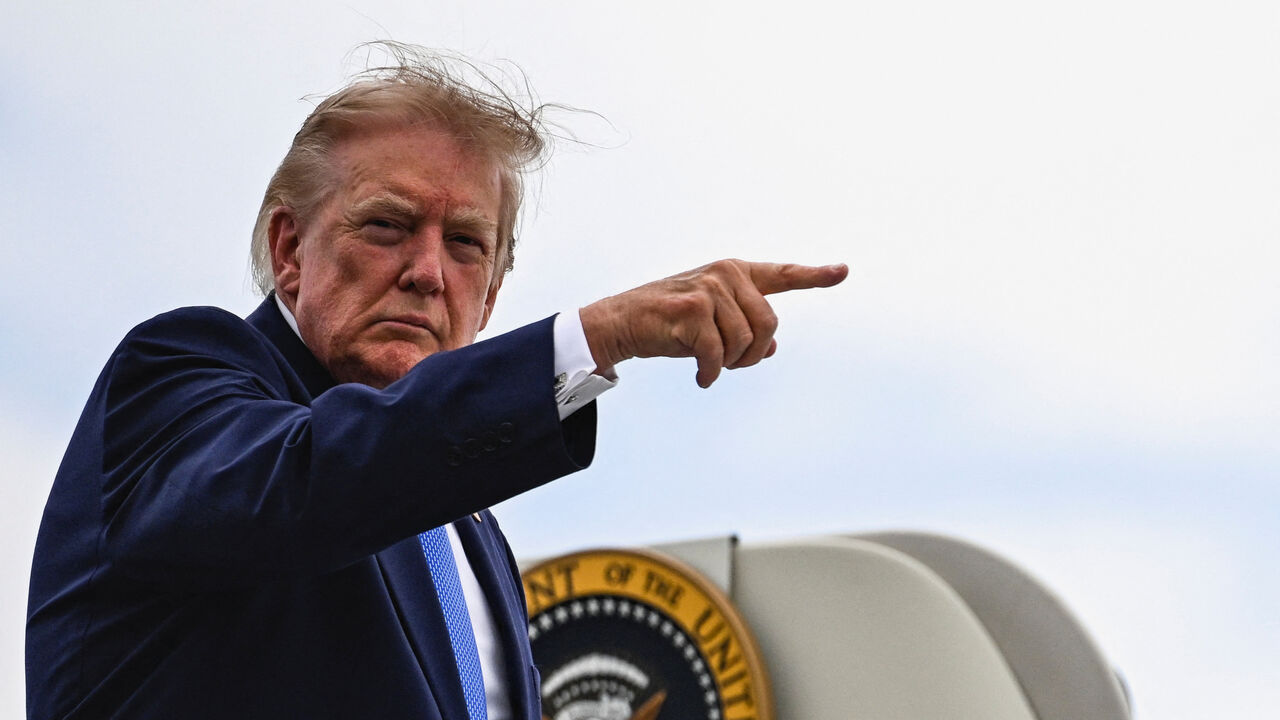
ABOARD AIR FORCE ONE/DUBAI, Aug 3 (Reuters) – Iran announced on Monday that there are no ongoing talks with the United States and no scheduled meetings. This statement contradicts U.S. President Donald Trump's claims of discussions taking place that afternoon, which he mentioned as a reason to cancel military attacks.
Over the weekend, Trump followed a familiar pattern observed over the last five months: he has announced plans for "massive attacks" on Iran, only to reverse those decisions at the last moment.
“Would I rather make a deal? I’m not looking to kill people,” Trump stated while aboard Air Force One on Sunday.
“Now what we’re doing is talking to them, in the form of a negotiation. It begins tomorrow afternoon,” he added, though he didn't specify where or who would be involved in these talks.
Iran’s Foreign Ministry spokesman Esmail Baghaei dismissed Trump's claims, stating that no negotiations are taking place and that Iran has no meetings planned. He confirmed that they have no intention of hosting foreign delegations or sending negotiators abroad in the near future.
Baghaei mentioned that all Iranian negotiators are currently in the country, except for Foreign Minister Abbas Araqchi, who is on a religious pilgrimage in Iraq. He noted that the only ongoing discussions are with Oman regarding the management of the Strait of Hormuz.
A senior source from Iran also informed Reuters that there are no planned talks, and Araqchi will be unavailable at least until the end of the week.
REPEATED PATTERN
Monday’s events seemed to follow a recurring theme observed since Trump initiated “Operation Epic Fury” with Israel over five months ago. Multiple times, Trump has threatened military action only to later cite diplomatic efforts as his reason for stepping back.
Since a June agreement to de-escalate tensions fell apart in early July, Iran has publicly rejected any negotiations with Washington.
Trump has not achieved his initial war objectives, which include dismantling Iran's nuclear capabilities, limiting its aggression towards regional rivals, and fostering conditions for the Iranian people to overthrow their clerical leaders.
Repeated escalations from the U.S. have led to increasing Iranian responses against U.S. forces in the region, Washington's Gulf Arab partners, and maritime activities, each time with Trump pulling back.
The situation surrounding the Strait of Hormuz remains a key issue. Washington argues that the June agreement required Iran to allow free navigation in this crucial waterway, while Tehran insists that the document guarantees its control over shipping routes.
If Tehran maintains a stronger hold over the strait than prior to the conflict, it could be viewed as a significant setback for Trump.
Thus far, the United States has been unable to force Iran to release its grip on the waterway, leading to higher global oil prices and increasing politically sensitive gasoline prices in the U.S.
On Monday, oil prices dropped following Trump’s decision to refrain from military action, with Brent crude futures declining over 4% to around $84 per barrel.
In the most recent incident in the strait, the British maritime security agency UKMTO reported that the captain of a vessel mentioned an explosion in the water near their ship, but fortunately, no injuries were reported.