
By Patrick Sykes and Arsalan Shahla
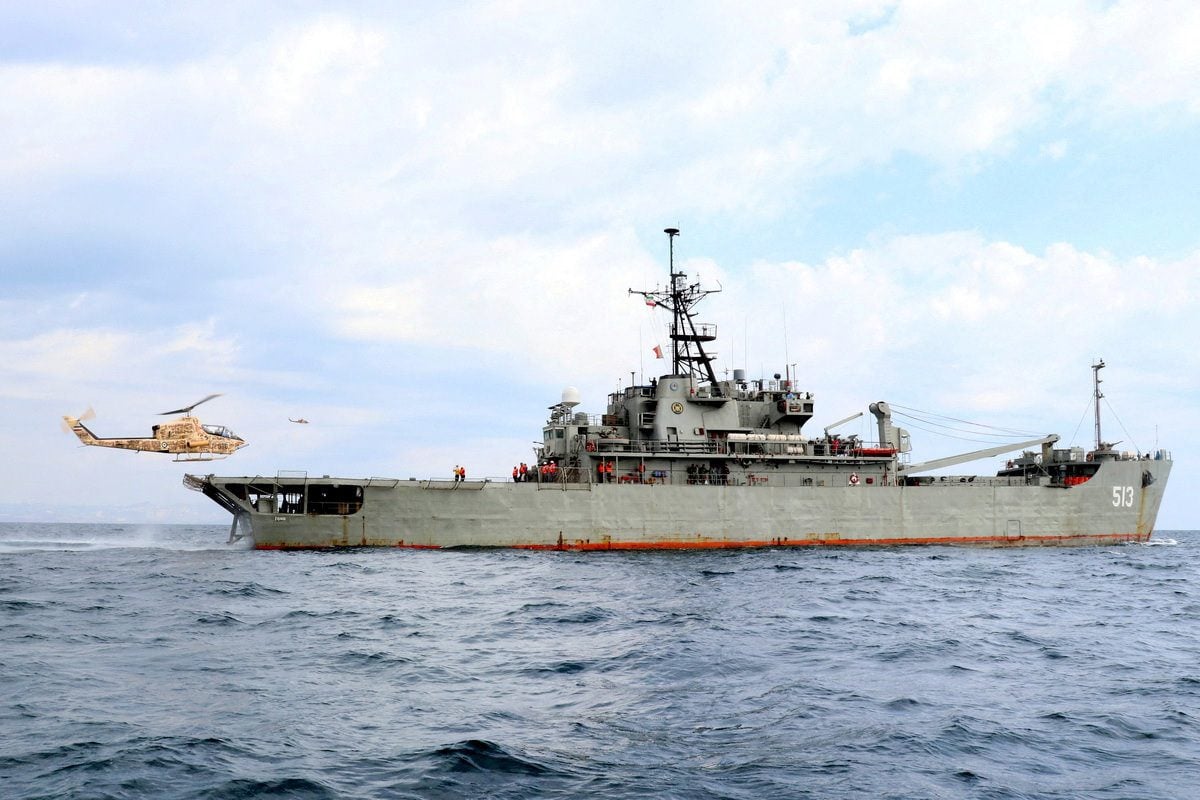
February 17, 2026 (Bloomberg) - Parts of the Strait of Hormuz, a crucial oil shipping route, will be closed for “several hours” on Tuesday due to military exercises by Iran, according to state television.
These drills were previously announced and coincide with the start of a second round of negotiations between Iran and the US in Geneva. Following the news, oil prices bounced back, with Brent crude up 0.1% at $68.74 per barrel as of 11:22 a.m. in London.
According to state TV, “The main transit routes of the Strait of Hormuz are under the control of the IRGC Navy, and Iran will not hesitate to ensure security in this area.” The IRGC refers to the Islamic Revolutionary Guard Corps.
Recently, Iran's Supreme Leader Ayatollah Ali Khamenei intensified his warnings about potential consequences for the US if it attacks Iran, responding to threats made by President Donald Trump regarding the stalled negotiations.
“They keep saying: ‘We sent a warship towards Iran,” Khamenei stated. “A warship is a dangerous weapon, but more dangerous is the weapon that can sink it.”
The US and Iran are engaged in another round of nuclear talks in Switzerland, aiming to prevent further conflicts after attacks on Iran by Washington and Israel in June.
The negotiations in Geneva, mediated by Oman, began at around 10:30 a.m. local time. The previous round on February 6 in Oman lasted about seven hours, and both sides reported the discussions were productive.
Iranian officials are open to discussing their nuclear activities but have linked any concessions to potential reductions in US sanctions.
At the same time, there has been an increase in military presence from both countries in the region. The US is sending a second aircraft carrier to the area, citing possible military action against Iran if the drawn-out talks do not yield a resolution. The IRGC had begun drills in the Strait of Hormuz on Monday to respond decisively to security threats.
Oil markets are closely monitoring these negotiations for signs of potential supply disruptions from the Persian Gulf or the possibility of sanctions relief for Iran, whose oil is largely unavailable to most buyers. Brent crude prices have risen nearly 13% this year due to tensions between the US and Iran and the threat of conflict in the oil-rich region.
According to the semi-official Mehr news agency, the Revolutionary Guard is continuously monitoring the strait and plans to reveal new equipment soon to enhance its military capabilities there, as stated by Navy commander Alireza Tangsiri.
Iranian Foreign Minister Abbas Araghchi met with the head of the International Atomic Energy Agency (IAEA) in Geneva on Monday to discuss proposals he intends to present during talks with US officials. Additionally, he met with Omani Foreign Minister Badr Albusaidi to share Iran’s stance for communication with the US.
The US delegation is led by Middle East envoy Steve Witkoff and Jared Kushner, President Trump’s son-in-law. Trump mentioned on Monday that Iran is eager to strike a deal and that he intends to remain involved in the discussions.
Israel has been advocating for the negotiations to address limitations on the range of Iran’s ballistic missiles, though Iran has rejected this demand as a red line.
During a recent visit to Tel Aviv, US Republican Senator Lindsey Graham stated that Washington is “weeks, not months” away from deciding between diplomatic or military responses to Iran.
“We are negotiating with our finger on the trigger,” said Jalal Dehqani Firouzabadi, head of Iran’s Strategic Council on Foreign Relations, to the semi-official Iranian Students’ News Agency. “Iran is making all efforts to avoid war, and diplomacy is part of that, but we are ready to defend ourselves.”