
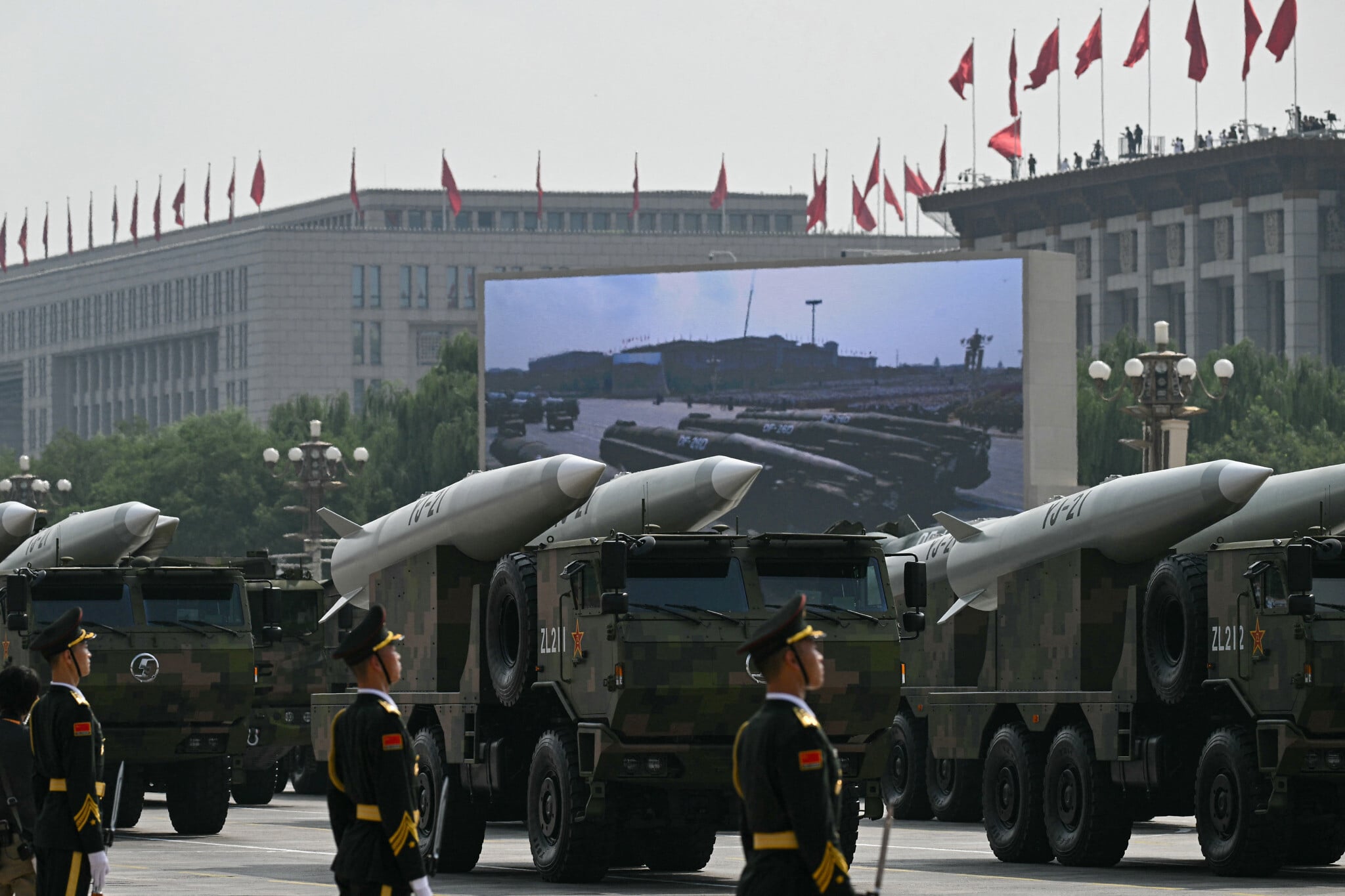
LONDON, Feb 24 – Iran is nearing a deal with China to buy anti-ship cruise missiles, according to six sources familiar with the discussions. This comes as the United States positions a large naval presence near Iran in anticipation of potential military actions against the country.
The prospective deal involves Chinese-made CM-302 missiles that can travel about 290 kilometers. These supersonic missiles are designed to fly low and fast, helping them avoid ship defenses. Their arrival would significantly boost Iran's military capabilities and could threaten U.S. naval forces in the area, say two weapons experts.
Talks with China for these arms have been ongoing for at least two years but gained momentum following the 12-day conflict between Israel and Iran last June. As negotiations reached their final stages last summer, senior Iranian military officials, including Massoud Oraei, Iran's deputy defense minister, visited China. This trip has not been previously reported.
“If Iran acquires the capacity to launch supersonic missiles against ships, it would change the game entirely,” said Danny Citrinowicz, a former Israeli intelligence officer and current senior analyst at Israel’s Institute for National Security Studies. “These missiles are extremely hard to intercept.”
It remains unclear how many missiles are involved in the deal, the payment amount, or if China will proceed with the transaction given the rising tensions in the region. An Iranian foreign ministry official stated, “Iran has military agreements with its allies, and this is the right time to utilize them.”
China’s Ministry of Foreign Affairs claimed it was unaware of the missile sale discussions. The Chinese defense ministry did not provide any comments on the matter.
When asked about the Iran-China negotiations, the White House did not provide a direct response. A White House official noted that U.S. President Donald Trump has indicated that “either we will make a deal or we will need to take strong action like before” regarding the situation with Iran.
If finalized, this missile sale would represent a significant transfer of advanced military technology from China to Iran, violating a U.N. arms embargo that has been in place since 2006. Although sanctions were lifted in 2015 as part of a nuclear agreement, they were reinstated last September.
This potential sale highlights the growing military partnership between China and Iran amidst increasing regional tensions, complicating U.S. efforts to control Iran's missile program and nuclear activities. It also signals China’s increasing willingness to assert itself in a region historically influenced by U.S. military power.
China, Iran, and Russia conduct annual joint naval exercises, and last year, the U.S. Treasury imposed sanctions on several Chinese entities accused of supplying materials to Iran’s missile program. China denied these allegations, asserting it adheres strictly to export controls on dual-use goods.
When hosting Iranian President Masoud Pezeshkian during a military parade in September, Chinese President Xi Jinping expressed support for Iran’s sovereignty and national dignity. In an October joint letter, China, Iran, and Russia stated they believed the decision to reimpose sanctions was misguided.
“Iran is caught in a conflict between the U.S. on one side and Russia and China on the other,” remarked one official briefed on the missile discussions.
This deal coincides with the U.S. gathering a naval fleet within striking distance of Iran, which includes the aircraft carrier USS Abraham Lincoln and its strike group, alongside the USS Gerald R. Ford and its escorts. Combined, these vessels can carry over 5,000 personnel and 150 aircraft.
“China is not interested in a pro-Western regime in Iran,” said Citrinowicz. “Such a regime would threaten its interests, and they prefer the current Iranian government to remain in power.”
On February 19, Trump stated he was giving Iran 10 days to make a deal regarding its nuclear program or face military action. The U.S. is preparing for the possibility of prolonged military operations against Iran if Trump gives the go-ahead.
The potential CM-302 acquisition would provide a much-needed boost to an Iranian military that has been stressed following last year's conflict, according to Pieter Wezeman, a senior researcher at the Stockholm International Peace Research Institute.
China’s state-owned China Aerospace Science and Industry Corporation (CASIC) promotes the CM-302 as the best anti-ship missile globally, capable of sinking aircraft carriers and destroyers. The missile system can be launched from ships, aircraft, or mobile ground units and can strike land targets as well.
Iran is also exploring options to acquire Chinese surface-to-air missiles, anti-ballistic weapons, and anti-satellite technology, the six sources revealed.
China was a key arms supplier to Iran in the 1980s, but large-scale transfers diminished by the late 1990s under global pressure. In recent years, U.S. officials have accused Chinese companies of sending missile-related materials to Iran without directly accusing them of providing complete missile systems.