
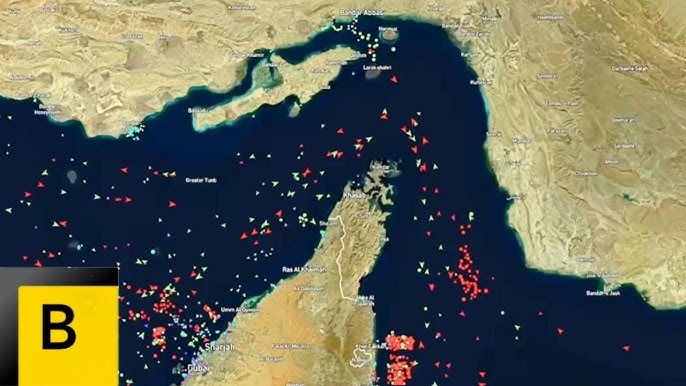
On Wednesday, Iranian gunboats fired at commercial ships in the Strait of Hormuz, a key route for energy supplies, while two Iranian oil supertankers tried to bypass a blockade imposed by the US.
The UK Maritime Trade Operations, a naval liaison for the shipping industry, announced on X that a cargo ship and a container ship were shot at in the area. At the same time, analytics company Vortexa reported that Iran had moved supertankers into the Arabian Sea, where the US has been trying to limit Iranian shipping.
Iranian state TV later revealed that the Islamic Revolutionary Guard Corps had captured two vessels, named MSC Francesca and Epaminondas, and brought them ashore for inspection. The Wall Street Journal noted that these ships, along with another called Euphoria, had also suffered attacks.
The operators of all three ships listed in the Equasis international shipping database did not respond to inquiries right away.
These actions highlight Tehran's defiant attitude amid US pressure, especially since talks between the two nations are currently stalled. They also illustrate the difficulties in managing a conflict that has already cut a billion barrels of oil from supply, according to leading traders.
Two Supertankers
The supertankers that entered the Arabian Sea were identified as Hero II and Hedy. Vortexa used satellite images to track these two Iran-flagged very large crude carriers that arrived in the area on April 20, which can carry a combined total of 4 million barrels of oil.
Another Iranian VLCC named Diona seemed to turn back after entering the Arabian Sea from Hormuz, according to Samir Madani, co-founder of TankerTrackers.com.
Iran shut down the Strait of Hormuz shortly after facing attacks from the US and Israel at the end of February.
The latest incidents show that, despite US President Donald Trump claiming Iran's navy has been destroyed, Tehran's use of small boats to target commercial shipping remains a significant threat.
One of the attacks on the container ship occurred at 2:55 a.m. London time, causing serious damage to its bridge, as reported by the UKMTO. The cargo ship was not damaged but had to stop after being fired upon about three hours later.
It wasn't clear if the ships attacked were the same ones that Iranian media claimed were captured.
New Approach
Initially, the US responded to the closing of Hormuz by encouraging Iranian oil sales to stabilize rising prices. However, on April 13, they changed their strategy, imposing a blockade on all Iranian shipping.
The departure of loaded tankers highlights the difficulties of enforcing this blockade, which Trump labeled a “tremendous success,” while also trying to press a resilient Iranian government into making concessions.
Since the blockade began, the US Navy has seized an Iran-linked cargo vessel and boarded a sanctioned oil tanker off the coast of Sri Lanka, expanding its targeted area. They have also turned back at least 28 vessels. The US has previously indicated it may consider boarding and seizing any sanctioned vessels, regardless of their location, meaning these supertankers may still be at risk.
Despite US threats, Vortexa's data suggests that Iranian exports have not stopped, with at least 34 Iran-linked tankers and gas carriers making their way through the Strait and the US blockade. Of the ships that have crossed since early last week, 19 were leaving the Persian Gulf, with 17 carrying cargo. Ships were told to leave Iranian ports by late April 13.
Transponders Off
Vortexa employs satellite imagery since vessels trying to avoid US forces usually switch off their transponders. The Hero II was last seen more than a month ago moving north in the Strait of Malacca, while the Hedy last transmitted its location near Khor Fakkan in the UAE in late February.
It is unclear where the two oil shipments are headed. Most of Iran's crude exports go to China, although India received some Iranian crude in recent weeks before a US waiver expired.
As the conflict entered its eighth week, Trump extended a ceasefire indefinitely on Tuesday, but maintained that the US blockade would continue. Approximately 800 vessels remain stuck in the Persian Gulf. This week, the International Maritime Organization announced it is working on an evacuation plan, which depends on de-escalating the situation.