
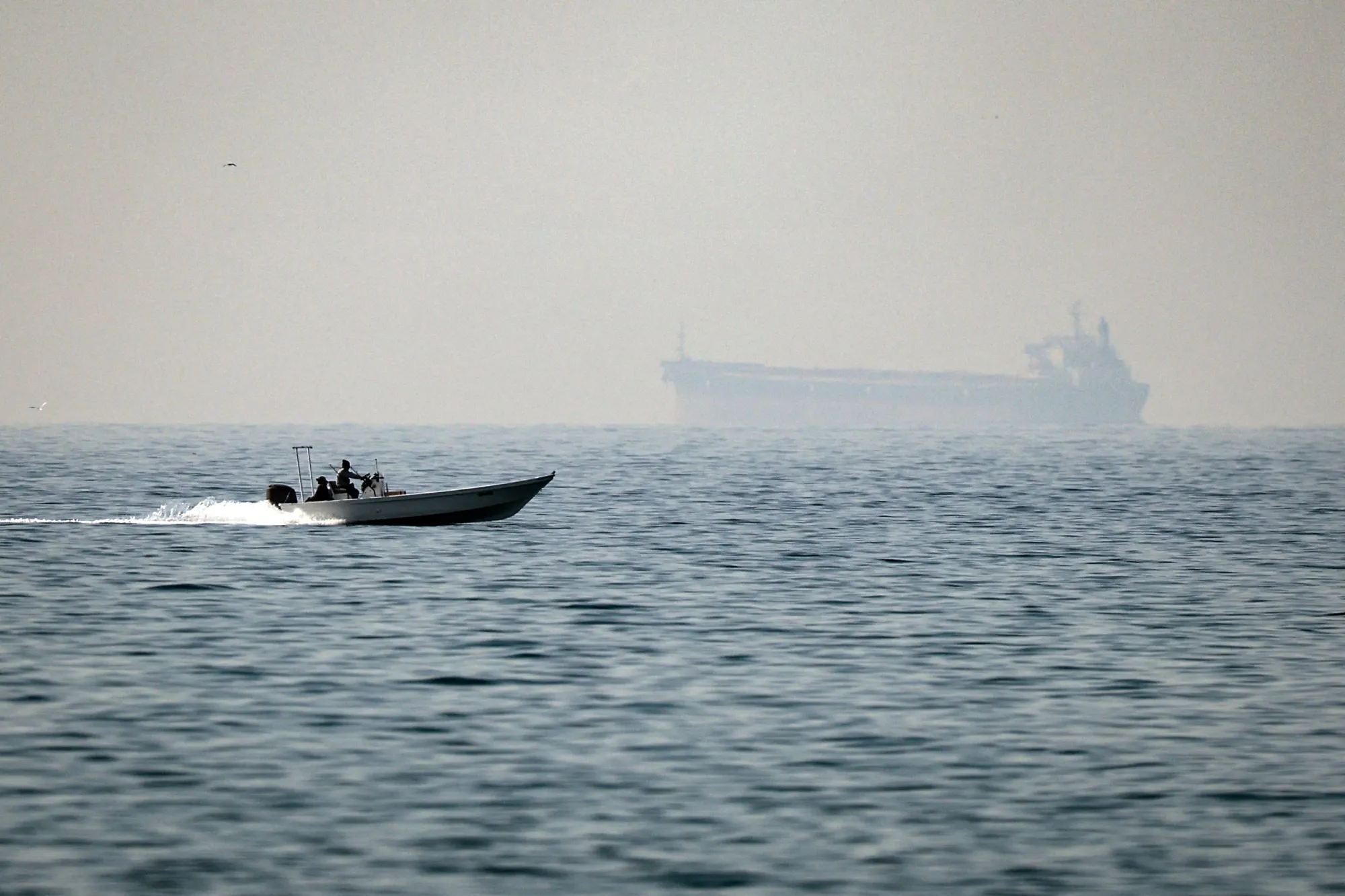
Vessels wanting to pass through the Strait of Hormuz under Iranian protection are now required to submit lists of their crew and cargo, along with voyage details and bills of lading. This request comes from the Islamic Revolutionary Guard Corps (IRGC) to ensure safe transit.
The process for obtaining permission varies and can be inconsistent from one ship to another, according to industry insiders. This situation highlights Iran's efforts to take more control over this crucial maritime route as tensions in the Persian Gulf enter their fourth week.
Some vessels have been asked to make payments, although not all. These requests often go through intermediaries and vary in amounts, primarily affecting oil tankers, gas carriers, and other high-value ships.
Since the US and Israeli military actions began almost a month ago, only a few ships have successfully crossed the strait, most of them being Iranian or linked to China. Those that have passed through with protection from Tehran have usually followed a route close to Iran’s coastline.
This week, Iran stated that navigation for vessels from friendly nations continues in coordination with relevant Iranian authorities. While Iran's Supreme Leader Mojtaba Khamenei has suggested keeping the strait closed, recent communications claim that the waterway remains open and that traffic has not been halted.
On Tuesday, the IRGC reported that a container ship was turned back for not following legal protocols and lacking clearance to pass through the strait.
Following US President Donald Trump’s weekend ultimatum demanding the reopening of Hormuz, which was later extended, the US government is actively seeking talks with Iran. A recent 15-point plan aimed at ending the conflict has helped reduce soaring oil prices, but there has been little sign of improvement on the ground or immediate changes in traffic patterns around Hormuz.
Asian countries are notably impacted by the disruptions in energy trade from the Persian Gulf, facing fuel shortages across the region. India is one of the hardest-hit countries, experiencing a significant shortage of liquefied petroleum gas (LPG). Only a few Indian LPG tankers have successfully navigated the strait, following negotiations between New Delhi and Tehran.
India maintains that international laws support the right of free navigation in the strait, indicating that no fees should be charged.
Chinese government agencies overseeing shipping are aware that some Chinese vessels have paid protection fees through local agents. Officials in China see little justification for these charges since transit rights are protected by international law. Additionally, Beijing is a key trading partner for the region and an economic lifeline for Tehran, purchasing the majority of its oil exports.
Iran has stated that full security and stability in the Strait depend on the cessation of military threats in the area.