
DUBAI/WASHINGTON, April 20 (Reuters) – A senior Iranian official told Reuters on Monday that Iran is thinking about attending peace talks with the United States in Pakistan. This consideration comes after Islamabad’s efforts to lift a U.S. blockade on Iran’s ports, an issue that has hindered Iran's return to peace discussions.
However, the official made it clear that no final decision has been reached yet.
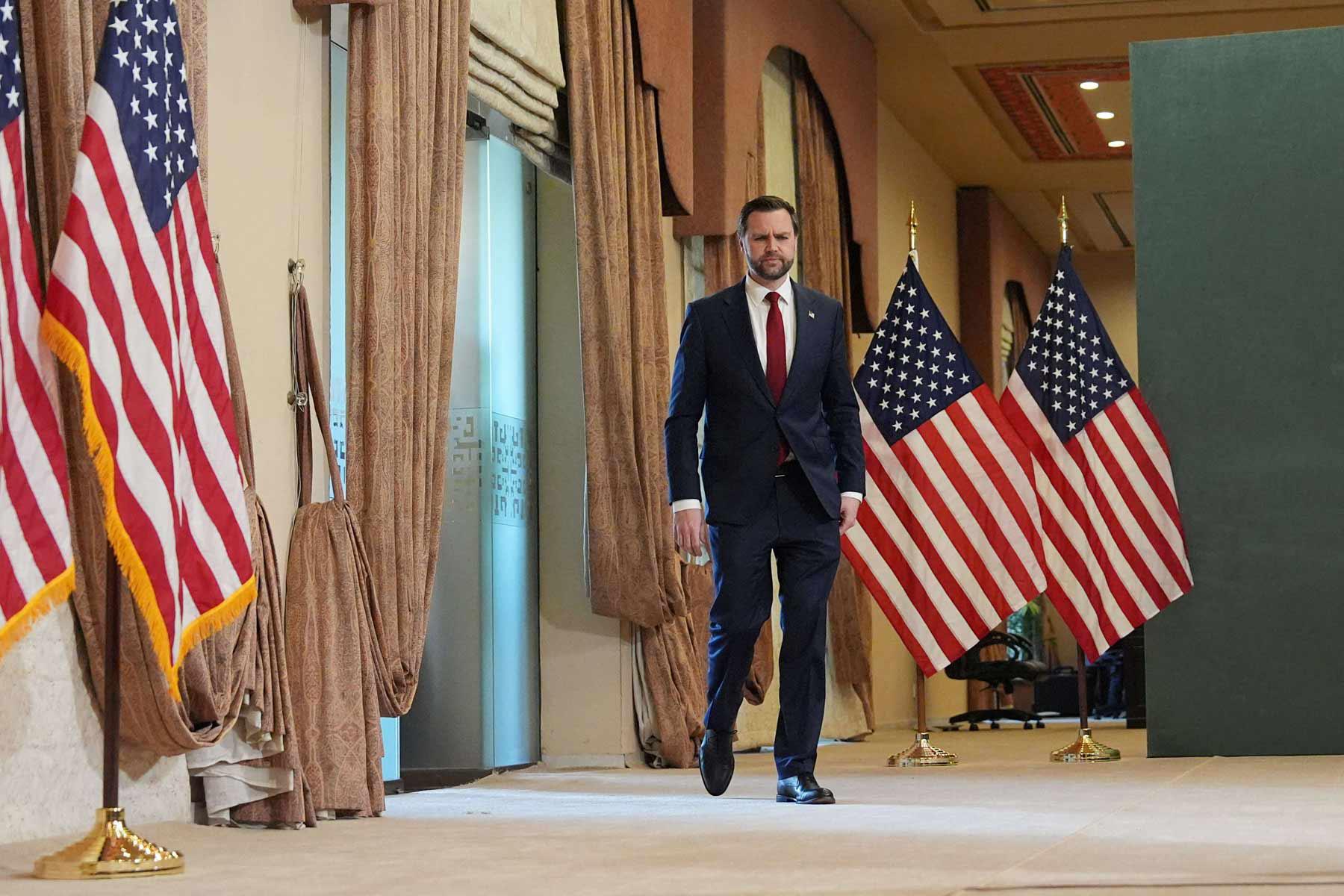
Additionally, according to a source, Vice President JD Vance is still in the U.S. and has not yet traveled to Islamabad for discussions, which contradicts previous reports.
As a two-week ceasefire approaches its end, the Iranian official stated that Tehran is “positively reviewing” its participation, although a final decision is still pending. This statement marks a notable shift from earlier remarks that rejected the possibility of attendance and vowed retaliation against U.S. actions.
The Iranian official mentioned that Pakistan, acting as a mediator, is making commendable efforts to lift the U.S. blockade and ensure Iran's involvement.
SECURITY PREPARATIONS
The ceasefire is at risk after the U.S. announced the seizure of an Iranian cargo ship attempting to bypass the blockade, leading Tehran to vow retaliation.
Esmaeil Baghaei, the spokesperson for Iran's Foreign Ministry, said on Monday that Washington has shown a lack of seriousness in pursuing diplomacy and that Tehran will not alter its demands.
The U.S. hopes to initiate talks in Pakistan before the ceasefire ends, with extensive security measures being put in place in Islamabad. However, Baghaei criticized the U.S. for maintaining “unreasonable and unrealistic positions.”
A Pakistani security official revealed that Field Marshal Asim Munir, acting as the key mediator, informed U.S. President Donald Trump that the blockade is a significant barrier to negotiations, to which Trump agreed to consider the suggestion.
U.S.-IRAN CEASEFIRE SET TO EXPIRE
Trump declared the two-week ceasefire with Iran on April 7, although he has not specified an exact end date.
A Pakistani source involved in the negotiations indicated it would expire at 8 p.m. EST on Tuesday, which translates to midnight GMT or 3:30 a.m. Wednesday in Iran.
When asked over the weekend about the possibility of an extension, Trump responded, “I don’t know. Maybe not. Maybe I won’t extend it. But the blockade is going to remain.”
The U.S. continues its blockade of Iranian ports, while Iran has lifted and then reinstated its blockade of the Strait of Hormuz, a vital route for about one-fifth of the world's oil and gas supply.
As concerns grow over a potential ceasefire collapse, oil prices have jumped by around 5%. Traffic through the Strait of Hormuz has significantly decreased, with only three ships crossing in a 12-hour span, according to shipping data.
U.S. MARINES BOARD IRANIAN VESSEL
The U.S. military reported that it fired on an Iranian-flagged cargo ship headed for Iran's Bandar Abbas port on Sunday after a six-hour standoff, disabling its engines. U.S. Central Command released a video showing Marines descending onto the vessel from helicopters.
The ship is believed to have been carrying items that Washington considers dual-use products which could be utilized by the military, according to maritime security sources.
Iran's military claimed that the ship was en route from China and accused the U.S. of “armed piracy.” They stated they were prepared to confront U.S. forces regarding this “blatant aggression,” but were cautious due to the presence of crew members’ families on board.
China, the main buyer of Iranian crude oil, expressed worry over what it termed “forced interception.” Chinese President Xi Jinping called for the resumption of normal shipping traffic through the strait and urged for a resolution through political and diplomatic means, as reported by state news agency Xinhua.
Trump warned on Sunday that the U.S. would demolish every bridge and power plant in Iran if it rejected his terms, continuing his recent pattern of threats.
Iran has indicated that if the U.S. attacks its civilian infrastructure, it would retaliate against power stations and desalination plants in neighboring Gulf Arab countries.
PREPARING FOR TALKS THAT MIGHT NOT HAPPEN
Pakistan is getting ready to host the talks, even though there is uncertainty about whether they will proceed. Close to 20,000 security forces have been deployed throughout Islamabad, according to government and security officials.
European allies, often criticized by Trump for not supporting his war efforts, fear that Washington's negotiation team is pushing for a quick deal that would lead to lengthy and complex follow-up discussions.
Since the war started on February 28, thousands have died from U.S.-Israeli strikes on Iran and during an Israeli invasion of Lebanon that is occurring simultaneously, where a truce is also currently in place.
Iran has responded to these attacks with missile and drone strikes against Israel and nearby Arab countries hosting U.S. bases.