
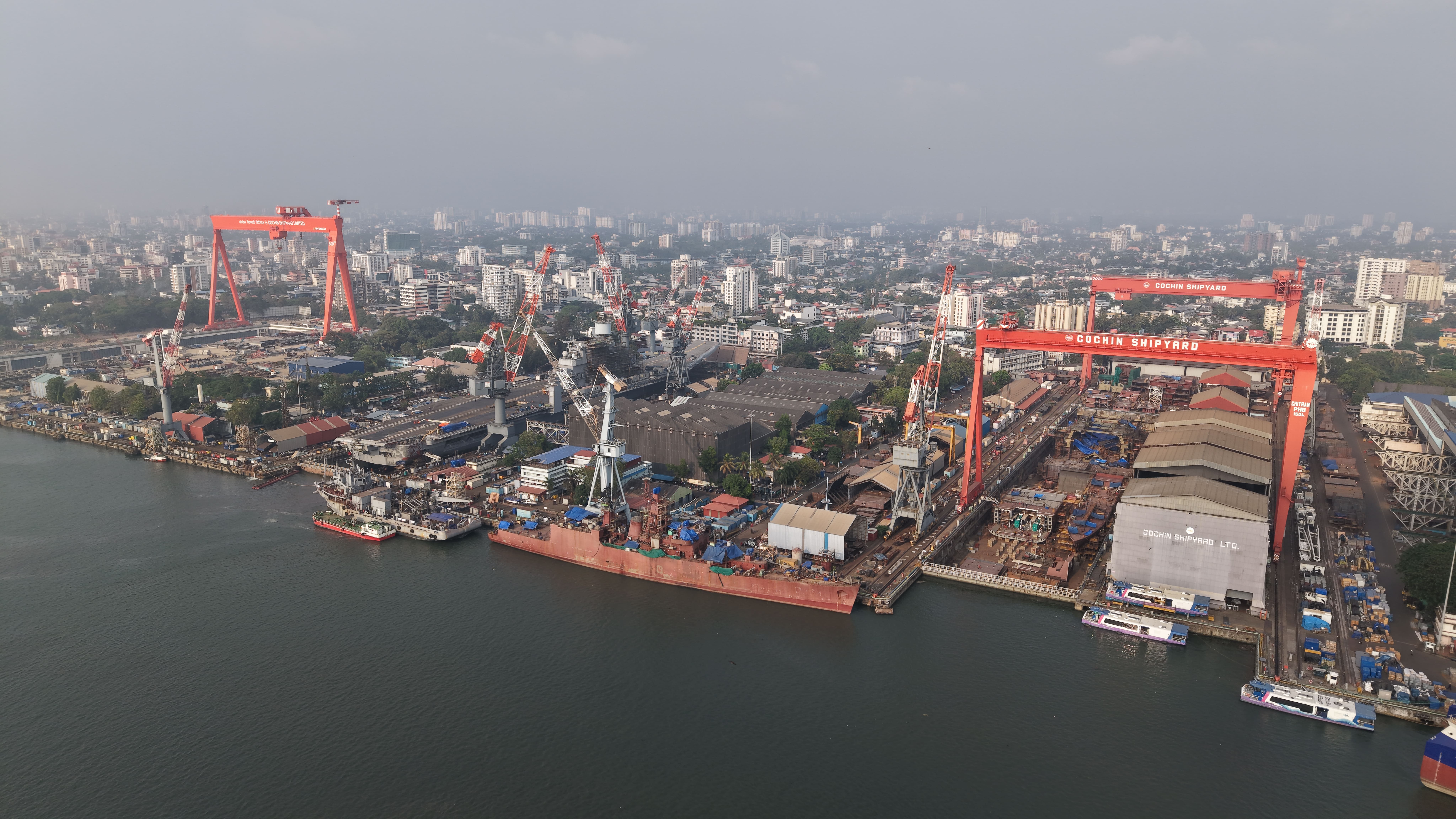
India has just invested $5.4 billion to shake up the global shipbuilding industry. This move serves as a serious warning for Western shipyards that are already struggling against Asian competition.
The Indian government approved a substantial subsidy plan earlier this year, which includes $3 billion in direct shipbuilding subsidies and $2.4 billion for improving dockyard infrastructure. These initiatives will continue until 2036, with the possibility of extending until 2047—when India aims to be recognized as a "major maritime power" alongside developed nations.
The significance of this timing and scale cannot be overstated. Currently, India ranks around 20th to 22nd in the global shipbuilding market, accounting for just 0.06% of worldwide output. The country spends about $70-75 billion each year on foreign shipping services, and only 7% of Indian-owned vessels are built locally. The government, led by Prime Minister Narendra Modi, refers to this moment as India’s “Maruti moment,” drawing a parallel to the automotive revolution of the 1980s that shifted India from being an importer to a manufacturer.
India has ambitious goals: to break into the global top 10 shipbuilders by 2030 and then into the top five by 2047. The country is not hiding its strategy; officials are openly taking cues from China's early-2000s industrial policies, which propelled China from having 14% of the global shipbuilding share to over 70% today. Currently, China dominates commercial shipbuilding with a market share between 55% and 74%, while South Korea holds about 25% to 28%, and Japan around 13% to 17%. The rest of the world competes for the remaining share.
The Indian subsidy plan follows a familiar pattern: offering demand-side subsidies of 15% to 25% per vessel to attract orders, investing in infrastructure for world-class shipyards, and providing government-backed credit guarantees to compete with the financing that makes Chinese and Korean shipyards so appealing.
India's message to the world is straightforward yet powerful: we provide pricing similar to China’s, backed by the state, but without the geopolitical risks involved.
This news is concerning for European shipbuilders, who have already shifted away from standard commercial vessels like bulk carriers and tankers and now focus on specialized niches such as cruise ships and naval construction. They are surviving on high-value projects rather than large volumes.
However, the global shipbuilding market is only expected to grow modestly, from approximately $160-170 billion now to just over $200 billion by 2030. There's not enough space for another major subsidized competitor without starting price wars. If India successfully adds millions of tonnes of shipyard capacity and competes on price with state guarantees, European shipyards could face additional pressure on their remaining commercial orders.
The strategic implications are deeper. India’s plan includes government-supported insurance for risks before and after shipments—this type of export credit support has made Asian yards highly competitive. European yards have frequently complained that they can’t compete with Chinese financing terms, and now they may face similar competition from a democratic ally where criticism on geopolitical grounds is less viable.
America’s Unsettling Reflection
For the United States, this move by India is particularly significant. The American commercial shipbuilding sector only accounts for about 0.1% to 0.13% of global output, essentially negligible. The industry relies heavily on the Jones Act, which mandates that domestic coastal shipping must use US-built, US-flagged, and US-crewed vessels. No major international shipping company has ordered large commercial vessels from US shipyards in decades.
The cost difference is stark: US shipyards charge three to four times more than Asian yards for comparable vessels, with some studies estimating the gap could be even higher. Building a container ship that costs $50 million in South Korea might cost between $200 million to $500 million in the United States, if you can even find a yard capable of handling it.
Washington has essentially accepted a secondary role in the global commercial market. The current US strategy focuses on maintaining capacity for Navy vessels and exploring partnerships with South Korean and Japanese shipyards. In November 2024, Navy Secretary Carlos Del Toro visited South Korea to discuss technology transfer and shipbuilding collaboration. Hanwha Ocean’s acquisition of Philly Shipyard in Philadelphia highlights how US shipbuilding increasingly requires foreign investment.
India’s rise as a subsidized, export-focused competitor makes it impossible for the US to ignore this gap. If cargo owners can order modern vessels in India at prices close to those in Asia without the risks associated with China, this might pressure policymakers to reconsider the Jones Act’s requirements, which critics say inflate domestic shipping costs and harm competitiveness.
Opportunity or Threat?
However, India’s efforts also present new opportunities. As Western governments seek “friend-shoring” to lessen dependence on Chinese supply chains, Indian shipyards could become appealing options for naval repairs, refitting, and co-producing auxiliary vessels. Defense ties through the Quad group and various bilateral agreements are strengthening. US and European shipbuilders might pursue joint ventures, exchanging design expertise for access to lower-cost Indian production.
The key question is whether shipbuilding is seen as a strategic industry. Both the US and Europe have recently committed significant investments to maintain domestic capacity for semiconductors and electric vehicle batteries, considering these sectors too critical to outsource. India is betting that shipbuilding is equally essential and should be viewed as strategically vital as chips or batteries.
If India successfully positions itself as the world’s "fourth pillar" in shipbuilding, Western governments will have to make a choice: accept the continued decline of their maritime industrial base or commit to the sustained support needed to remain competitive.
India’s $5.4 billion subsidy plan indicates that in this new era of great power competition, industrial policies are back, and traditional free-market principles may no longer suffice.