
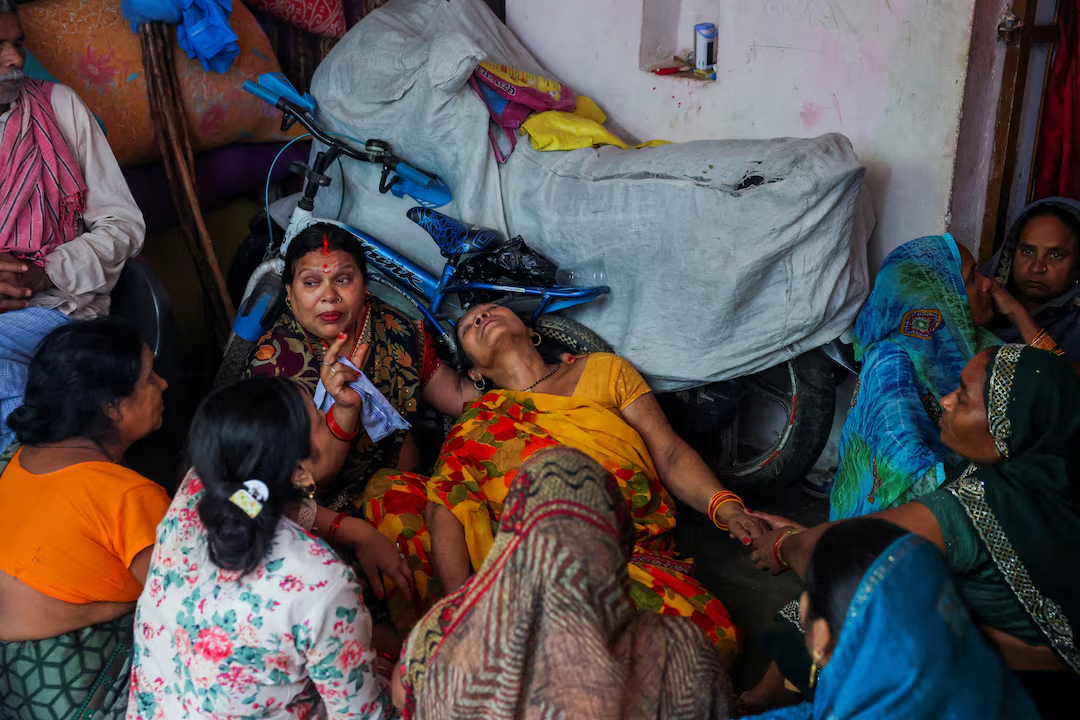
DEORIA, India, June 12 (Reuters) - Sushila Devi was crying on the floor of her home in Deoria, northern India, after being informed that her husband was one of three sailors killed in a U.S. attack on a ship off the coast of Oman.
“If he had warned us about the dangers, I would have asked him to come back,” she sobbed, surrounded by family members trying to comfort her. “The government should not send people there.”
On Friday, India made the unusual decision to file a second protest with the U.S. regarding the strike that happened over three months into the Iran war. Sushila's sentiments reflect the growing demands among Indians for their government to do more to protect its sailors in the Gulf.
CRITICS WANT MORE THAN 'ROUTINE PROTEST'
Her husband, Shivanand Chaurasia, the family's primary provider for their two young children, was one of the 24 Indian sailors on board the Palau-flagged tanker Settebello when it was attacked on Wednesday.
The U.S. military's Central Command reported that an aircraft targeted the vessel's engine room after the crew “consistently failed to follow orders from American forces.”
This strike was part of a blockade aimed at disrupting oil shipments from Iran, which was implemented after Tehran significantly reduced shipping through the Strait of Hormuz, a critical route for a fifth of the world's oil and liquefied natural gas before the conflict began.
India's foreign ministry summoned the U.S. chargé d’affaires to express “deep concern over the use of lethal force against civilian shipping.”
“Such actions are unacceptable and threaten the safety and stability of international maritime trade in a sensitive area during challenging times.” The U.S. embassy in Delhi did not respond to a request for comment.
The tragedies have led to calls for Indian Prime Minister Narendra Modi to take stronger action than just issuing protests.
India, which is the world’s second-largest supplier of seafarers after the Philippines, has faced significant costs due to a conflict it did not instigate, according to opposition critics.
On Thursday, another ship with 20 Indian crew members was attacked, although there were no casualties.
“India has responded with a standard diplomatic protest and seems to be downplaying the severity of the attacks,” stated Brahma Chellaney, a strategic affairs analyst in New Delhi.
OPPOSITION SAYS MODI SHOULD TALK TO TRUMP
“If the victims had been Chinese sailors, Beijing would have likely reacted very differently, viewing the strikes as a serious provocation by the U.S. and escalating the situation into a significant international crisis.”
The opposition party Aam Aadmi Party urged Modi to discuss the issue with U.S. President Donald Trump, as the two leaders are expected to meet at the upcoming Group of 7 summit.
The main opposition Congress party criticized the government for policies that they say have “allowed foreign powers to act against Indian interests without consequence.”
“India's strategic independence and interests must be protected with clarity and determination,” they emphasized.
Such attacks could discourage workers from pursuing seafaring careers, making labor shortages in the industry even worse, noted Manoj Yadav, general secretary of the Forward Seamen's Union of India.
“These recurring incidents highlight the serious decline in safety and security in one of the world’s most important maritime routes,” he added.