
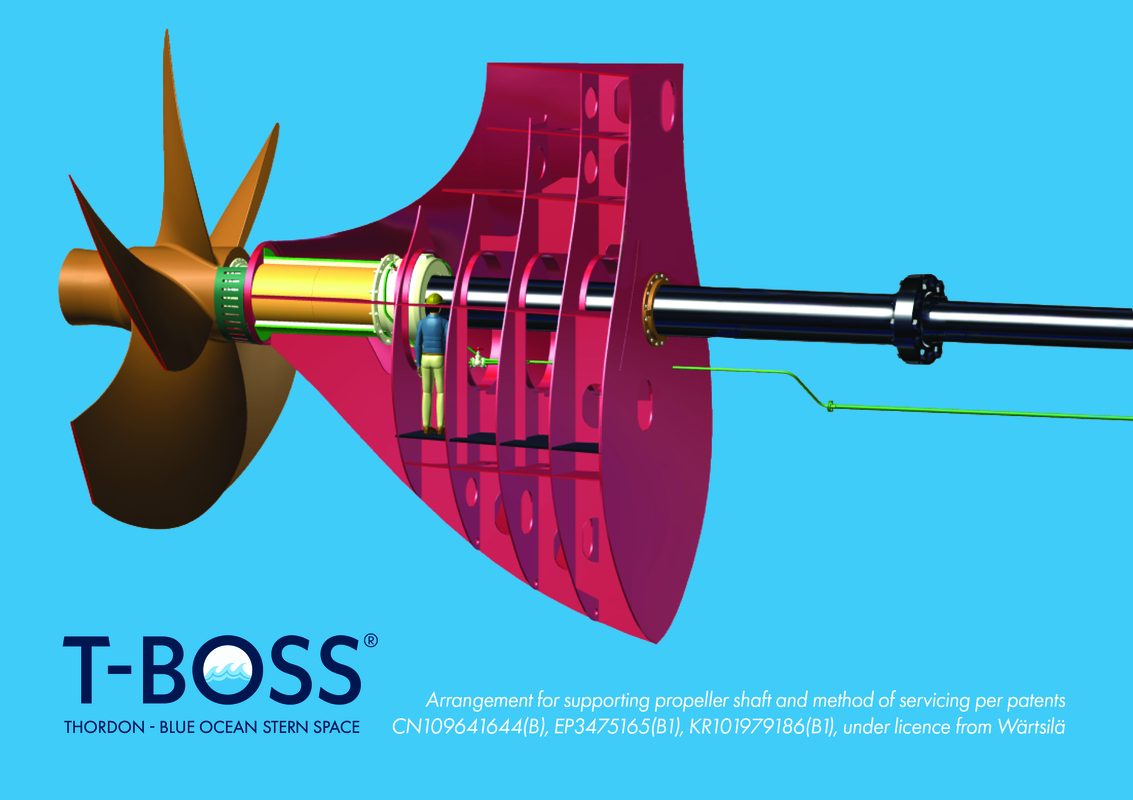
An extensive study on a Suezmax crude oil tanker has shown that using Thordon Bearings’ T-BOSS® shaftline solution is a better option compared to traditional oil-lubricated sterntube systems.
The study looked at the capital expenditures (CAPEX) for the sterntubeless T-BOSS® system on a 274-meter (899-foot) tanker, using a shaft diameter of 670mm (26 inches) as the standard. It found that T-BOSS® offers significant advantages for ship designers and builders, such as increased design flexibility due to a shorter shaft, reduced labor and installation costs, and a more appealing stern design that can attract shipowners through operational and cost benefits.
The study examined various aspects of shipbuilding, including sealing systems, piping, structural components, shafting, outfitting, painting, electrical systems, testing, and regulatory issues. The results showed that labor and installation costs are consistently lower with the T-BOSS® system.
The T-BOSS® provides enhanced design flexibility by shortening the propeller shaft, which can free up to 660m³ (23,308ft³) of extra cargo space in the Suezmax tanker. This allows naval architects and shipbuilders to improve layout options during the early design stages. Consequently, shipowners can use this space for more cargo or reposition the main engine, facilitating the installation of a shaft generator. This change can help lower greenhouse gas emissions and may qualify the ship for carbon credits. Additionally, this flexibility makes it easier for designers to create more appealing vessel designs.
In addition to design advantages, shipbuilders can offer a more attractive ship thanks to lower operating expenses (OPEX). The study notes that a key savings factor is the elimination of the cost for sterntube lubricating oil, which can be quite high. By using the T-BOSS® system that is lubricated with seawater, shipowners can save about US$33,000 initially and about US$11,500 per year in operational costs. Moreover, polymer bearings in the T-BOSS® system have less friction than traditional metal bearings, leading to annual fuel savings of around US$5,100. The T-BOSS® system also reduces the risk of oil pollution and cuts compliance costs with tough environmental regulations by avoiding the need for costly Environmentally Acceptable Lubricants (EALs).
Maintenance is simplified with the T-BOSS® system due to its unique design and dry inspection chamber. Engineers can check and replace the COMPAC bearings without having to remove the propeller shaft or the propeller, keeping the vessel operational and reducing drydocking costs. This helps decrease downtime and maintenance expenses over the life of the vessel.
Overall, the combined benefits of lower CAPEX, reduced complexity, increased design flexibility, and a more attractive ship design make the T-BOSS® system an appealing choice for shipbuilders and naval architects. It supports the shift towards greener and safer ship designs.
The T-BOSS® system was developed in collaboration with Thordon Bearings, Wärtsilä Shaft Line Solutions, CSSC – Shanghai Merchant Ship Design and Research Institute (SDARI), classification society ABS, and the National Technical University of Athens (NTUA).
The complete study was conducted by Hydrus Engineering in Greece, with supplementary data from JBL Tech Service, ABS, and Thordon Bearings.
To access the free whitepaper in English, Chinese, or Korean, visit: T-BOSS Whitepaper