
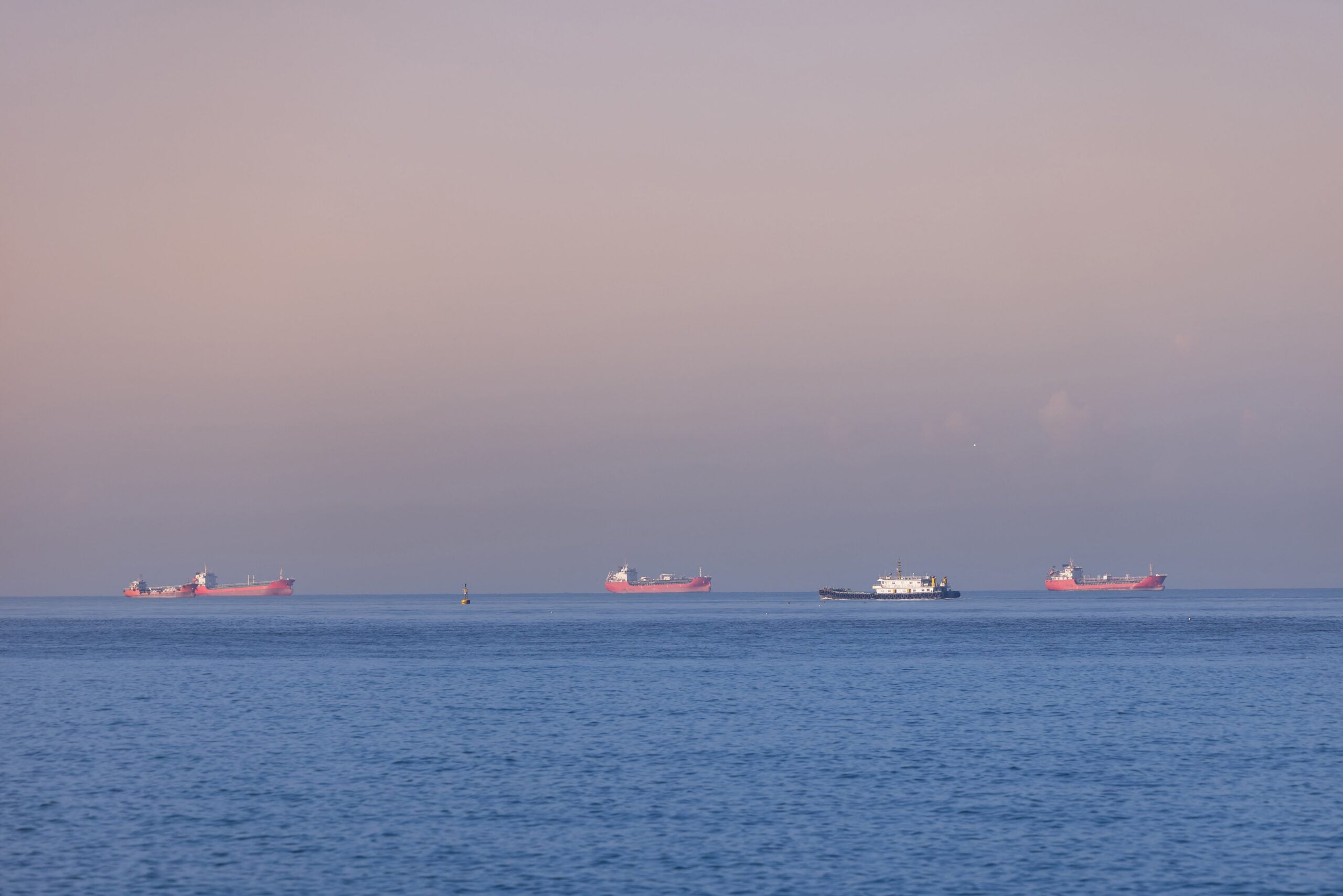
The International Maritime Organization (IMO) is advising thousands of ships stuck in the Persian Gulf to stay where they are and wait for further instructions as they start evacuating over 11,000 seafarers who have been trapped in the area due to ongoing conflict.
This guidance was released on Wednesday and highlights that, despite a recent agreement between the U.S. and Iran, the Strait of Hormuz remains a highly controlled and potentially dangerous area for shipping.
The IMO has instructed vessels to hold their positions and not to move until they are contacted. “Do not move. Wait to be contacted,” it advised shipmasters, urging them to adhere strictly to the instructions from the relevant coastal authorities.
Currently, ships should not head towards the Strait or the designated waiting area on their own. The IMO will contact each ship individually through a coordinated system that includes the U.K. Maritime Trade Operations (UKMTO), France's MICA Center, and local coastal states.
When contacted, ships will be directed to a waiting area off the coast of Oman, where they can choose either a northern route managed by Iran or a southern route managed by Oman and the United States.
Ultimately, it will be up to shipowners and masters to decide on the route, as they are expected to assess any risks involved before proceeding.
The IMO has clarified that it does not handle operational routing. “The IMO provides a framework for coordinating a safe departure, but the actual routing and maritime safety are the responsibility of the coastal states,” the organization stated.
This means that Iran is in charge of the northern route, while Oman and the U.S. oversee the southern route, where vessels can continue to coordinate their movements according to existing advisory notices.
The guidance also addresses concerns raised by shipping groups, indicating that the traditional Traffic Separation Scheme in the Strait is currently unusable. “The TSS should not be used due to the reported presence of mines,” the IMO stated.
Instead, ships will have to navigate through temporary corridors with routing instructions provided by coastal states. The main risks include mines, navigational hazards, and heavy traffic.
The evacuation plan developed by the IMO dates back to March when many ships and tens of thousands of seafarers were trapped in the Gulf due to escalating attacks on merchant shipping. At that time, the IMO estimated that around 20,000 seafarers on over 3,000 vessels were unable to leave the area safely.
While the IMO claims to have secured necessary safety assurances before initiating the plan, it has warned that movement delays, suspensions, or rerouting might still occur if conditions worsen.
As commercial traffic starts to gradually resume through the Strait of Hormuz, it appears that the initial phase of the IMO's coordinated operation is aimed at scheduling departures and reducing navigational risks, rather than hastily evacuating ships during the 60-day pause in conflict as outlined in the recent agreement.