
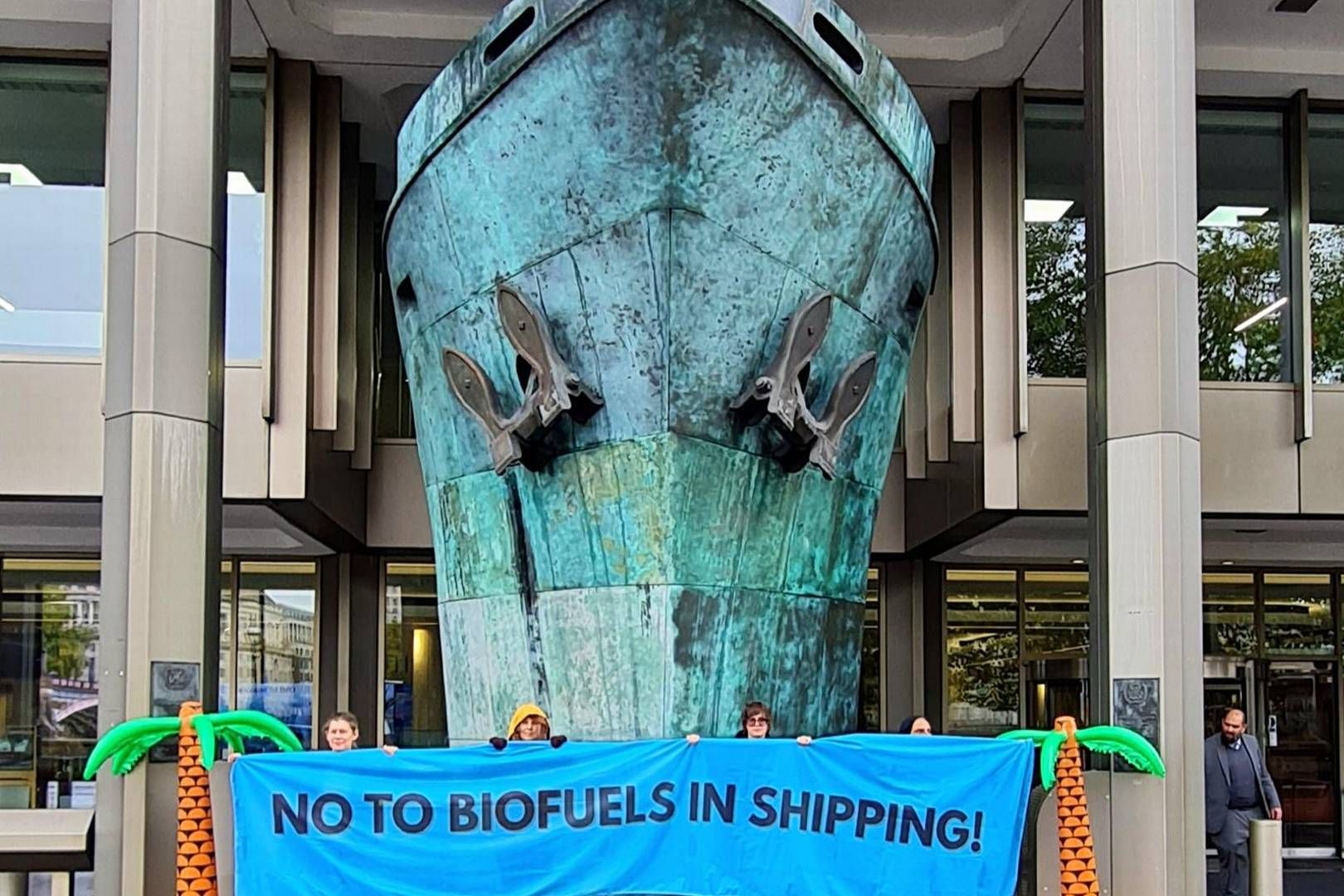
This week, the International Maritime Organization (IMO) continued discussing its Net-Zero Framework in London, even after agreeing to delay its adoption by a year just days before.
The Net-Zero Framework proposes the world's first global carbon pricing system for shipping, which is essentially a carbon tax. This initiative aims to help the shipping industry meet the 2023 Revised Strategy goals of reaching net zero emissions around 2050. It is anticipated that the revenue from this carbon pricing could amount to as much as $15 billion annually by 2030.
During the ISWG-GHG-20 meeting, countries discussed the framework's guidelines, which contrasted sharply with last week's chaotic negotiations that led to the adoption delay.
There was significant disagreement among countries about the role of biofuels in the transition for shipping. Brazil, Indonesia, and several African nations advocated for a "technology neutral" approach, which would include current biofuels such as those derived from soy and palm oil. Meanwhile, the EU and Pacific Island countries opposed this idea, raising concerns about sustainability and scalability. They supported the use of renewable e-fuels as a long-term solution.
Researchers, civil society organizations, and international advocates have warned against using food- and feed-based biofuels for environmental, climate, and human rights reasons. Mexico, the UK, and various Pacific Islands expressed interest in addressing these concerns through Life Cycle Assessment (LCA) guidelines that consider emissions from land-use changes. These guidelines are expected to be finalized by April 2026.
There was broad support among member states and the industry for including wind propulsion as a zero- or near-zero energy source, along with solar and shore power.
Additionally, discussions were held about the IMO Net-Zero Fund, which experts believe must be fair to ensure that vulnerable countries are not left behind in the transition.
However, the US, Saudi Arabia, and other oil-producing nations objected to continuing work on the guidelines, arguing that it was too early until the Net-Zero Framework is adopted. Some delegates noted that these countries had previously claimed that the framework could not be adopted due to a lack of necessary policy clarifications.
Dr. Alison Shaw, IMO Policy Manager at T&E, emphasized that the success of the framework will rely on strong guidelines that encourage green e-fuel production and prevent the use of unsustainable fuels like crop-based biofuels. She mentioned, "Many member states recognized the importance of both goals, although there remains uncertainty about the framework’s eventual adoption."
Next Steps
The IMO plans to hold more technical working group discussions from April 20-24, 2026, followed by the 84th session of the Marine Environment Protection Committee (MEPC 84) from April 27 to May 1.
MEPC 84 is expected to finalize decisions regarding clean energy under the Net-Zero Framework, including the important LCA guidelines for assessing the environmental impact of maritime fuels and ensuring vessels comply with the framework.
Not long after the IMO's delay, over 200 industry leaders met in Antwerp for the Global Maritime Forum Annual Summit. Many participants reported feeling "hopeful and energized" despite the recent setback. IMO Secretary-General Arsenio Dominguez urged leaders to see the delay as a pause in adoption, not in the ongoing work. He stated, "This extra year gives us the opportunity to engage with all stakeholders to address the issues raised, including clarifications around the framework."