
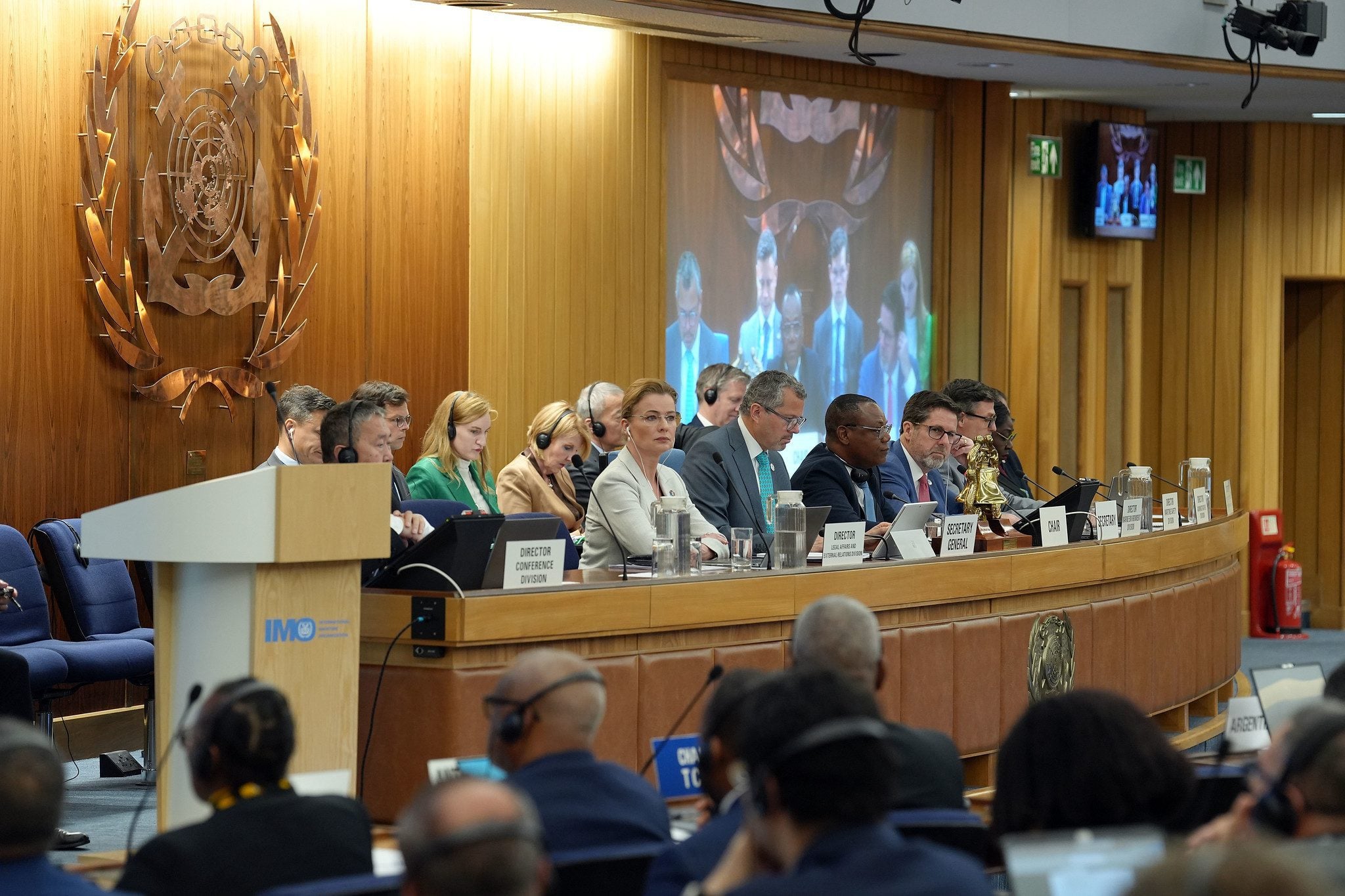
The U.S. is stepping up its efforts against the proposed global carbon pricing plan by the International Maritime Organization (IMO). This week, Federal Maritime Commission Chairman Laura DiBella encouraged member countries to look for alternatives to the stalled Net Zero Framework (NZF) during high-level discussions in London.
After attending the IMO’s Marine Environment Protection Committee (MEPC 84), DiBella mentioned that the U.S. delegation spoke with over 20 countries to try to resolve disagreements over the contentious plan, which has split the global shipping community.
The NZF, which has strong support from the European Union, aims to set standards for greenhouse gas emissions for ships and impose fees on those that do not comply, effectively creating a global carbon pricing system for maritime transport.
DiBella expressed concern that the current proposal could lead to significant economic consequences.
She noted that ships unable to meet the framework’s fuel requirements—projected to affect up to 97% of the global fleet—would incur charges that would ultimately be passed on to consumers.
“While proponents of the NZF may feel they have had productive talks with all parties involved, the reality is that a small group had previously overshadowed the majority who stayed quiet until this week at the MEPC, when they finally expressed their concerns,” DiBella stated, indicating a potential shift in the discussions.
The U.S. delegation is now actively promoting alternative strategies that could cut emissions without disrupting global shipping markets or increasing costs for economies dependent on imports.
This intervention marks a significant expansion of the FMC’s role in international maritime policy debates, which have usually been led by organizations like the U.S. Coast Guard and the State Department. It also reflects the Trump administration’s broader stance against what it sees as a costly and possibly anti-competitive regulatory system.
DiBella suggested that the FMC might take a more proactive role if the framework progresses as it is, citing the Commission’s authority to monitor and address “unfavorable shipping conditions” that affect U.S. trade.
“The U.S. will explore all possible options to safeguard American consumers from a controversial and unnecessary global carbon tax,” she added.
The debate over the NZF continues to be the primary focus at MEPC 84, following a heated confrontation last year that stalled the adoption of the framework after a close vote revealed significant geopolitical rifts.
Supporters of the plan—including key shipping nations and industry groups—argue that a global mechanism is crucial to avoid a fragmented approach with varying regional regulations and to speed up the transition to low- and zero-emission fuels.
However, the U.S. and a growing number of countries are opposing it, depicting the proposal as a costly measure that could disrupt trade and unfairly burden consumers.
As no final vote is expected until a future extraordinary MEPC session, this week’s discussions indicate that positions are becoming more entrenched, and any compromise will likely depend on finding common ground between environmental goals and economic stability.