
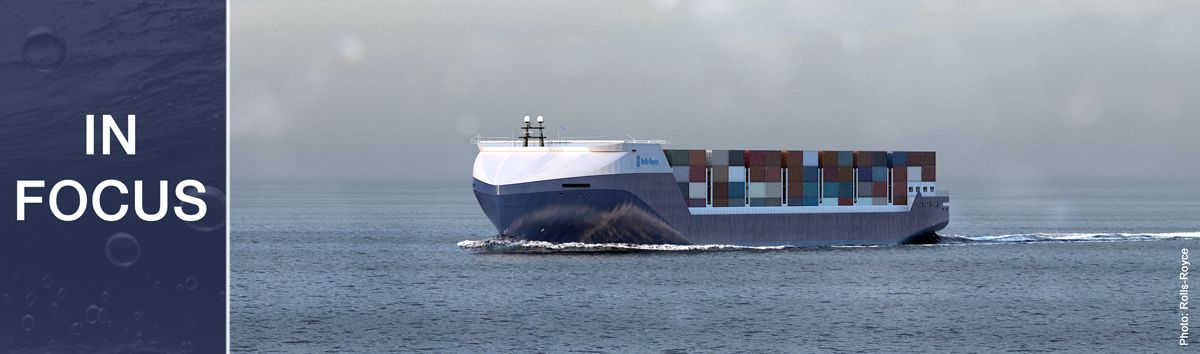
The maritime industry has been discussing for years whether autonomous ships are a true advancement or just a well-funded experiment. While this debate is ongoing, a significant step has been taken in the discussion.
The International Maritime Organization (IMO) has approved the first global regulations for Maritime Autonomous Surface Ships, known as the MASS Code, during the 111th session of the Maritime Safety Committee in London on May 22, 2026, as reported by Paul Morgan of gCaptain.
However, this adoption does not mean that unmanned vessels will soon be sailing the oceans under artificial intelligence control. Instead, it marks a crucial point where the world's maritime regulator acknowledges that autonomous and remotely operated ships need specific international regulations. They cannot continue to operate under temporary approvals and individual state rules.
The MASS Code will be implemented as a non-mandatory guideline starting July 1, 2026. This begins what the IMO calls an "Experience Building Phase," with more details to be developed at MSC 112 in December 2026. A mandatory version of the Code is expected to be adopted by July 1, 2030, and will officially take effect through amendments to SOLAS by January 1, 2032.
For an industry that usually sees regulatory changes take decades, this timeline is relatively quick and should be taken seriously.
It is also essential to clarify that the MASS Code currently applies only to cargo ships. The application for passenger vessels has been postponed, with the IMO planning to assess this extension as more experience is gained during the voluntary phase. This is a sensible approach.
The safety and liability issues concerning autonomous passenger operations are much more complex than those for cargo ships. Therefore, expecting the Code to cover both categories at this moment would have been unreasonable.
The MASS Code outlines four levels of autonomy, a framework refined over several years. At Degree One, crew members remain onboard but are supported by automated systems. Degree Two involves remote operation, but some crew are still present. Degree Three means the vessel is controlled remotely without any crew onboard. Finally, Degree Four is full autonomy, where the ship's systems make decisions without human input.
This Code addressing all four degrees is significant because it reflects a variety of operational scenarios that are already appearing in the commercial sector, rather than just focusing on a single ideal of autonomous shipping.
The decision to use a goal-based structure rather than a detailed rulebook shows a careful consideration of how fast technology is changing. Technologies like artificial intelligence, remote sensing, and advanced vessel management software are advancing quicker than traditional regulations can keep up. A rigid code created today might become outdated before it even becomes mandatory. By focusing on safety outcomes rather than specific technical solutions, the IMO has established a flexible framework that can adapt to future developments while ensuring consistent safety, security, and environmental standards.
One of the most crucial principles in the Code is that autonomous or remotely operated vessels must meet the same safety, security, and environmental criteria as conventional ships. It does not create a lower standard for vessels with fewer or no crew members onboard. The goal is to ensure that reducing or eliminating crew does not compromise operational safety.
Accountability is another major concern regarding autonomous shipping. In case of an accident, who is responsible if there is no crew on board? The MASS Code addresses this by maintaining the idea of a designated master, either onboard or from a Remote Operations Centre on land, who must have the ability to intervene if necessary.
This requirement for intervention capability is a strict condition. A Remote Operations Centre must be certified by the flag administration of the ship it oversees, introducing a formal accountability structure for shore-based operations at an international level for the first time.
The Code covers many topics, including system design, software principles, navigation, fire protection, cargo handling, and security. Its structure is similar to traditional maritime safety regulations. This design ensures that inspectors and surveyors can recognize familiar standards rather than facing an entirely new regulatory system.
The adoption of the Code brings a level of regulatory certainty to the sector that has been lacking. This certainty is crucial for investors and technology developers, as shipping operates on long timelines. Ships ordered in 2026 may be in service until the 2050s, making regulatory expectations in the 2030s and 2040s highly relevant. The MASS Code provides the first internationally recognized framework to address these concerns.
Shipyards and design companies now have a standard to assess automation readiness and remote operation capabilities. Classification societies face the challenge of developing methods to evaluate software reliability and AI systems, which are quite different from traditional certification processes. Insurers must also adapt their risk frameworks that have been based on human behavior. Port authorities will need to consider implications for infrastructure when vessels operate under remote supervision.
The training and certification aspect is particularly noteworthy. While traditional officer career paths won't disappear, their focus will shift. The MASS Code envisions a future where maritime officers manage autonomous systems regularly, with Remote Operations Centres becoming accepted workplaces. Developing the necessary competency frameworks and certification routes will be essential during the experience-building phase, which won't be straightforward.
The next six years will be crucial. The Experience Building Phase aims to gather real-world data and feedback to enhance the mandatory Code. It will undoubtedly highlight areas needing improvement and reveal challenges as vessels operate under this new framework.
The phased approach taken by the IMO reflects the recognition that the field of autonomous shipping is still evolving and not ready for a final, mandatory code just yet. This voluntary period is not a delay but a structured learning process for regulators.
Overall, the adoption of the MASS Code does not instantly change global shipping practice. Crewed vessels will still dominate for the foreseeable future, and seafarers will not be replaced on a large scale.
However, now autonomous commercial ships have a recognized legal status within international regulations. They are no longer just a technology project looking for a framework; they represent a defined operational category with established standards, accountability, and a clear pathway toward mandatory regulation.
This is a significant administrative advancement. It marks the point where years of engineering goals, commercial investments, and regulatory discussions culminate in an outcome that will influence ship design, operation, ownership, and insurance throughout the century.