
By Samia Nakhoul
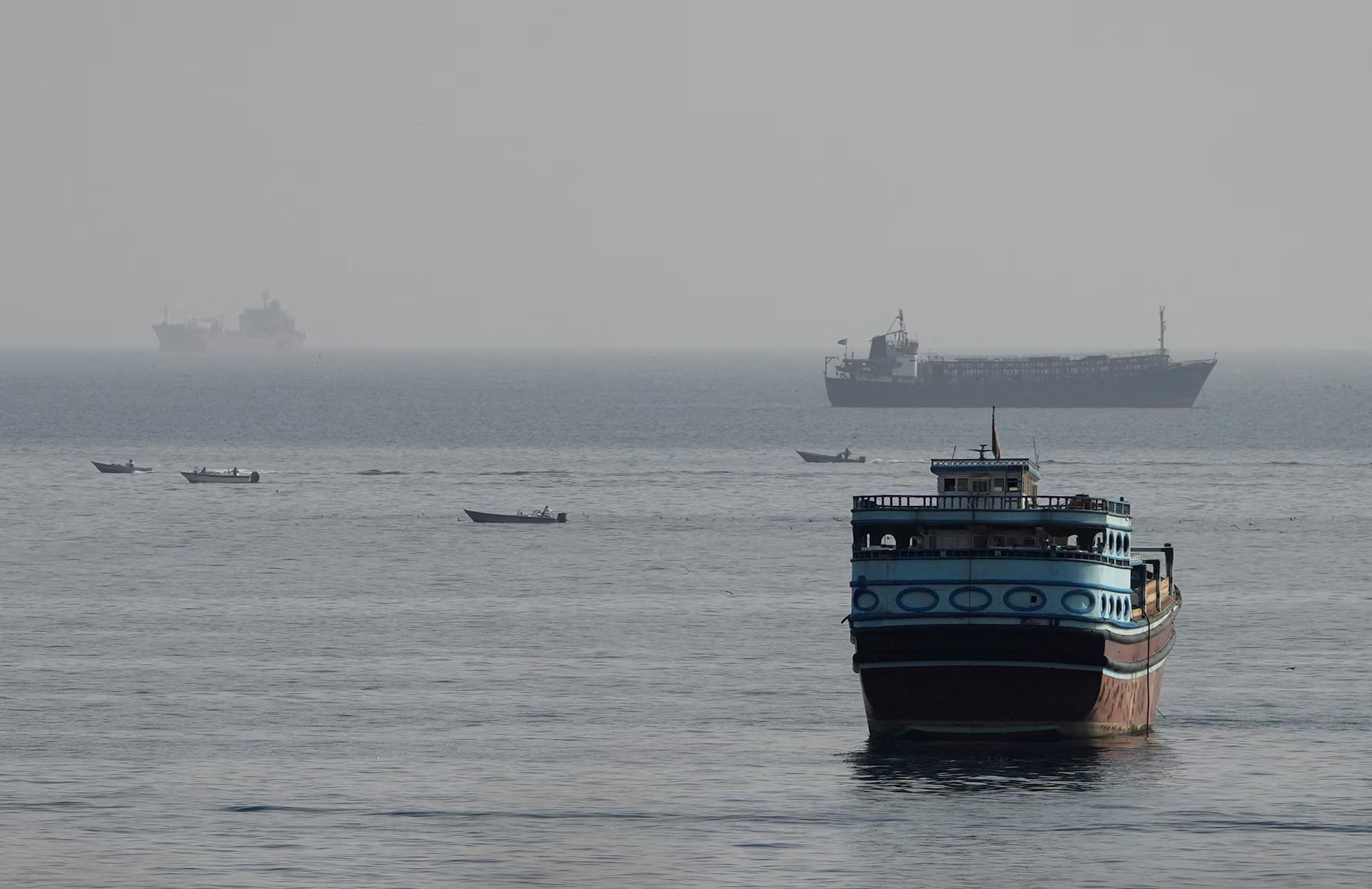
BEIRUT, Aug 3 (Reuters) – Iran believes it can outlast Washington by turning key trade routes, shipping lanes, and energy networks in the Middle East into pressure points that slowly increase the costs of confrontation, according to officials and analysts from the Gulf region.
Instead of aiming for a decisive military win, Tehran is using a strategy of measured escalation to expand the conflict without triggering an all-out war.
The objective, they say, is to convince the U.S. and its allies that it's more expensive to contain the crisis than to meet Iran's demands regarding the Strait of Hormuz.
Tehran's message is clear: unless Washington agrees to a new status quo that allows Iran a bigger role in Hormuz, the conflict could extend beyond the Gulf region.
By putting various maritime chokepoints and energy assets at risk, Iran believes it can improve its position in future negotiations.
“Iran has always sought to escalate more than the United States by continuously introducing new escalation options — whether it's a new location, weapon type, or target every week,” Michael Knights from the Washington Institute told Reuters.
“Their major advantage is not about hurting America or Israel; it lies in their ability to threaten regional states and the global economy,” he added.
EXPANDING THREATS BEYOND HORMUZ
Having shown its capability to disrupt maritime traffic through Hormuz — a vital route for about 20% of global oil consumption before the conflict — Tehran has indicated that no maritime chokepoint is safe.
Threats to the Red Sea and Saudi energy facilities imply a broader strategy to increase the costs of protecting global trade while evaluating Washington's tolerance for disruption.
Iran's tactic reflects what one Gulf source described as the Revolutionary Guards' belief that “they can gain more.”
They perceive a chance in President Donald Trump's hesitance to get deeply involved in another Middle Eastern conflict before the November midterm elections.
“The Iranians think that by broadening the conflict and raising the pressure, he will eventually concede,” the Gulf source noted. “Trump thinks he can hit Iran hard enough to bring them to the table, but they won't yield.”
ESCALATE TO FORCE CONCESSIONS
This approach is at the heart of Tehran's negotiation strategy.
Trump said discussions with Iran might happen on Monday after earlier suggesting he had postponed a possible attack to negotiate the reopening of the Strait of Hormuz. However, Tehran responded that it wasn't currently holding talks with the U.S.
An Iranian official indicated that Tehran’s leadership has realized that being flexible only led to more pressure from Washington, reinforcing the belief that leverage needs to be established before meaningful talks can begin.
In Tehran's view, the source said, Trump interprets concessions as signs of weakness and reacts mainly to pressure.
Michael Singh, a senior fellow at the Washington Institute, stated that Tehran feels it still holds the initiative, partly because the Trump administration seems uncertain about how far it is willing to go militarily.
“The Iranians are looking to capitalize on this advantage,” he added. “They aim to establish control over the strait and exercise selective authority over the waterway.”
Alan Eyre, a former U.S. diplomat and Iran expert, mentioned that Tehran is following a deterrence strategy to make Washington lift its blockade and stop military actions. “They don’t want the U.S. to dictate how events unfold,” he said.
Central to the disagreement is the future governance of Hormuz. Oman has offered Iran a Gulf-backed proposal for managing the waterway, including voluntary user fees, according to sources in the region.
However, Tehran is seeking administrative control over the strait and wants to charge service fees for vessels. Washington has rejected any fees, insisting that Hormuz must remain an international waterway free from Iranian domination.
THE ENDURANCE GAMBIT
Iran's campaign has resulted in an outcome that aligns with its strategy. As threats extend beyond Hormuz, both regional and Western powers are increasingly focused on safeguarding trade routes and energy infrastructure rather than putting more pressure on Iran.
The formation of a Saudi-led maritime coalition exemplifies this shift. Gulf sources describe it as a defensive setup aimed at escorting commercial vessels, sharing intelligence, and protecting sea lanes rather than confronting Iran directly.
Knights likens this effort to Europe’s Aspides mission in the Red Sea, which was established to safeguard merchant traffic instead of changing military dynamics.
For Tehran, this development signifies a form of success. While unable to match U.S. military strength directly, Iran can impose costs by pushing governments and navies into a defensive stance.
Each new threat, whether in Hormuz, Bab al-Mandeb — linking the Red Sea to the Gulf of Aden — or other regions, raises the resources needed to maintain global trade flows.
At its core, this competition is about endurance. Iranian leaders seem to believe they can endure the economic pressure longer than a U.S.-led coalition can endure ongoing disruptions to global trade and energy markets.
This strategy also has diplomatic aims. By showing it can widen the crisis when necessary, Tehran hopes to influence the terms of any future negotiations.
“If negotiations happen, they will dictate the terms,” said Ray Takeyh from the Council on Foreign Relations and a former advisor on Iran at the U.S. State Department. “Both sides are escalating as a form of response.”
Yet, neither side seems ready to back down. As Washington and Tehran continue to test each other's determination, the risk remains that a strategy meant to maximize leverage could spiral into a conflict neither side can fully control.