
The maritime security situation in the Middle East worsened sharply on Saturday after confirmed military strikes by the United States and Israel on Iran. The Houthi movement from Yemen has indicated that it plans to resume attacks on commercial ships in and around the Red Sea after a months-long pause.
According to two senior Houthi officials who spoke anonymously to international media due to the lack of a formal announcement, the group has decided to restart missile and drone attacks on maritime traffic in response to the US-Israeli military actions against Iran. They suggested that these renewed attacks could start soon and would target shipping routes previously hit during the group’s 2024-2025 campaign in the Red Sea and Gulf of Aden.
The Houthis had effectively halted large-scale attacks on ships since mid-November 2025, following a regional de-escalation related to a ceasefire in Gaza. From around November 11, 2025, to late February 2026, there were no sustained attacks by the group on merchant vessels. Therefore, the recent statements mark the end of about three and a half months of relative calm in one of the world’s most vital trade routes.
Industry groups responded quickly. The Baltic and International Maritime Council (BIMCO), the largest international shipping association, warned that vessels connected to US or Israeli interests may face a heightened risk if Houthi attacks resume. BIMCO representatives noted that previous Houthi targeting patterns have included ships perceived to have ties to Israel or the United States, not just based on their flags.
BIMCO also cautioned that the risk extends beyond just those ships with direct links. In past attack cycles, ships without obvious ties to Israel or the US have been targeted, either intentionally or by mistake. The organization stressed that merchant vessels operating in the Red Sea and surrounding waters could be at risk even if they consider themselves neutral.
BIMCO advised vessels already in the area to consider delaying their voyages, seeking shelter in territorial waters if permissible, or rerouting entirely, depending on charter conditions, insurance requirements, and coastal regulations. Some operators are reportedly assessing whether to remain positioned in safer coastal zones of Gulf states or reroute around the Cape of Good Hope if the threat level increases. Such decisions require guidance from flag state authorities, approvals from underwriters, and permissions from coastal states.
Insurance issues are expected to follow quickly. BIMCO stated that war risk premiums would likely rise sharply if attacks resume. In previous Houthi campaigns, additional war risk premiums for Red Sea routes increased significantly, sometimes adding hundreds of thousands of dollars to individual voyages. Underwriters usually reassess premiums immediately after confirmed incidents where missiles or drones successfully hit merchant vessels.
This security alert comes alongside other regional maritime warnings. The UK Maritime Trade Operations (UKMTO) issued an advisory on Saturday regarding significant military activity in the Persian Gulf, Gulf of Oman, and Strait of Hormuz following the US-Israeli strikes on Iran. This advisory warned of increased risks to commercial shipping, including possible electronic interference affecting navigation and communication systems.
Reports also indicate that US naval authorities have alerted mariners to a maritime warning zone covering parts of the Gulf region. Commercial ships have been advised to navigate with increased caution and to steer clear of areas with heavy military activity when possible. Such warnings aim to prevent accidental targeting or misidentification during active military operations.
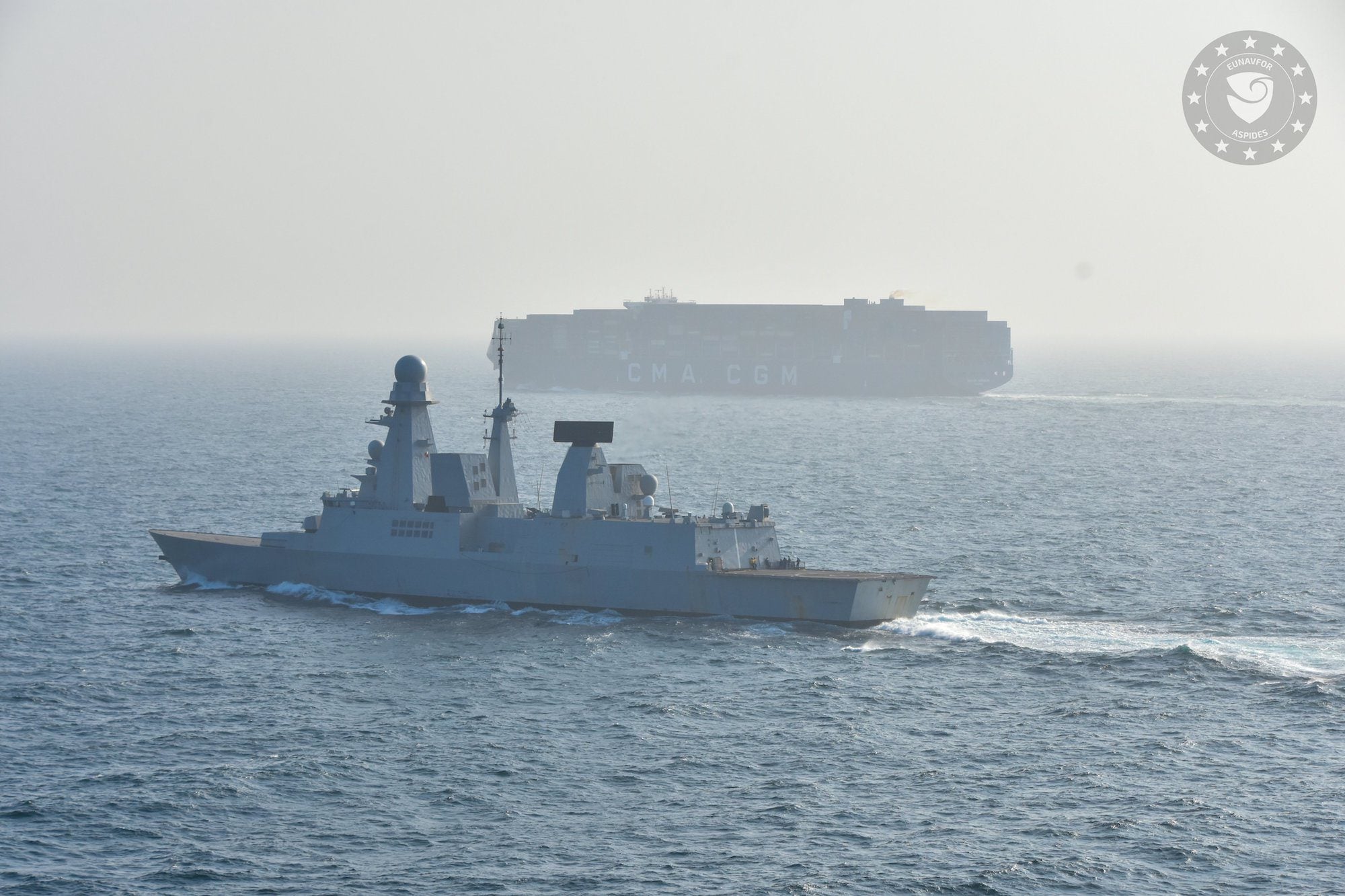
The EU’s Red Sea naval operation has also warned of increased risks to ships in the area. "EUNAFOR ASPIDES assets in the area remain on high alert and are ready to assist in protecting lives at sea, ensuring freedom of navigation, and enhancing #MaritimeSecurity through one of the most vital sea trade corridors," the operation stated.
The Red Sea and Bab el-Mandeb Strait are critical for global trade, connecting Europe and the Mediterranean with Asia via the Suez Canal. Under normal conditions, about 10-15% of global seaborne trade passes through this corridor. During the last Houthi campaign, many major shipping lines altered their routes around southern Africa, which added about 10-14 days to voyages and significantly increased fuel costs and emissions.
The Houthis have previously shown the capability to hit vessels with anti-ship ballistic missiles, cruise missiles, and long-range drones. Several merchant ships were damaged during earlier attacks, and some seafarers were killed as confirmed by maritime authorities and shipping companies. Coalition naval forces have responded with escort operations and strikes against Houthi launch sites in Yemen.
As of Saturday evening, there were no confirmed new attacks related to the latest Houthi statements. However, naval and commercial operators in the region have raised their threat levels and activated contingency plans.
The immediate future depends on whether the Houthis move from making threats to carrying out sustained attacks. If attacks resume, shipowners will have to reconsider routes, charter agreements, war risk coverage, and crew safety. The freight markets are likely to respond quickly if confirmed attacks occur.
For now, the situation remains dynamic but is based on verified developments, with confirmed US-Israeli military action against Iran, credible indications from the Houthis about renewed attacks, formal advisories from UKMTO, and industry warnings from BIMCO regarding targeting patterns and rising insurance costs. This combination places the Red Sea and Gulf region back into a high-risk maritime zone, with implications that extend far beyond local waters.