
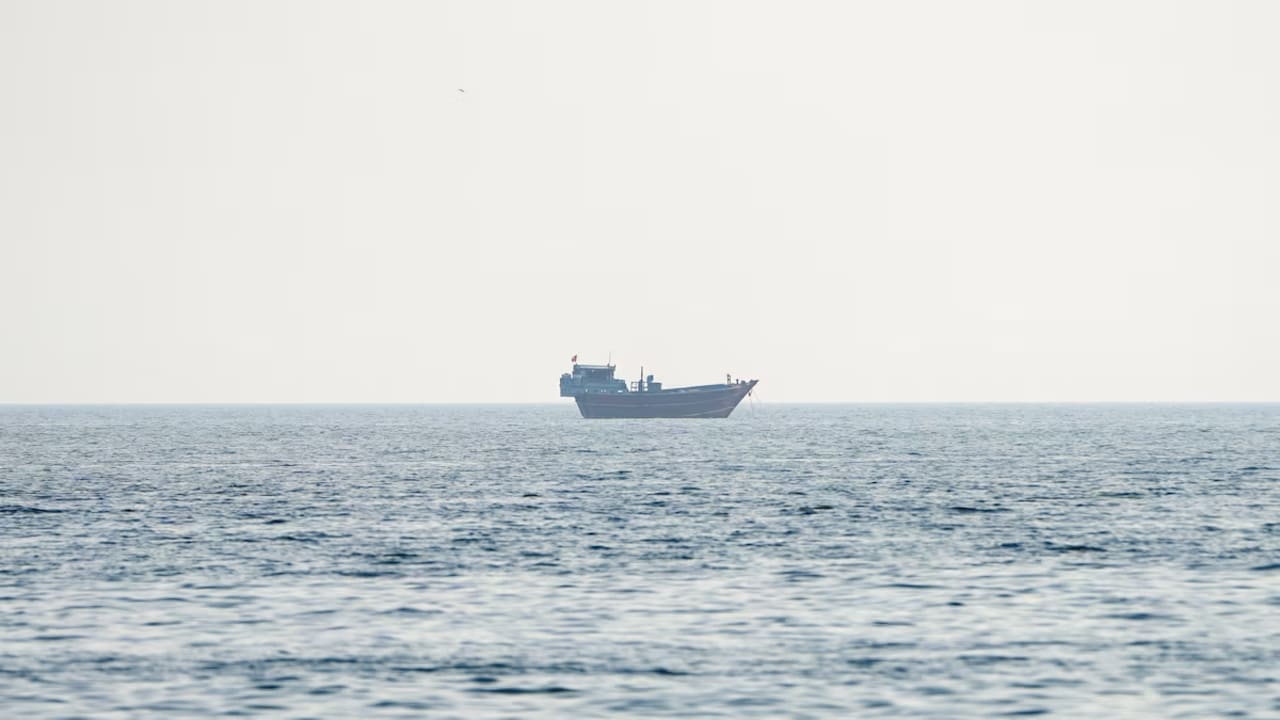
SINGAPORE, July 24 (Reuters) – The number of tankers passing through the Strait of Hormuz dropped to just one on Thursday, marking the lowest level since May 7. This decrease comes amid ongoing shipping concerns in the Middle East and as oil prices spiked back to $100 a barrel.
On July 23, only one tanker crossed the Strait, down from three the day before, according to analytics firm Kpler.
The very large crude carrier New Giant, which is carrying 2 million barrels of Iraqi Basrah crude, left the Strait on Thursday and is expected to reach Rizhao port in China by mid-August.
No vessels entered the Strait of Hormuz on July 23.
Late on Thursday, the U.S. military announced that it had completed its 13th consecutive night of airstrikes in Iran.
In the Bab el-Mandeb strait, commodity tanker crossings totaled 32 on July 23, an increase from 26 the day before.
Of these crossings, 14 tankers were heading into the Red Sea, while 18 were leaving the Strait towards the Gulf of Aden.
Out of the 18 tankers exiting Bab el-Mandeb, nine were transporting crude oil, including two Chinese supertankers headed for China.
In a separate occurrence, the clean tanker Torm Innovation – carrying around 500,000 barrels of naphtha destined for Asia – took a slight detour towards the Suez Canal instead of the usual route through Bab el-Mandeb, according to shiptracking data from Kpler and LSEG.
Changing routes through the Suez Canal to reach Asia, rather than passing through Bab el-Mandeb, could nearly triple the duration of the journey, according to regional trade sources.
To adapt to the situation, Saudi Aramco has begun offering additional crude shipments loading at Egypt's Mediterranean port of Sidi Kerir, as an alternative to using its Red Sea ports.