
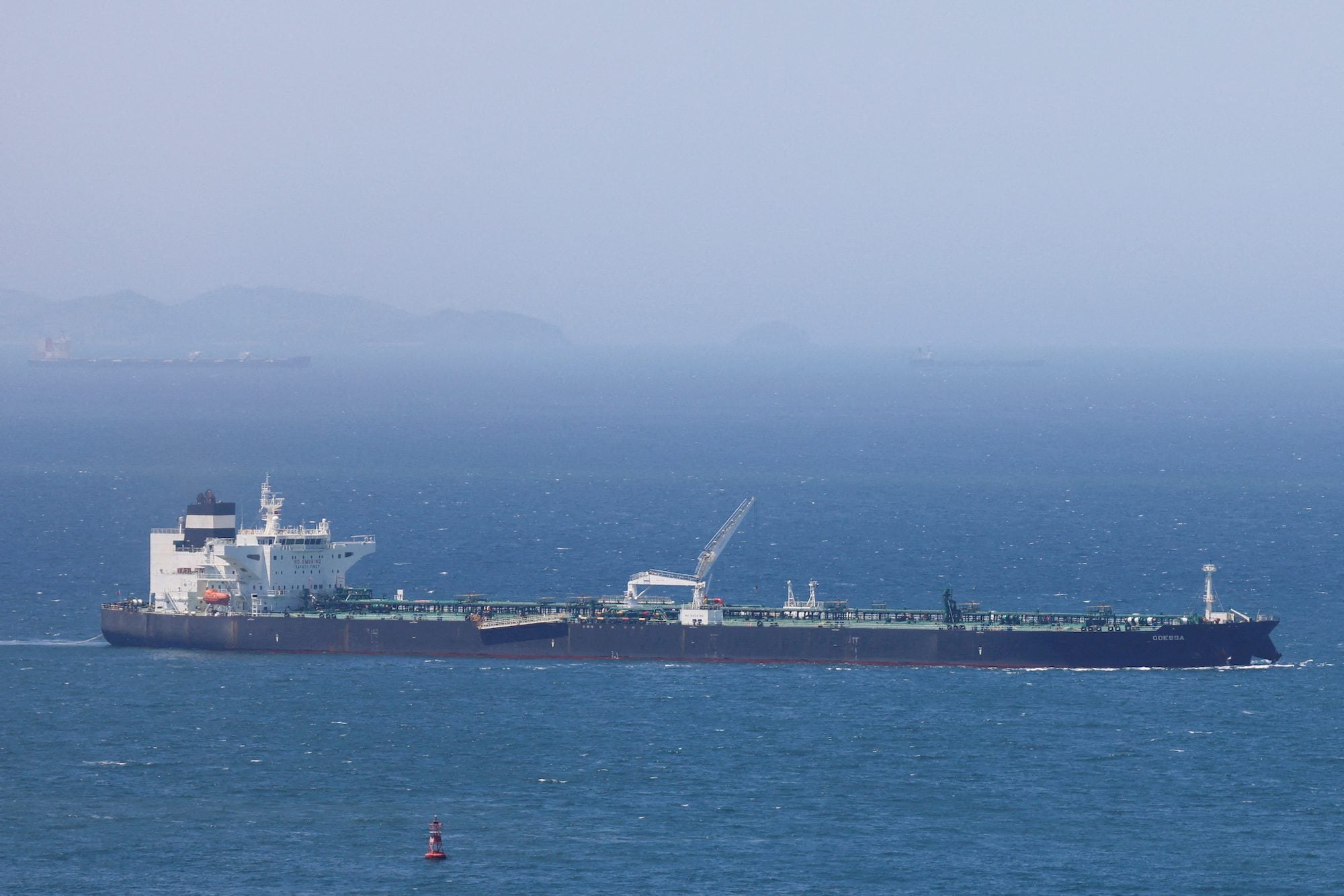
The Strait of Hormuz is facing renewed challenges to trade confidence. Just a month after an agreement was reached between Washington and Tehran to stop tanker attacks, the situation has deteriorated once again. Both parties are now back to conducting strikes, making this crucial oil passage risky for many shipping companies.
The impact of this escalating situation can be seen in the rising war risk hull premiums, which were only a small fraction of one percent before the crisis started in February. Now, these premiums have surged to between three and ten percent of a ship's insured value. For a tanker worth $100 million, this means a premium change from about $250,000 to as much as $10 million for just one voyage.
Neil Roberts, who oversees marine and aviation at the Lloyd's Market Association, notes that the market has experienced significant fluctuations alongside oil prices and attack rates. After the memorandum of understanding (MoU) was signed in June, rates dipped briefly, but they quickly rose again following renewed attacks on commercial ships.
The situation has been deteriorating since spring. After a temporary ceasefire on April 8, each period of calm has been interrupted by new strikes. This cycle has repeated itself multiple times: Iranian attacks on ships, U.S. retaliation against Iranian military targets, and subsequent Iranian strikes on U.S. facilities in the Gulf.
In the latest round, the Iranian Revolutionary Guard Corps targeted U.S. assets across the Middle East in response to American airstrikes on Iranian cities, as reported by Iranian state media. This led to a brief spike in oil prices above $90 a barrel, which later fell as Iran indicated that mediators had proposed new terms.
The market has learned to expect price spikes with each escalation, followed by minor drops when any diplomatic efforts seem to have traction. However, both trends highlight a persistent issue: no one in shipping or insurance believes that this ceasefire, or any future one, will be stable. Commercial shipping has had to bear the financial burden, as evidenced by three attacks on vessels in the Strait in early July, shortly after the U.S. and Iran agreed to stop attacks. Iran claimed these vessels were crossing without permission, which it uses to assert control over the waterway.
As a result, transit numbers have plummeted. There was a day when only six ships crossed the Strait, marking the lowest count in five weeks. Many ships are now stuck at anchor, unable or unwilling to proceed.
The implications are both financial and human. The International Maritime Organization has documented deaths and injuries among seafarers through July, including those aboard vessels targeted while passing through the Strait. Roughly 6,000 seafarers now find themselves trapped in the region.
The insurance industry has pushed back against claims that reduced traffic is due to a lack of available coverage. The Lloyd's Market Association has clarified that war risk insurance is still accessible in London, with owners opting not to transit primarily due to safety concerns rather than costs. While the price of hull, cargo, and fixed-premium charterers' coverage has increased, liability coverage through P&I Clubs remains unaffected.
In response, governments have stepped in to fill the gaps. The U.S. International Development Finance Corporation has been authorized to provide political risk insurance, working with commercial insurers to create a reinsurance facility that offers up to $40 billion in coverage for hull, cargo, and liability risks. Chubb is the lead partner in this facility, providing various war-related covers, though specific conditions have yet to be fully revealed.
Major industry organizations have issued strong warnings. BIMCO, the International Chamber of Shipping, INTERCARGO, and others have released a 22-page advisory indicating that even if the Strait is technically open, it may still be unsafe. They highlight threats such as kinetic warfare, electronic attacks, mines, drones, GPS spoofing, and heavy traffic congestion.
On the contractual front, shipowners are relying on standard war risk provisions in most charter agreements. BIMCO's CONWARTIME and VOYWAR clauses permit owners to reject orders to sail if they believe the vessel, cargo, or crew are at risk of war.
Sanctions also complicate matters. Since the IRGC is sanctioned in the UK and EU, BIMCO's sanctions clauses prevent charterers from issuing orders that could involve a sanctioned entity or activity, including compliance with Iranian demands regarding Strait passage. Legal advisors are guiding owners to follow the U.S. Treasury's guidance on this risk.
The International Maritime Organization does not have the authority to close the Strait or guarantee its safety, a fact reflected in its statements. Secretary-General Arsenio Dominguez has condemned attacks on commercial shipping and urged governments, shipowners, and operators to avoid putting seafarers in harm's way when their safety cannot be guaranteed. The organization has also supported calls for de-escalation from the United Nations, warning that disruptions in the Strait could have far-reaching economic and humanitarian impacts. In June, the IMO evacuated around 11,000 seafarers after the MoU was signed but suspended those operations on June 25 when attacks resumed.
For shipowners and charterers, the situation remains unchanged but has become more urgent. War risk coverage is available but costly, with prices rising with each incident. While government-backed reinsurance options are helping to ease some capacity issues, they have not restored rates to normal levels.
Industry leaders are advising companies to treat the Strait as unsafe, despite its formal legal status. The IMO, while vocal against attacks, lacks the authority to enforce safety measures.
Until Washington and Tehran reach a lasting agreement, rather than just another temporary pause, the combination of high insurance premiums, cautious shipowners, and stranded crews is likely to characterize shipping in the Gulf for the foreseeable future.