
Shipyards often reveal the true state of affairs. Steel doesn't care about stories, and submarines are unaffected by buzzwords. It's easy to tell if a place is thriving or just getting by, if it's moving forward or managing decline. At Huntington Ingalls Industries in Newport News, inside the submarine construction building, there was no doubt. This wasn't a museum showcasing American naval power; it was a busy factory filled with purpose.
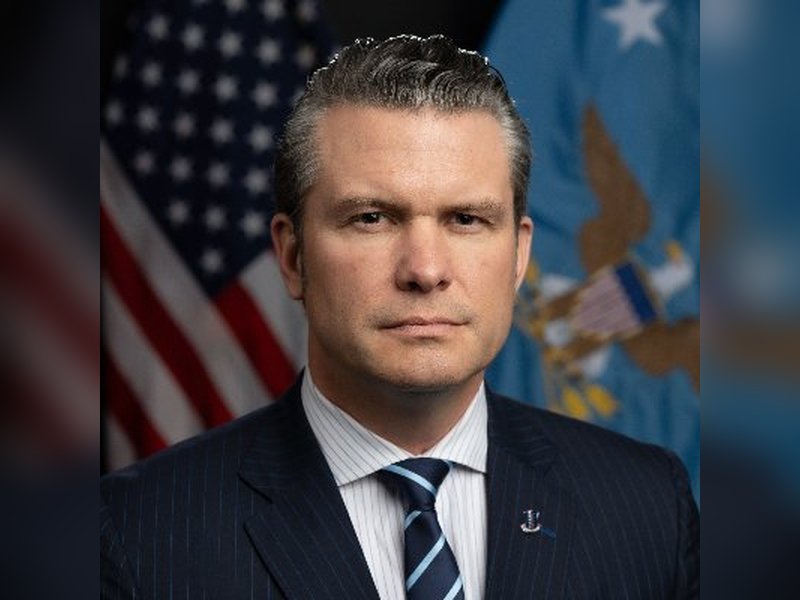
In the background stood the USS Oklahoma, a Virginia-class submarine designed to create challenges for adversaries who will never see or hear it, and may not realize their mistakes until it's too late. Along with a large American flag above it, this was the setting chosen by Pete Hegseth for the first event of the Trump administration's Arsenal of Freedom Tour; the location was significant. It conveyed a strong message.
Just days after the successful operation to capture Nicolás Maduro, which drew global attention to American military strength, Hegseth found himself under a spotlight filled with both praise and criticism. He could have used this moment to debate policies or celebrate victory. Instead, he chose to focus on shipbuilding and the American industrial base, inviting gCaptain to share his remarks with the world.
Hegseth aimed to address the skilled workers who turn national strategy into tangible outcomes. Welders, electricians, pipefitters, engineers, planners, apprentices, and master shipbuilders listened as a cabinet member reminded them that they are a vital part of American power, not an afterthought. They are the backbone of the arsenal.
This message is important because, for many years, American leadership has viewed shipbuilding as something to be optimized, managed, or outsourced, rather than as a crucial foundation for sovereignty and deterrence. Hegseth directly rejected this mindset. He argued that a nation unable to build its own tools is in decline. Standing beside a submarine representing one of humanity's greatest industrial achievements, it was hard to disagree.
The speech was long and straightforward. Hegseth used the term "Department of War" instead of "Department of Defense" not to provoke, but to emphasize a point. He stated that peace is not maintained by euphemisms but by credibility, capability, and the readiness to act decisively when deterrence fails. He laid out the administration's intentions clearly: prioritize America's interests, revive a warrior mindset, rebuild military strength quickly and seriously, and reestablish deterrence to the level where no rational adversary would dare challenge it.
“Under the previous administration, when our ships were attacked, we just said, ‘I guess we have to handle it,’” he told a diverse audience that included shipyard workers, Navy personnel, Pentagon leaders, and the media. “All the way back to Thomas Jefferson, we claimed, ‘You're not targeting our ships—and if you do, you may face serious consequences.’ We proved that with the Houthis, and now American ships are sailing freely again. That’s peace through strength.”
What made his speech impactful was not just the words but the connection to action. Hegseth referred to bombing missions that reopened shipping routes, the capture of unmarked oil tankers, and successful operations against drug smuggling ships. He also highlighted long-range strikes that keep adversaries uncertain. Regardless of one's agreement with his examples, the message was clear: this administration believes that any uncertainty about American resolve is dangerous, and aims to eliminate it.
The focus on the future of sea power became even clearer when Hegseth discussed the recently announced Golden Fleet, a commitment to restoring American maritime dominance. Submarines like the USS Oklahoma will play a key role, but they won’t be alone. New surface warships, including the Trump class of battleships, will ensure strong command of the seas. The combination of firepower and presence, lethality and endurance will be developed together instead of chosen at the expense of one another.
For an audience aware of how competitors have expanded their shipyard capabilities while the U.S. shipbuilding industry has struggled, this message resonated strongly. While the U.S. decommissioned ships, others were launching new ones. As American shipyards faced unpredictable funding and bureaucratic hurdles, competitors were investing, training workers, and initiating new projects. Hegseth's argument is that this phase of decline is over, not due to a report from a think tank, but because of a decision to rebuild on a large scale, directly appealing to shipbuilders where it matters most.