
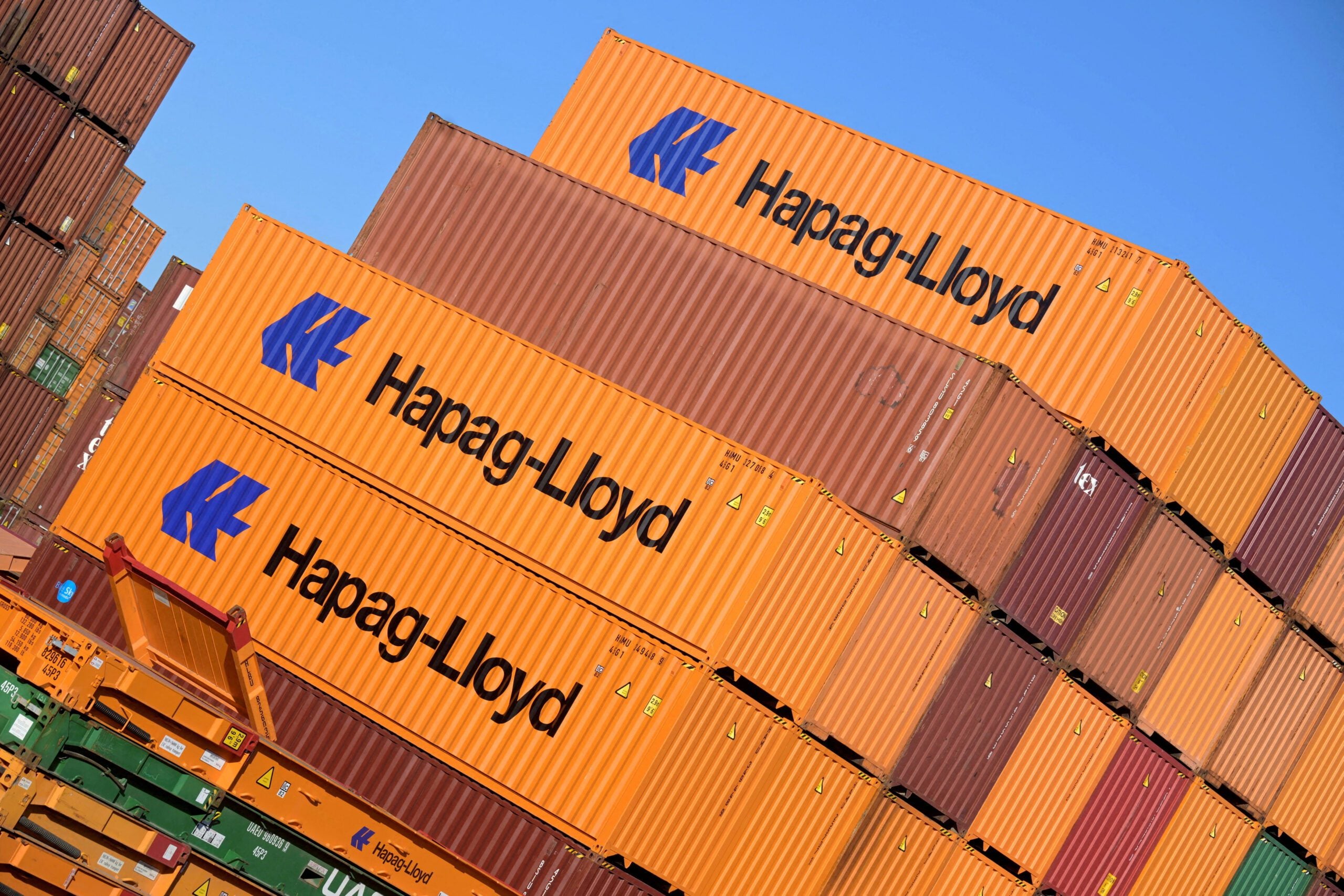
FRANKFURT, Feb 16 (Reuters) – The container shipping company Hapag-Lloyd announced on Monday that it will acquire Israeli competitor ZIM Integrated Shipping Services for $4.2 billion. This merger will strengthen Hapag-Lloyd's status as one of the largest ocean shipping companies in the world.
According to Hapag-Lloyd, the merger will position it as the fifth-largest shipping line globally, boasting a modern fleet of more than 400 vessels. This announcement came a day after Hapag-Lloyd revealed it was in advanced discussions to buy ZIM.
Following the news, shares of ZIM, listed in Frankfurt, jumped by 28.8%, while Hapag-Lloyd’s shares fell by 8%.
Hapag-Lloyd stated that the acquisition will be funded through its cash reserves, along with external financing of up to $2.5 billion.
In response to the takeover news, employees at ZIM’s headquarters in Haifa went on strike on Sunday, as reported by the Times of Israel.
ZIM's management is in discussions with the workers' union to prevent any “negative impact” on operations and has acknowledged the workers' concerns, according to the same report.
JP Morgan Analysts Predict HAPAG-LLOYD’S MARKET SHARE WILL RISE TO NEAR 9%
JP Morgan analysts believe this acquisition will enable Hapag-Lloyd to increase its global market share from 7% to nearly 9% without needing significant investment in a lengthy process.
Hapag-Lloyd also mentioned that discussions were progressing well for FIMI to manage certain obligations under Israeli regulations. The Israeli government holds a "golden share" in ZIM, allowing it control over specific aspects of the business, as noted by Globes.
ZIM, which was valued at approximately $2.7 billion as of last Friday, had been exploring strategic options for several months after receiving a non-binding takeover offer in November.
JP Morgan analysts commented, “This can be seen as a way to quickly gain additional capacity (instead of investing in fleet expansion) as delivery slots at shipyards are not easily available in the near term.”
ZIM operates in over 90 countries and serves around 300 ports worldwide, as stated on its website.