
By Mike Stone
WASHINGTON, Aug 14 (Reuters) - Stocks for South Korea's Hanwha Group and Italy's Fincantieri increased on Friday following President Donald Trump's new policy that allows overseas shipyards to participate in U.S. Navy shipbuilding.
Both companies have significant shipyard operations in the U.S. Hanwha Ocean Co's shares rose by 5.6%, while Fincantieri SpA saw a 3.2% gain.
On Thursday, Trump signed a national security memo stating that foreign shipbuilders that invest heavily in U.S. shipyards and train American workers will temporarily be allowed to build up to two ships in their home shipyards for quick delivery.
The memo also permits foreign builders to construct three types of vessels overseas: surface combatants, cargo replenishment tankers, and roll-on/roll-off ships.
Bryan Clark, a senior fellow at the Hudson Institute, noted that Hanwha is well-positioned due to South Korea's significant financial investments in U.S. shipbuilding.
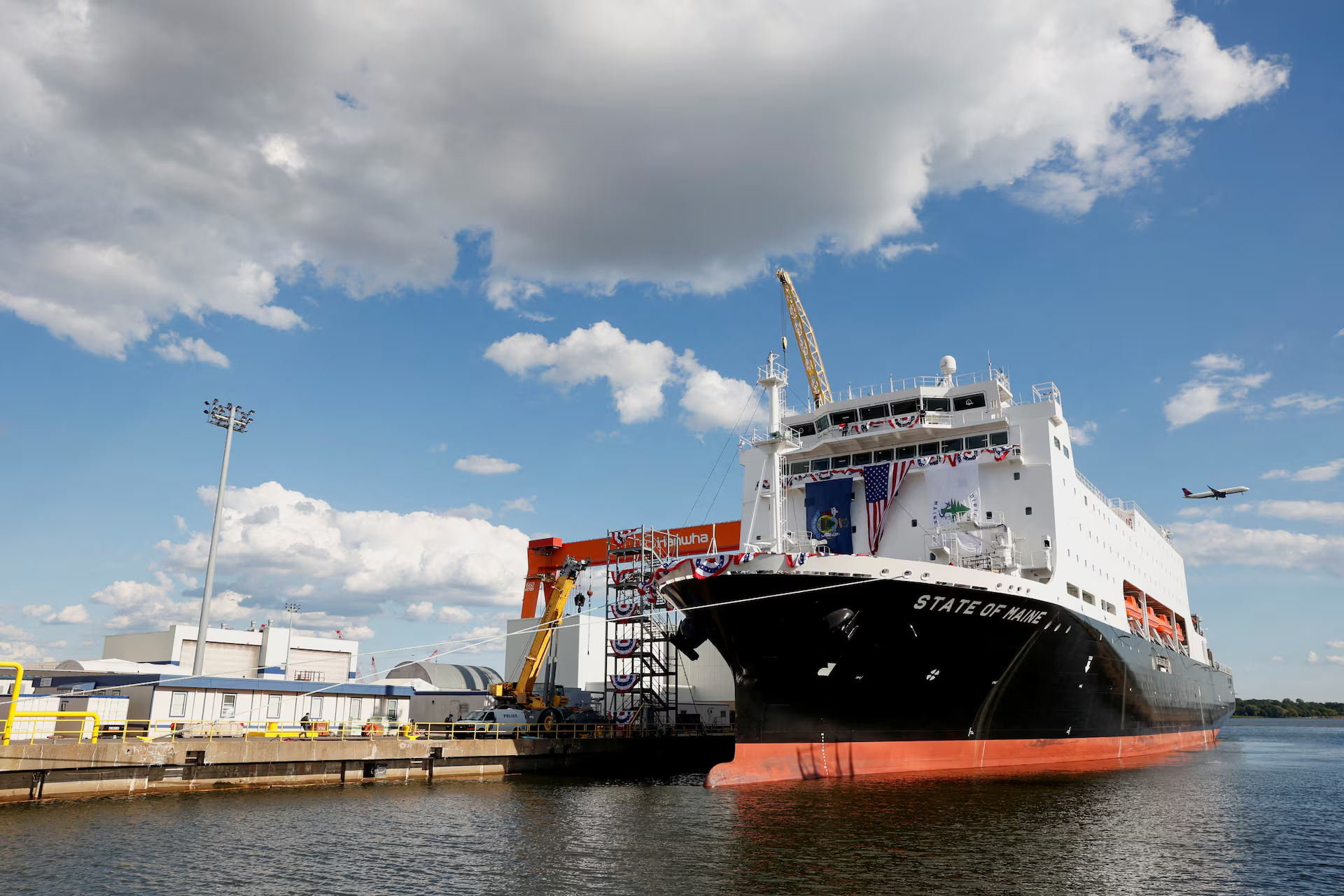
Hanwha acquired Philly Shipyard in 2024 and has increased its commitment to the U.S. market with a $5 billion plan to expand the Pennsylvania yard. This investment is part of a larger trade agreement with Washington. A spokesperson for Hanwha Defense USA mentioned they are reviewing the details of Trump's memo.
Clark emphasized that the backing from the South Korean government gives Hanwha an advantage. "You need to invest in that shipyard to enable it to produce what they're asking for," he explained.
Fincantieri, the largest shipbuilder in Europe, has invested over $800 million in its U.S. shipyards over the past ten years, including Fincantieri Marinette Marine in Wisconsin and Fincantieri Bay Shipbuilding. The company recently secured a $30 million contract from the Navy for preliminary work on Medium Landing Ship vessels, which could lead to a program for up to 35 ships. Fincantieri has not yet commented on this development.
Clark anticipates that the new policy will initially result in the production of tankers and roll-on/roll-off vessels rather than warships because of the high costs and complexity associated with redesigning warships for the U.S. supply chain.
This policy change complicates Hanwha's non-binding bid for Austal's U.S. operations, as a sale could prevent Austal's Australian parent from building two ships in Australia under the new rules. Austal's shares rose by 5.6% on Friday. The company has not responded to a request for comment.
Clark believes that Australia is unlikely to invest enough to qualify, considering its obligations under the AUKUS submarine pact.
The Shipbuilders Council of America, representing U.S. companies, expressed concerns that allowing overseas shipbuilding could undermine the U.S. industry.
(Reporting by Mike Stone in Washington)