
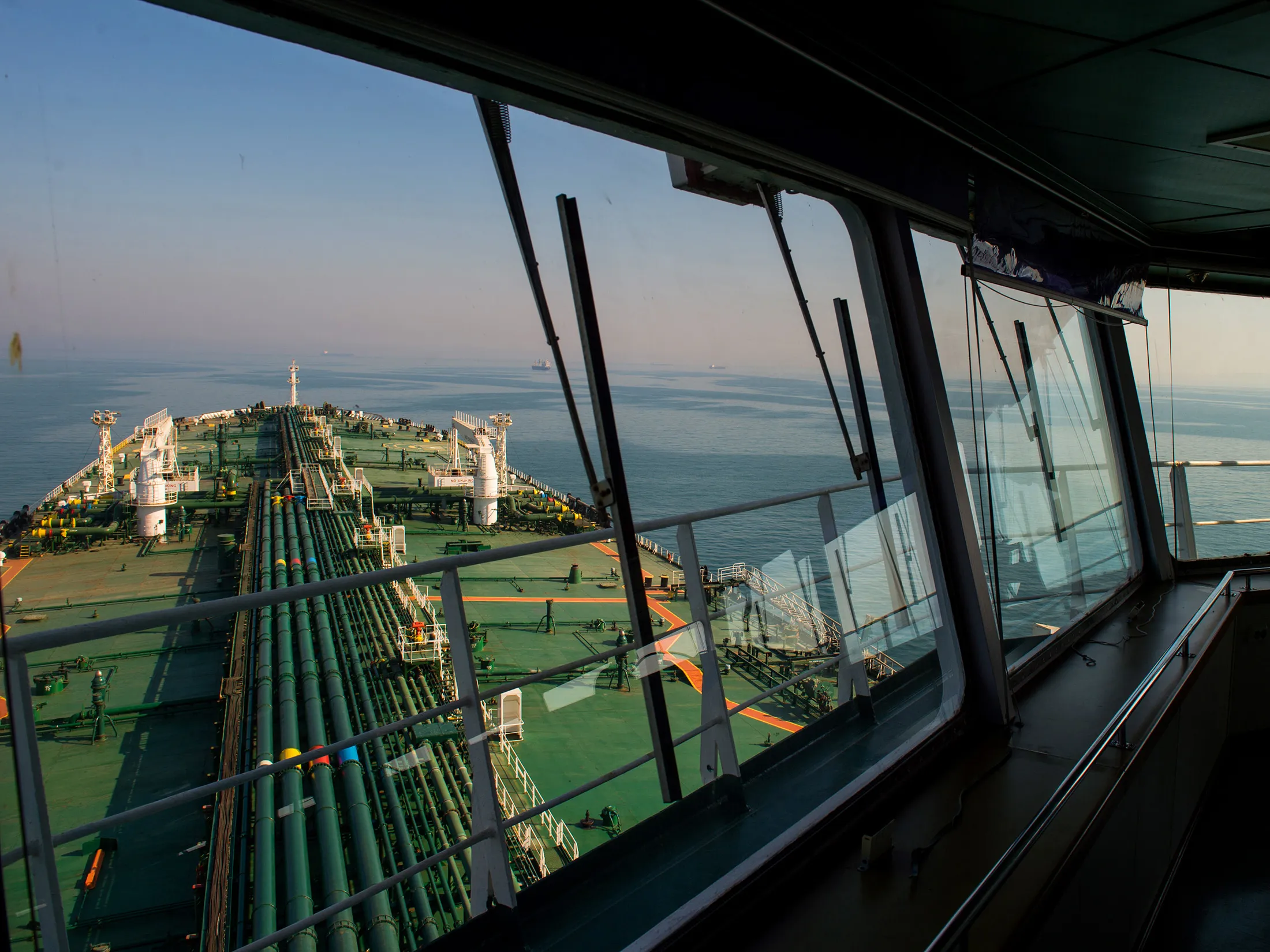
By Alaric Nightingale (Bloomberg) — The number of empty tankers heading to collect Middle Eastern crude oil is decreasing, which might threaten the recent increase in oil shipments from the region to global markets, according to Tankertrackers.com, a company that tracks ship movements.
There are two main types of ships used to transport oil from the Persian Gulf: very large crude carriers (VLCCs) that can carry 2 million barrels of oil, and Suezmax tankers that hold about half that amount. The number of these vessels sailing without cargo to the region has dropped by roughly 40% since late August, based on figures from Tankertrackers.com.
While everyone is watching how much oil is leaving the Middle East, it’s important to remember that these shipments can only happen if there are enough ships arriving to pick up the oil. The ongoing conflict in Iran has led some ships to avoid transiting through the Strait of Hormuz, opting instead to load cargoes in places like the Gulf of Oman from tankers willing to navigate through this vital area.
According to Samir Madani, co-founder of Tankertrackers.com, “there aren’t enough empty tankers to take oil out of the region.” He highlighted that while it’s possible to bring oil into the Gulf of Oman through the Strait of Hormuz, there seem to be insufficient vessels to transport it out of the Gulf of Oman.
Overall, there has been a decline in oil flows from the region this month, though the reasons behind this drop, the exact scale of the decline, and how long it might last are still unclear, according to Madani. For now, though, the number of ships transferring cargo to other vessels outside the Persian Gulf remains high, allowing shipments to continue for the time being.
Oil tanker rates have decreased from record highs over the past few weeks, which has lowered the cost of delivering crude oil to customers. A shortage of empty vessels, however, could support these rates.
Iran has consistently targeted shipping during the conflict, deterring some shipments. The number of reported incidents rose sharply last month and remains high this November, according to data from the International Maritime Organization and the UK Maritime Trade Operations Centre.