
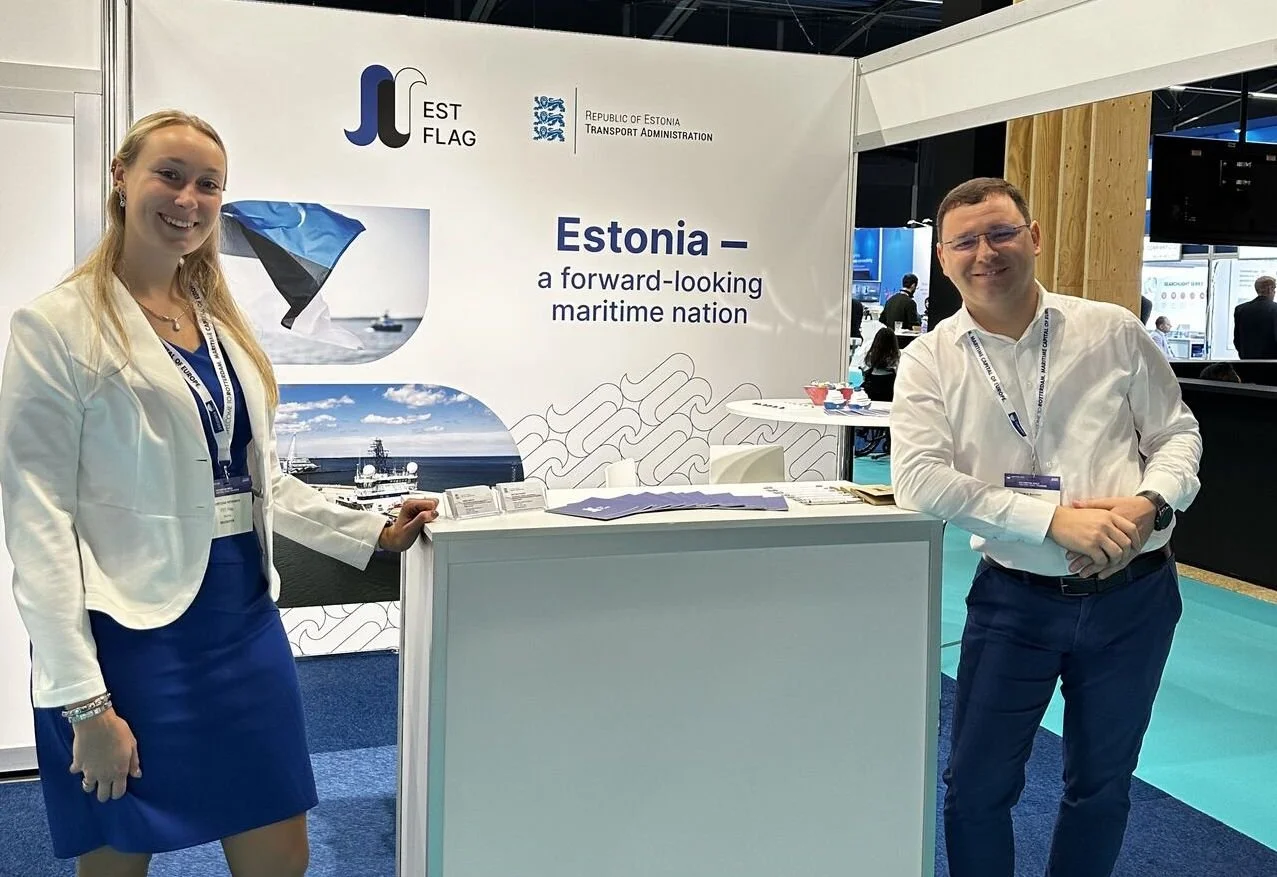
Estonia's favorable tax system, efficient digital administration, and a supportive business culture are drawing more and younger ships to register under its flag.
Since the launch of a comprehensive set of shipping law amendments in 2020, Estonian governments have focused on expanding the maritime economy. A combination of tax benefits and simple processes has made the Estonian Flag a key driver for growth, attracting a significant amount of tonnage in a competitive market.
The EST Flag, initiated by the Estonian Transport Administration, is designed to promote the advantages of flying the Estonian flag, support the national ship register, and enhance international cooperation in the maritime sector. Estonia's shipping registers include two bareboat charter registers: one for companies based in Estonia and another for charterers whose businesses can be established online through e-Residency, along with a national register for vessels flying the Estonian flag.
One of the main attractions of the EST Flag is Estonia's tax structure, which is consistently ranked among the most competitive in the OECD. The country's corporate tax system taxes profits only when they are distributed as dividends, not when they are earned. This results in a 0% tax rate on retained and reinvested earnings, allowing businesses to reinvest profits for long-term growth without facing immediate taxes.
Additionally, there are unique advantages tied to the Estonian flag, such as a favorable tonnage tax based on a ship's net weight instead of operational profits and a seafarer program that significantly lowers employment costs by imposing zero income tax on crew members, plus a minimal monthly social tax.
Estonia has agreements with many countries to prevent double taxation or provide options for paying taxes in the resident country.
To lure in newer ships, the tonnage scheme also uses age-based calculations, which lower tax rates for younger vessels. Ships under ten years old face much lower tax obligations compared to vessels that are twenty years old.
Competitive Position
These measures create significant operational savings while ensuring compliance with European Union standards. Last year, the Polish Register of Shipping became the sixth member of IACS to conduct physical inspections for vessels registered under the Estonian flag.
Kristiina Peterson, Chief Specialist of Maritime Competitiveness at the Estonian Transport Administration, noted that the appeal of the competitive tonnage tax and low seafarer tax rates is bolstered by the Transport Administration's efficient and modern online registration systems.
“We have made progress through effective state aid measures like the tonnage tax and seafarer programs, as well as investments in IT platforms that ensure a user-friendly process,” she said.
The Ship Information System allows vessel representatives to manage registration, request inspections, handle certifications, and oversee fleets entirely online. Automated notifications help ensure that renewal deadlines and financial obligations are met in a timely manner.
“Our main goal is to solidify Estonia's status as a quality flag with a focus on safety, efficiency, and environmental responsibility, supported by a digital infrastructure that promotes transparency and streamlines administration,” Peterson added.
Digital Transparency
According to the UN E-Government Survey 2024, Estonia ranks second globally in e-government development. By adopting digital technology, Estonia has become the world's first fully digital country, offering around 99% of its government services online 24/7. Peterson mentioned that new regulatory updates will help maintain Estonia’s competitiveness.
Ship owners will benefit from further streamlined processes through digital tools for the ship information and seafarer systems aimed at creating a “business-friendly maritime environment,” Peterson noted.
“The combination of digital-first operations and progressive policies makes Estonia attractive to innovative enterprises seeking reliable, long-term registry partnerships within a European framework,” she added.
Investment in digital infrastructure for the maritime sector aligns with Estonia’s strategic goals. Currently, maritime policy is part of the Estonian Transport and Mobility Master Plan 2021-2035, which outlines steps to foster a maritime cluster to support the shipping industry.
Reinvesting in Business
As Estonia aims for energy independence, there is potential for growth in the offshore wind sector, especially if future state aid measures, including the tonnage tax scheme, incorporate relevant vessels.
Another area identified for growth is a scheme to subsidize the retrofitting of energy-efficient and environmentally friendly equipment on ships, set to launch in 2025.
The scheme has allocated €25 million in government grants, allowing eligible ship owners to receive subsidies between 15% and 30% of retrofit costs for projects focused on achieving green outcomes, with a maximum of €5 million per project. Incentives are available for energy-saving technologies such as hybrid-electric propulsion, renewable fuel technologies, exhaust gas cleaning systems, and other initiatives aimed at reducing pollution and improving efficiency.
To qualify for the full 30% subsidy from the Estonian Marine Greentech & Retrofit Hub, a vessel must be converted into a zero-emission ship. Factors such as the flag state and how often a vessel visits local ports will also impact the level of incentive provided.
“Our goal is to make Estonia a hub for maritime retrofitting, attracting ship upgrades to our ports and helping ship owners decrease emissions and operating costs while complying with EU climate regulations,” stated Andrei Barotov, another Chief Specialist of Maritime Competitiveness at the Estonian Transport Administration.
“We focus not on the largest vessels, but rather on medium-sized ships and their owners. Our policies aim to attract companies that prioritize responsibility towards the environment and their crews.”
Estonia has several facilities capable of managing upgrades, including Tallinn Shipyard, LTH baas, Baltic Workboats, SRC Group, and the electric charging systems developer ShoreLink. The scheme is also expected to encourage new opportunities for both established companies and startups.
Lastly, Estonia plans to link tax incentives not only to the age of vessels but also to their environmental performance, which will help lower costs for eco-friendly vessels.