
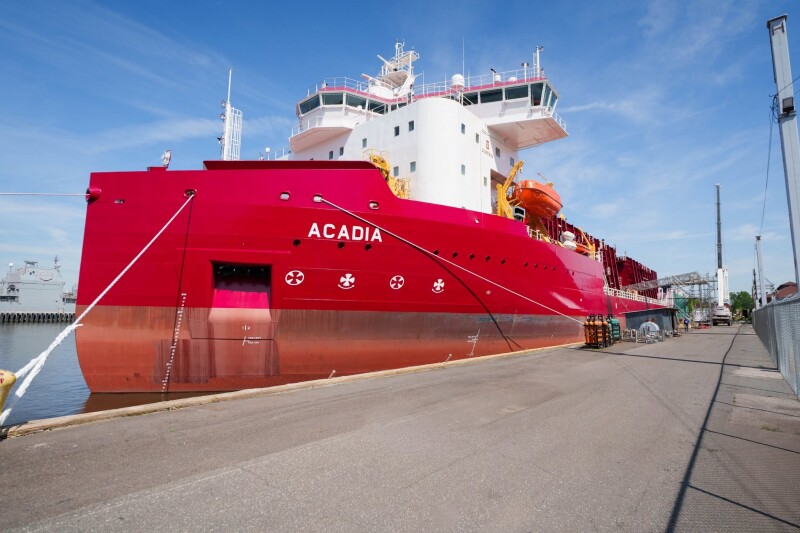
Great Lakes Dredge & Dock has received the vessel Acadia, which is the first U.S.-flagged subsea rock installation vessel compliant with the Jones Act. This delivery is a significant step for the U.S. offshore construction fleet as the company aims to grow in the offshore energy sector.
The vessel was constructed by Hanwha Philly Shipyard in Philadelphia and will start working right away on Equinor's Empire Wind 1 project offshore New York before moving to Ørsted's Sunrise Wind project. Great Lakes has also announced two new international contracts with a major offshore wind developer, which will keep the Acadia busy in Europe for most of 2027, giving it a workload beyond its initial assignments in the U.S.
“The arrival of Acadia marks a turning point for Great Lakes and shows our commitment to building and maintaining offshore energy infrastructure both at home and abroad,” said Lasse Petterson, President and CEO of Great Lakes Dredge & Dock.
Designed to transport and accurately place rock on the seabed, Acadia provides protection for subsea cables, pipelines, and the foundations of offshore wind turbines. It can carry up to 20,000 metric tons of rock and is the first of its kind built to meet Jones Act requirements.
The delivery of Acadia wraps up several years of investment by Great Lakes in the offshore energy market and comes just about a year after the vessel was launched at Hanwha Philly Shipyard. The construction involved over one million labor hours, using steel sourced from the U.S. and workers from various states, including Pennsylvania, New Jersey, Ohio, Texas, and Louisiana.
Even though Acadia is booked for projects until 2027, it starts its service at a time of significant changes in the U.S. offshore wind industry.
Its first two jobs—Empire Wind 1 and Sunrise Wind—are among the few major offshore wind projects in the U.S. that are still being built after the Trump administration took steps to halt new wind developments. Recently, the administration has negotiated settlements with several developers to end offshore wind leases in exchange for funding nuclear, natural gas, and electric grid projects.
These agreements have significantly reduced the future pipeline of U.S. offshore wind projects, lowering the expected demand for specialized Jones Act vessels, port infrastructure, and domestic supply chains that had grown around this sector.
Despite this, Great Lakes’ recent contract wins show a continuing strong demand for specialized subsea rock installation vessels internationally, allowing Acadia to move directly from its U.S. projects into European offshore wind work.
Acadia also signals a milestone for U.S. shipbuilding, as Hanwha became the first South Korean shipbuilder to operate in the U.S. after acquiring the historic Philadelphia yard in late 2024.
This delivery adds to Hanwha Philly Shipyard's growing list of completed projects while it works through one of the strongest order books in the U.S. The shipyard is currently building multiple National Security Multi-Mission Vessels for the U.S. Maritime Administration, three LNG-fueled containerships for Matson, and has secured orders from Hanwha Shipping for two LNG carriers and ten Jones Act product tankers, ensuring work well into the second half of the decade.
With around 200 specialized vessels, Great Lakes is the largest dredging contractor in the nation and is increasingly involved in offshore energy, where Acadia is expected to play a key role in the company’s long-term growth strategy.