
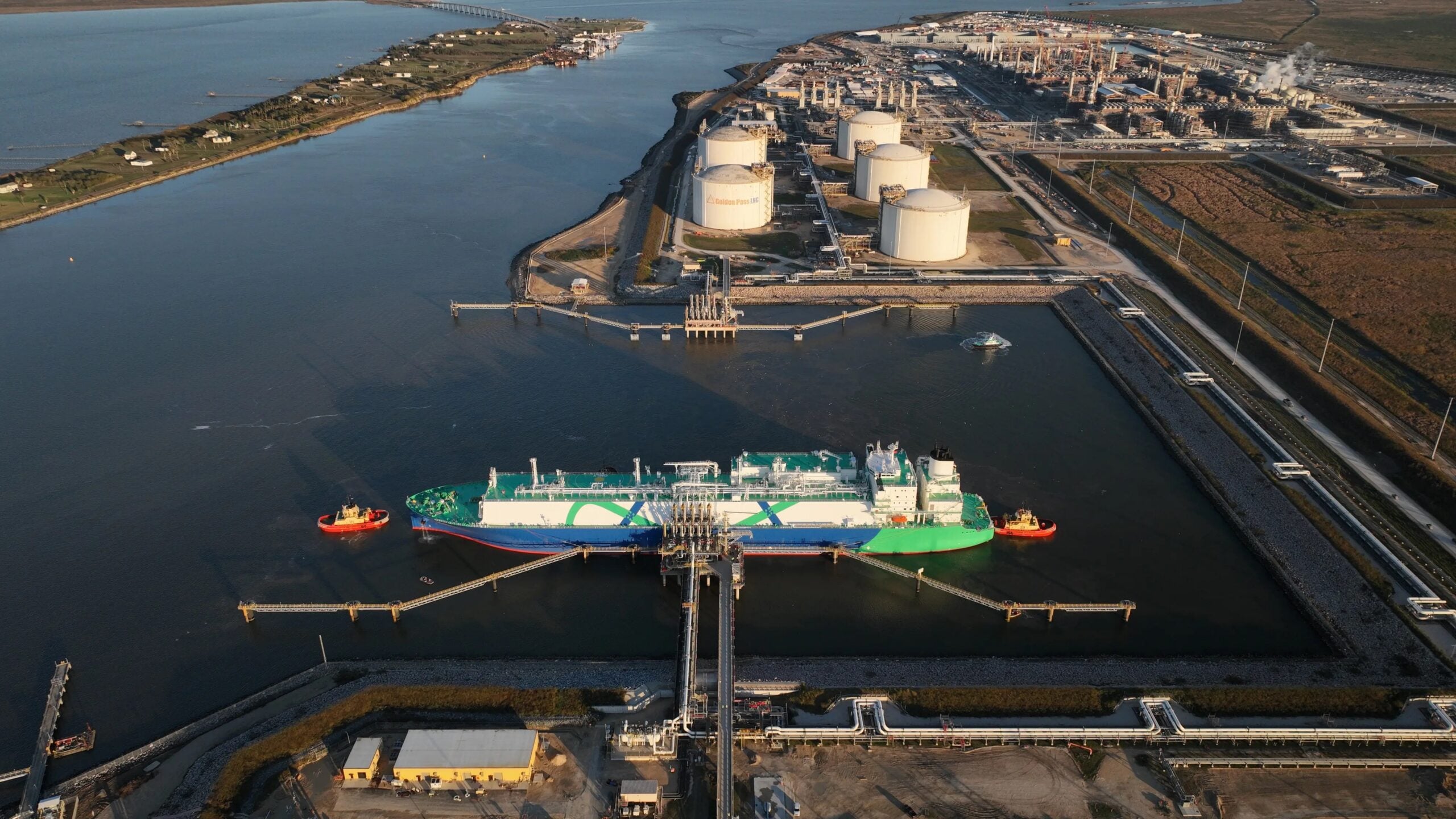
Golden Pass LNG has successfully produced its first liquefied natural gas from Train 1 at the Sabine Pass export terminal in Texas. This is a significant achievement for QatarEnergy’s largest investment in the United States and one of the biggest LNG projects currently being developed around the world.
This milestone marks the start of operations for the first of three liquefaction trains, which together will form an export facility capable of handling 18 million tonnes per annum (mtpa). The first cargoes are expected to be shipped in the second quarter of 2026.
Golden Pass is a collaboration between QatarEnergy, which holds a 70% stake, and ExxonMobil, which owns 30%. The production of the first LNG reflects years of planning, engineering, construction, and testing. It also indicates the shift towards continuous liquefaction operations and full commercial operations.
“First LNG is very important for one of the largest single investment decisions in U.S. LNG history,” said Saad Sherida Al-Kaabi, Qatar’s Minister of State for Energy Affairs and CEO of QatarEnergy. “The start of operations and market entry for Golden Pass LNG comes at a crucial time when global energy security is a top priority worldwide.”
The project, which received a final investment decision exceeding $10 billion in 2019, is a key part of QatarEnergy’s plan for international expansion, which includes a previously announced $20 billion investment in the U.S. energy sector.
“We are beginning to see the rewards of this forward-thinking strategy,” Al-Kaabi noted, emphasizing that the project will enhance global energy security and broaden access to cleaner energy.
The launch of operations coincides with significant shipping constraints through the Strait of Hormuz, where escalating regional conflicts have disrupted flows through this critical energy route. This narrow waterway usually carries a high volume of global LNG exports, much of which comes from Qatar, connecting Gulf producers to major markets in Asia and Europe.
In addition, regional instability has added pressure on both shipping and supply, tightening LNG markets and compelling buyers to look for alternative gas sources.
QatarEnergy’s Ras Laffan Industrial City, the largest LNG export hub in the world, has sustained considerable damage from missile strikes, with the company warning that repairs could take up to five years, affecting about 17% of Qatar’s LNG export capacity.
Given these challenges, Golden Pass provides an LNG supply that does not rely on routes through the Persian Gulf.
By establishing part of QatarEnergy’s export capacity on the U.S. Gulf Coast, this project diversifies supply routes at a time when traditional Gulf shipping lanes are facing pressure. Cargoes from Sabine Pass can reach global markets without passing through Hormuz, offering a safer and more flexible option for importers dealing with increased geopolitical risks.
Golden Pass is now entering the final stage before starting commercial operations, with exports expected to launch in the coming months as global markets continue to look for reliable supply amidst ongoing disruptions.