
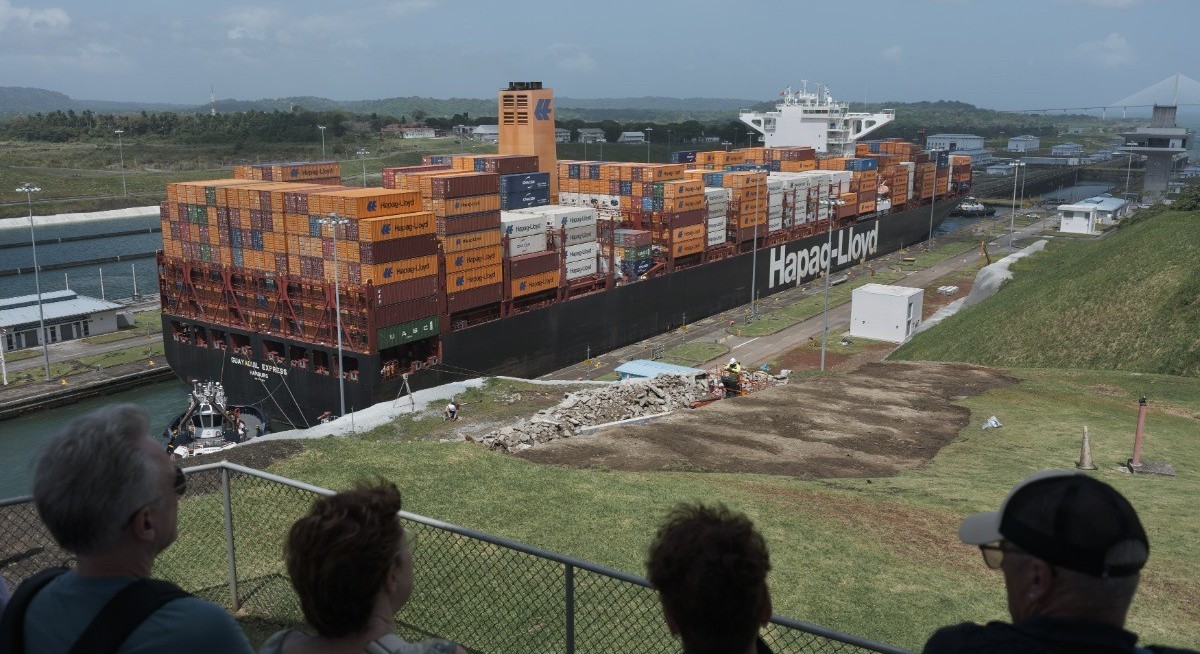
Global Trade Faces New Challenges as Panama Canal Limits Vessel Bookings
Global trade is encountering more difficulties due to ongoing issues in the Middle East. The Panama Canal is now reducing the number of available booking slots for ships due to water supply problems.
The Panama Canal Authority is temporarily suspending part of its booking system for vessels traveling between the Pacific and Atlantic Oceans. This decision comes as the potential for an El Niño weather event could negatively affect water levels, according to shipping agent Norton Lilly.
This restriction at the Panama Canal coincides with other global trade bottlenecks, which have hindered shipping and increased costs. The situation in the Middle East, particularly the conflict between Iran and the US, has led to a severe reduction in traffic through the Strait of Hormuz due to attacks on vessels. Additionally, the Iran-backed Houthi rebels in Yemen are threatening shipping routes via the Bab el-Mandeb Strait in the Red Sea.
Currently, the Panama Canal Authority has not responded to inquiries about these changes.
Norton Lilly has announced that daily auctions for Panamax-class locks at the canal will be stopped from July 25 until further notice, due to current and anticipated water levels at Gatun Lake. As a result, the daily booking capacity will decrease from 36 to 34 vessels.
The suspension is based on existing water conditions and the likelihood of an El Niño weather pattern developing, which historically has reduced freshwater levels feeding the canal. During previous El Niño events, restrictions on daily transit had to be implemented.
This suspension means fewer slots available for bookings, leading to increased competition for openings during the first and second booking periods. Ships without confirmed bookings may face greater challenges.
Currently, Gatun Lake, which supplies water to the canal's locks, has a depth of 84.6 feet (25.8 meters), slightly below the five-year average for July. Projections indicate that water levels will likely continue to decline, potentially reaching 83.8 feet by late September, which is 1.4 feet below the average.
In the last El Niño event, from 2023 to 2024, the number of vessels passing through the canal dropped significantly, falling from a peak of 1,523 in December 2022 to just 1,054 in February 2024, based on data from Weathernews Inc.
Recent forecasts suggest that this year’s El Niño could be particularly intense, raising concerns about future disruptions. The US Climate Prediction Center recently indicated that this El Niño is likely to be one of the strongest seen in over 75 years.
Typically, El Niño causes drier conditions across Central America. Panama has experienced significantly below-average rainfall in the past seven weeks, as reported by the US Climate Prediction Center.
Forecasts also indicate that this dry pattern is likely to continue, with a 70% chance that rainfall levels in the Panama Canal area will fall into the lowest third of historical averages from August through November, according to the European Centre for Medium-Range Weather Forecasts.
In June, the Panama Canal Authority announced it was preparing for potential extremes caused by El Niño by creating a plan that would avoid the vessel restrictions that disrupted shipping three years ago.