
By Lucia Kassai
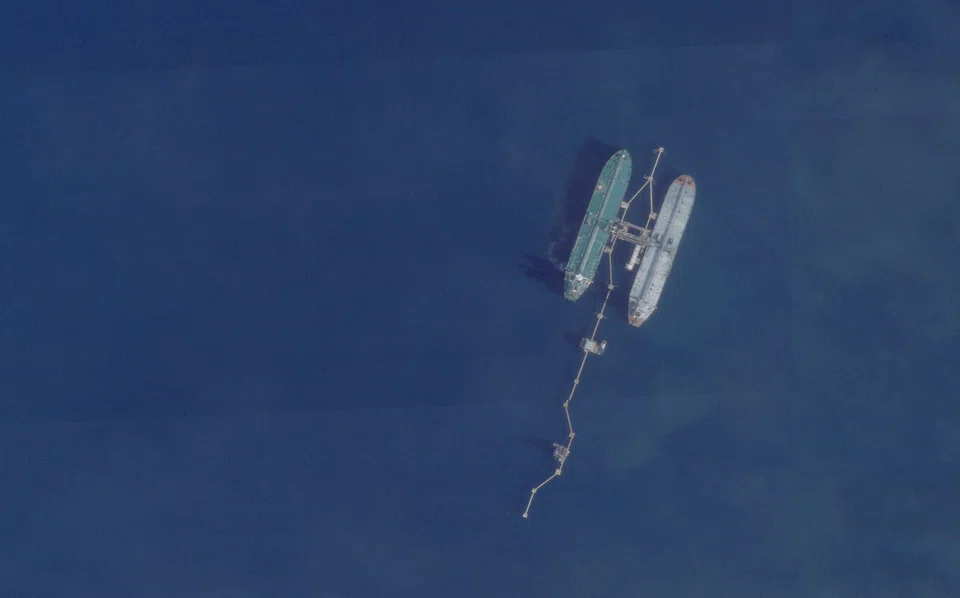
Dec 12, 2025 – Two so-called ghost oil tankers are currently loading off the coast of Venezuela, showcasing the difficulties the Trump administration faces in disrupting the country’s main source of revenue.
The supertankers, which are the largest vessels used for transporting crude oil, are currently loading at the government-controlled port of Jose in Venezuela, as reported by shipping data seen by Bloomberg. As of this month, up to last Friday, Venezuela has been exporting nearly 880,000 barrels of oil per day, according to preliminary shipping reports and vessel tracking data. This is an increase from an average of 586,000 barrels per day in November.
This activity at Venezuela’s largest port comes just two days after the U.S. seized a tanker carrying Venezuelan crude, even with the possibility that more ships could be seized by the Trump administration. This seizure is part of a pressure tactic against Venezuelan President Nicolas Maduro, aiming to cut off his oil revenues and push him out of power.
The key question now is whether these ships will be willing to leave Venezuelan waters and risk being seized.
Meanwhile, the U.S. has renewed Chevron Corp.'s license to continue oil operations in Venezuela, according to sources familiar with the situation. This renewal adds more pressure on Maduro.
Venezuela’s national oil company, Petróleos de Venezuela SA (PDVSA), has limited options for exporting its oil, often sending it to China at significant discounts. In contrast, Chevron loads its share of Venezuelan oil and sends it to the U.S.. Chevron can also work with PDVSA to extract oil, but it can only pay PDVSA with oil, not cash.
This is why the ghost ships are important: PDVSA needs to find a way to sell its oil to earn money, and its storage options are limited.
Chevron, based in Houston, stated that its operations in Venezuela “continue in full compliance with laws and regulations applicable to its business, as well as the sanctions frameworks provided for by the U.S. government.”
There has been no immediate response from the U.S. Treasury Department regarding the renewal for Chevron, nor from PDVSA or Venezuela’s Oil and Information Ministries.
The potential loss of oil from the world’s largest oil reserves could disrupt global markets. However, the effect has been minimal so far since global production, particularly in the U.S. and Guyana, has increased. The International Energy Agency estimates the current oversupply at a record 3.8 million barrels per day.
According to estimates from the energy consulting firm Rapidan Energy Group, around 30% of Venezuela’s oil exports—about 300,000 barrels a day—could be impacted by U.S. actions.
The ghost ships, which hide the source of the oil to evade sanctions, are preparing to load nearly 4 million barrels of Venezuela’s widely exported Merey 16 crude oil, as revealed in a shipping report seen by Bloomberg. These ships, operating under the false names Crag and Galaxy 3, are headed to Asia. The actual identities of ships docking in Venezuela are often concealed with rags covering their names, making it unclear whether they have been affected by U.S. sanctions.
Satellite images have confirmed the presence of these two vessels, showing the three berths at the Jose offshore platform occupied by both supertankers and a third ship, the Aframax Nave Neutrino, which is chartered by Chevron. Chevron is currently the only company permitted to lift Venezuelan oil under a Treasury license.
In recent months, the Trump administration has carried out strikes on boats in the Caribbean that are allegedly involved in drug trafficking, and has hinted at possible military action on Venezuelan territory. The campaign escalated with the seizure of the supertanker named Skipper, accused of being part of the illegal oil trade that funds foreign terrorist groups.
Maduro has denounced this act as piracy and has vowed to defend Venezuela’s natural resources.