
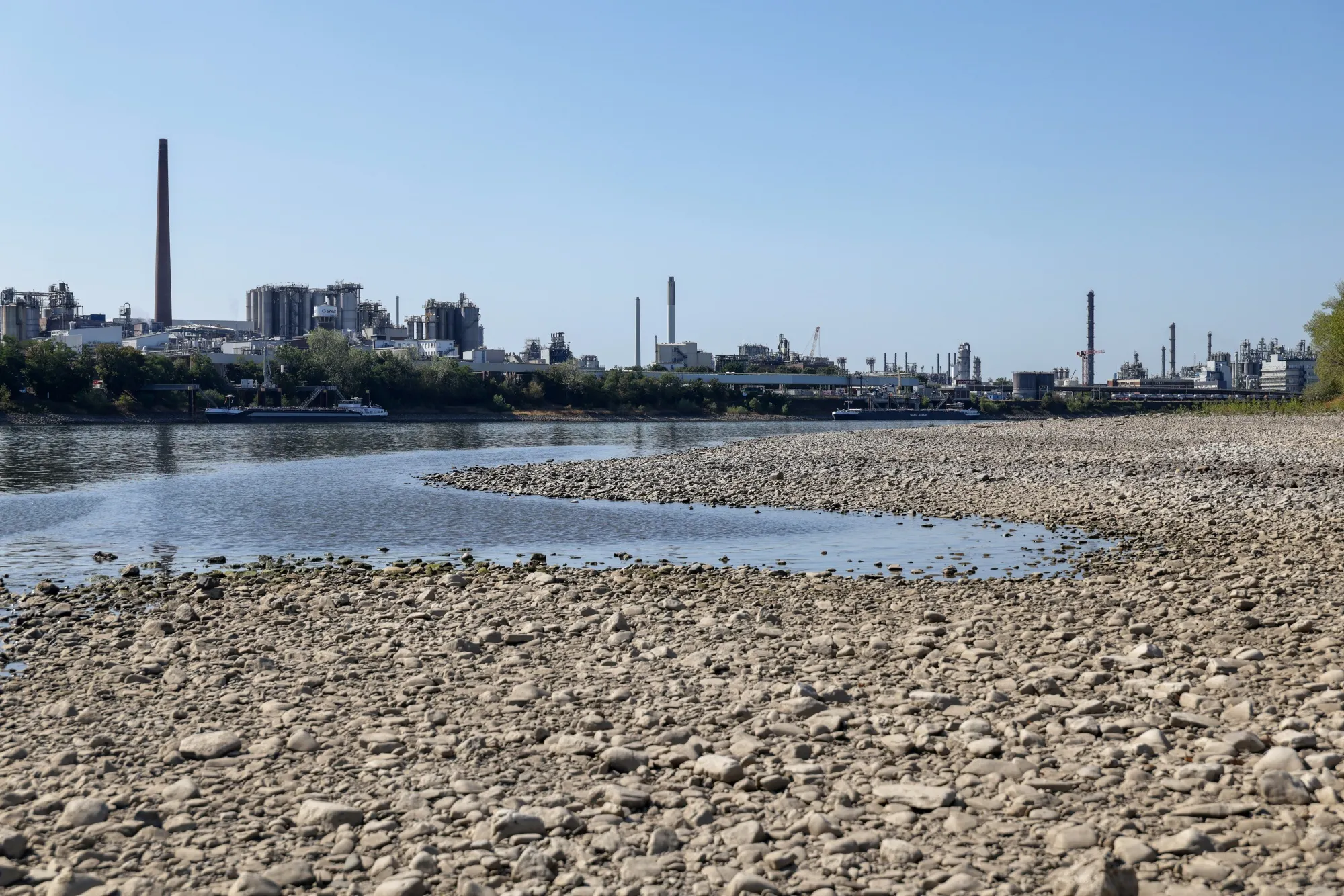
(Bloomberg) — Germany's economy is facing serious challenges due to a persistent lack of water in the Rhine River, according to Transport Minister Steffen Bilger.
Bilger spoke out just days after water levels in this crucial logistics route hit record lows. He described the situation as "very challenging" and warned that it will force more goods to be transported by land instead of by water.
"Every extra centimeter of water means more shipments and less cargo on rail and roads," he explained after a meeting with industry leaders in Bonn, a city located along the river.
The Rhine connects the Port of Rotterdam, which is the busiest port in Europe for sea trade, with three major German industrial areas: the steel-producing Rhine-Ruhr, the Rhine-Main region that includes Frankfurt, and the chemical hub in Ludwigshafen.
According to Bloomberg Economics, a month of low water levels can cut Germany’s production by as much as 1%, which is about a 0.25% hit to the country's gross domestic product.
Bilger emphasized, "We have a very challenging situation for our economy."
Steffen Bauer, the CEO of the port of Cologne—located just north of Bonn—joined Bilger in voicing concerns, stating that authorities should be ready for similar situations to recur in the future.
"We will see situations like this more often, and we need to learn how to manage them," he said, noting that the current circumstances are still manageable.
This challenge of low river levels serves as an early test for Germany's newly appointed transport minister.
After the severe drought of 2018, officials introduced an action plan to enhance the resilience of Rhine shipping.
Though forecasting for river conditions has improved, progress on infrastructure projects has slowed down. North Rhine-Westphalia Transport Minister Oliver Krischer mentioned on German radio that "things have gone a bit dormant again."
Economist Marc Schattenberg from Deutsche Bank expressed concern, stating, "Unfortunately, we have to accept that supply chains are under strain for now."
He is doubtful about deepening river channels for better shipping, as it could increase river speeds and cause environmental issues. While some cargo might shift to rail or road, this often results in higher transportation costs.
However, German industries have improved their stock of essential raw materials and expanded logistics options since the last major drought, allowing them to be better prepared this time, according to Bloomberg Economics.
Bilger concurs, stating, "We are in a better situation than a few years ago."
He was appointed as transport minister only last month during a cabinet reshuffle that faced significant criticism. Previously, he was a senior lawmaker in Chancellor Friedrich Merz’s Christian Democratic Union party and was not the top choice for this role.