
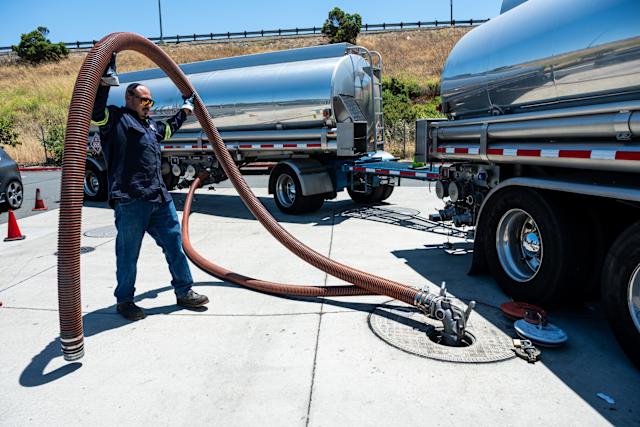
February 15, 2026 – Gasoline supplies from the United States are being shipped to California through a lengthy route via the Bahamas. This unusual shipping practice comes as California faces reduced fuel production and high gas prices.
In recent months, shipments on this indirect path have increased significantly. In November, California imported more gasoline than ever before, with over 40% of it coming from the Bahamas.
This long journey adds extra costs to California's already high gasoline prices. Unfortunately, this trend is expected to continue due to a combination of declining oil refineries, limited interstate pipelines, and a loophole in an old maritime law.
California has some of the strictest environmental laws in the U.S., which makes it expensive for energy companies to operate there. However, with several refinery closures on the horizon, officials may ease regulations. Average gasoline prices could rise between 5 and 15 cents per gallon due to these closures, according to Patrick De Haan, GasBuddy's head of petroleum analysis.
After Phillips 66 closed its Los Angeles refinery in October, gasoline imports reached their highest level since 2016. With Valero Energy Corp. planning to close a Northern California refinery this spring, California will likely need to rely on imports to meet its fuel needs, especially with no pipelines connecting the Gulf Coast to the West Coast.
Under the Jones Act, goods shipped between U.S. ports must be transported on U.S.-built and operated vessels. However, there are very few such tankers available, making them costly to charter. There are only about 55 Jones Act-compliant oil tankers worldwide, compared to over 7,000 oil tankers globally.
“Even if these vessels are available, they are more expensive than foreign-flagged vessels,” said Martin Davies, director of Tulane University's Maritime Law Center.
When California gasoline is priced higher due to refinery outages, refiners on the Gulf Coast can increase their profits by sending gasoline to the West. Taking the route through the Bahamas helps them avoid the higher shipping costs of U.S. flagged vessels while still making a profit.
“That gives Gulf Coast and Asian refiners plenty of reasons to supply Californians,” De Haan explained.
This trend is accelerating. Last year, California imported more gasoline from the Bahamas than in the previous nine years combined, accounting for around 12% of all gasoline received in California, including shipments from elsewhere in the U.S., according to Vortexa.
While overall imports of gasoline fell from their peak in January, Vortexa reported that both Japan and India supplied more gas than the Bahamas, which was the third-largest non-U.S. supplier.
De Haan noted that Asia is becoming a more logical source of gasoline for California, as Asian refineries already produce the specific gasoline blend required by the state, and those shipments do not incur the costs of transiting the Panama Canal. Last year, both India and South Korea delivered more products to California than the Bahamas.
However, the cost advantage of shipping U.S.-refined gasoline on foreign vessels has diminished recently. Following the easing of U.S. sanctions on Venezuela, regional freight prices increased. Data from Argus Media indicates that foreign ships, which were once nearly $4 per barrel cheaper than U.S. vessels, are now only about $1 cheaper. If freight costs keep rising, U.S. gasoline shipments could become too expensive to compete with supplies from South Korea or India.
Nonetheless, the shipping route through the Bahamas, which gained traction in early 2025, has played a crucial role in California's supply chain issues. Already this year, two tankers carrying gasoline have reached California from the Bahamas, according to customs data.
One of the latest shipments was made by the Singapore-flagged Silver Moon, which delivered almost 300,000 barrels of gasoline blendstock to the Los Angeles area in early January after loading in Freeport in mid-December. The vessel went through the Panama Canal and was assigned to the Houston-based refiner Phillips 66, which recently leased storage tanks in the Bahamas.
Phillips 66 did not offer any comments.
Earlier this month, the Torm Dulce completed the same journey, delivering gasoline blendstock to San Francisco. This routing reflects a long-term method used to supply fuel to the East Coast via the Bahamas when pipelines are not an option, according to Matt Smith, lead oil analyst at Kpler.
“We’ve seen this practice become established on the East Coast: barrels are shipped from the Gulf Coast via the Bahamas to circumvent using Jones Act vessels,” Smith noted. “Given the ongoing refinery closures and outages, it makes sense that we're now seeing this trend on the West Coast, and it’s likely to continue.”