
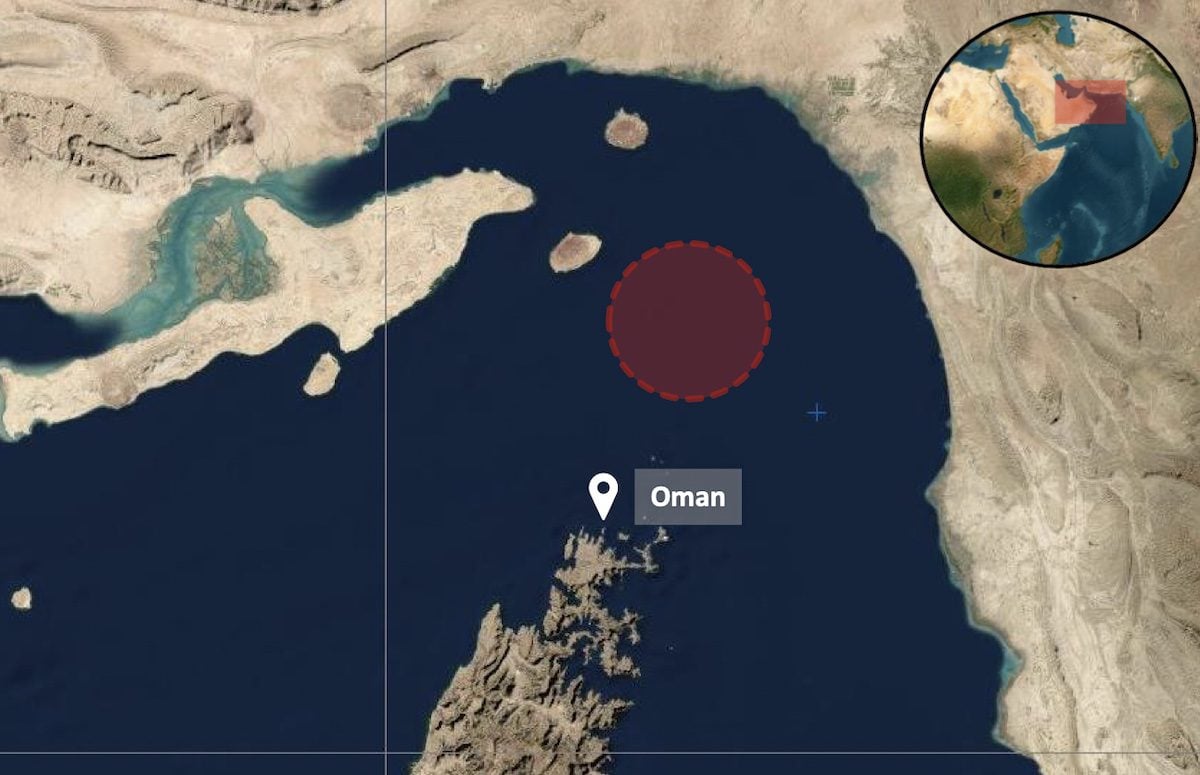
The claim that the Strait of Hormuz is “open” faced new challenges on Saturday, as several incidents were reported by the United Kingdom Maritime Trade Operations. These marked the first confirmed attacks on commercial shipping since April 7.
On April 18, three separate incidents were reported near Oman within just a few hours—two were classified as attacks and one as suspicious activity. This highlights the ongoing danger in one of the world's most vital shipping routes.
One containership was hit by an unknown projectile about 25 nautical miles northeast of Oman. Although the cargo was damaged, there was no fire or pollution reported, as noted in UKMTO Warning 038-26. Authorities are currently investigating the incident.
Another incident involved a tanker that reported being approached by two gunboats affiliated with Iran's Islamic Revolutionary Guard Corps Navy, which opened fire without giving a radio challenge. Fortunately, the vessel and its crew were safe, but this event indicates a return to direct aggressive tactics in the waterway.
Additionally, there was a report of a “splash” near a cruise ship just 3 nautical miles east of Oman—likely another projectile or a near-miss—adding to the evidence that risks are still active despite claims of a ceasefire.
First Attacks Since Ceasefire
These incidents broke a 10-day period of no reported attacks following the ceasefire on April 7, which had led to political claims—especially from President Donald Trump—that the strait was reopened for normal passage.
“[The] Strait of Iran is fully open and ready for full passage,” Trump stated on social media, declaring the “Hormuz Strait situation is over.”
However, Saturday's events suggest that the threat level remains high—and may be escalating.
According to UKMTO, there have been 30 reported incidents between late February and mid-April, with 18 confirmed attacks.
The resurgence of violence coincides with Iran's continued efforts to control shipping through Hormuz, which authorities have described as a new “maritime regime.”
Iranian lawmaker Ebrahim Azizi stated that vessels must get permission from IRGC forces and proceed along designated routes. This effectively creates a permission-based system that departs from internationally recognized navigation norms.
“Whether the Strait is open or closed … will be determined by the field, not by social media,” Azizi asserted, directly challenging U.S. claims of a full reopening.
Tankers Moving—But Not the Expected Ones
Early ship movements through the strait are causing skepticism within the industry. Analysts have noted that most recent transits involved vessels that are either sanctioned or part of the so-called “dark fleet,” operating outside Western regulatory frameworks, despite the ongoing U.S. blockade.
This includes LPG carriers like CRAVE, RAINE, and NV AQUAMARINE, along with sanctioned tankers flagged or operating under ambiguous registries, according to Martin Kelly, Head of Advisory at EOS Risk Group.
In the meantime, reports from TankerTrackers reveal that at least two Indian vessels—including a VLCC transporting Iraqi crude—had to turn back after encounters with IRGC naval units, which involved gunfire.
Industry Warnings Validated
The recent developments confirm warnings issued on Friday by industry groups, including BIMCO, INTERTANKO, and the International Chamber of Shipping.
All three organizations cautioned that claims of an “open” strait were premature, citing threats from unexploded mines in the established Traffic Separation Scheme, unclear routing rules, and overlapping military controls.
Saturday's incidents support these concerns.