
On Thursday, Panama's President José Raúl Mulino announced that Ilya Espino de Marotta will be the new administrator of the Panama Canal, making her the first woman to lead this crucial shipping point.
Espino de Marotta will take over from Ricaurte Vásquez, who has managed the canal since 2020 during challenging times, including severe droughts, rising trade tensions, and major changes in global shipping.
According to a statement from Panama's Minister for Canal Affairs, José Ramón Icaza, the Board of Directors started planning for this leadership change last year with help from a well-known consulting firm.
“The search for Panamanian professionals included both national and international candidates, identifying over 100 exceptional profiles,” Icaza noted.
Espino de Marotta has extensive experience in canal management, having begun her career there in 1985. She played a key role in the $5.25 billion expansion project that added larger Neopanamax locks.
She previously held the position of Executive Vice President for Engineering during the expansion and later served as Vice President for Transit Business. In 2019, she was appointed as deputy administrator by Vásquez.
Her appointment comes at a critical time for both the canal and global shipping.
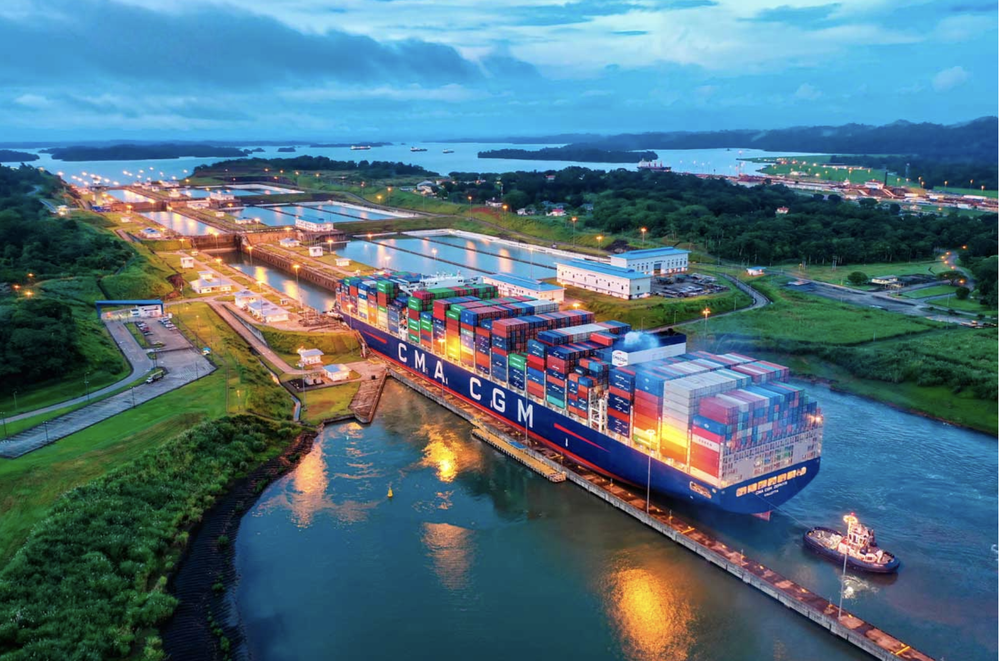
The canal is currently operating near its maximum capacity, especially after disruptions in the Strait of Hormuz led to a rise in U.S. energy exports to Asia and the Pacific. According to BIMCO, the number of ships transiting the Panama Canal increased by 8% year-on-year in 2026, averaging 38 vessels daily, which is very close to the canal's operating limit of about 36 to 40 ships per day.
Espino de Marotta also steps into her new role amid greater geopolitical scrutiny regarding the canal, as competition between the United States and China grows. U.S. officials have highlighted the canal’s significance for national and economic security, amid concerns about Chinese influence in infrastructure and commerce in Latin America, bringing the canal back into focus in discussions about global trade corridors.
Meanwhile, canal authorities are getting ready for the potential return of El Niño later this year after the severe drought crisis of 2023–2024, which caused transit restrictions and significant disruptions in global shipping.
The NOAA’s Climate Prediction Center has issued an El Niño Watch, indicating an 82% chance that the weather pattern will develop between May and July 2026 and continue through the winter.
The last El Niño event led to a drop in water levels in Gatún Lake, which forced the canal to lower daily vessel transits to as few as 24 ships and impose draft restrictions below 44 feet.
Since then, the Panama Canal Authority has worked hard to restore water reserves and implement conservation measures to prevent another operational crisis.
With her background in engineering and her experience in the canal's modernization efforts, Espino de Marotta is expected to prioritize water management, infrastructure resilience, and long-term capacity planning as climate change and geopolitical tensions continue to affect global trade routes.