
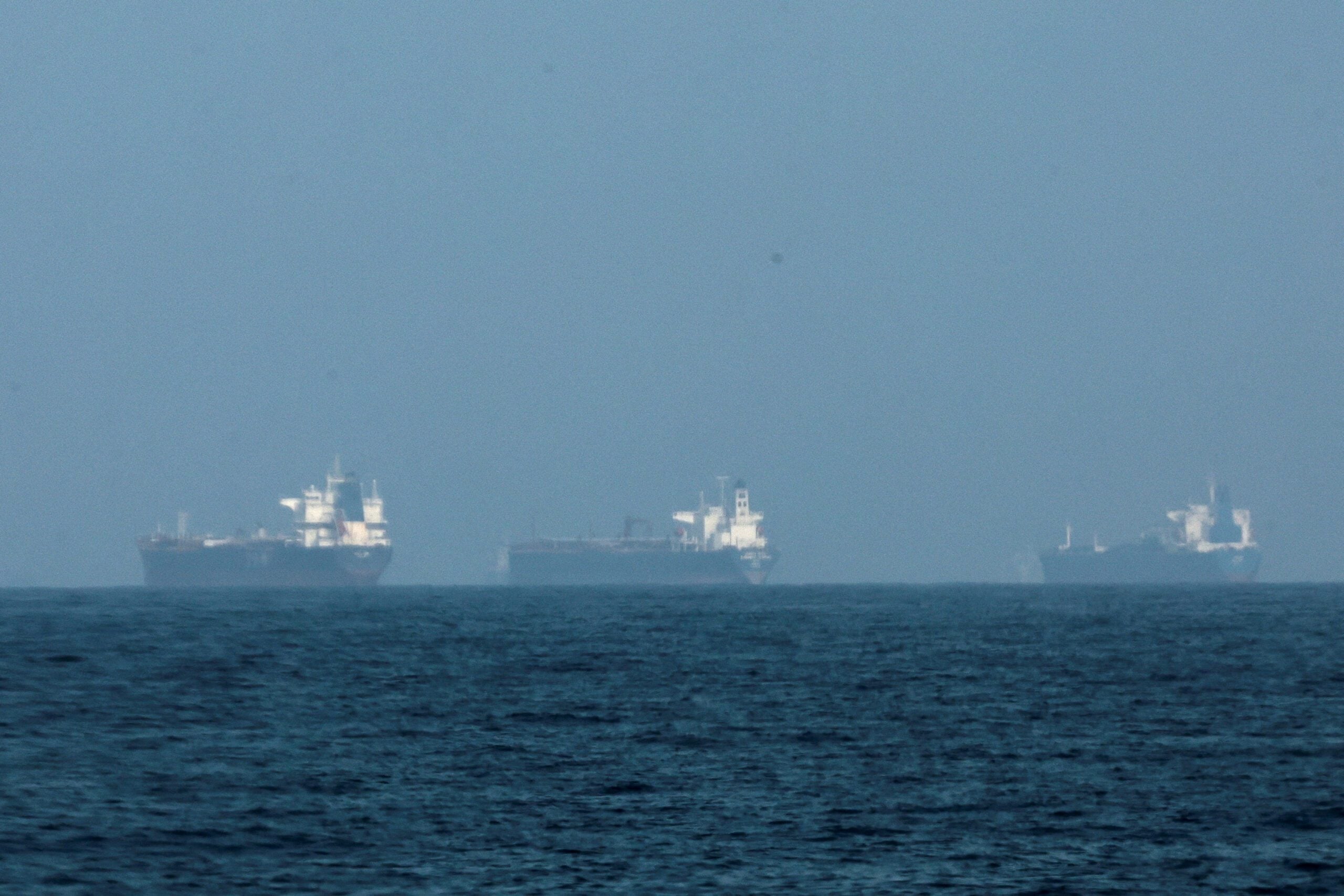
DUBAI/WASHINGTON, May 4 (Reuters) – An explosion struck a South Korean ship in the Strait of Hormuz on Monday, while Iranian drones sparked a fire at an oil port in the UAE. This comes as Iran asserted its control over Middle Eastern oil supply after U.S. President Donald Trump announced his Navy would open the strait.
The U.S. military reported that two U.S. merchant ships successfully passed through the strait, although they did not specify when this occurred. Iran refuted these claims, stating that no crossings had taken place, and there were no signs that Trump's "Project Freedom" led to increased shipping traffic through the critical waterway.
Trump's recent mission appears to be an attempt to use naval force to clear the world’s key energy shipping route, which has led to a confrontation with Iran, which insists that no ships can pass without its consent.
In the past two months, following the U.S. launching an air campaign against Iran alongside Israel, Tehran has significantly restricted access to the strait for ships, except for its own, disrupting global energy supplies like never before. Additionally, the U.S. has implemented a blockade on ships entering or leaving Iranian ports.
Conflicting statements came from both sides regarding the outcomes of the new U.S. initiative, and Reuters could not verify the full situation independently. However, there was no immediate evidence of an uptick in ships trying to cross, and the explosion on the South Korean vessel HMM Namu is likely to deter commercial shipping by making it seem unsafe.
In the UAE, a fire erupted at an oil facility in Fujairah following an Iranian drone attack. Fujairah is located beyond the strait, making it one of the few oil export routes that doesn't require passage through it.
REVOLUTIONARY GUARDS SAY NO TRANSITS TOOK PLACE
The U.S. Central Command announced on social media that some Navy guided-missile destroyers were operating in the Gulf to support the mission, and that two U.S.-flagged merchant ships had safely crossed the strait.
However, they did not disclose the names of the ships or when these crossings occurred. The Iranian Revolutionary Guards stated that no commercial vessels had crossed the strait recently, calling the U.S. claims untrue.
Earlier reports from Iran indicated that they had fired at a U.S. warship approaching the strait, forcing it to turn back. Initial reports suggested a U.S. ship had been hit, but Washington denied this; Iranian officials later clarified that the shots were warning fire.
South Korea’s Foreign Ministry confirmed a fire and explosion on board the Namu, operated by HMM. The Yonhap news agency stated that the government was investigating reports that the ship might have been attacked.
So far, no casualties have been reported, and authorities are looking into the cause of the fire, which HMM indicated started in the engine room of the cargo ship registered in Panama.
SHIPPING INDUSTRY AWAITS CLARITY ON SAFETY
Following news of these confrontations, oil prices surged, fluctuating between a 2% and 5% increase in a volatile market.
Treasury Secretary Scott Bessent told Fox News that the U.S. maintains solid control over the strait.
However, the shipping industry is still not convinced that this vital oil route, which is crucial for global trade and business, is safe, especially with little sign of progress toward resolving the conflict between Washington and Tehran.
The United Arab Emirates accused Iran on Monday of attacking an empty crude oil tanker belonging to ADNOC, a state-owned oil firm, as it tried to navigate through the strait.
IRAN REVIEWS U.S. RESPONSE TO PEACE PROPOSAL
Four weeks ago, the U.S. and Israel halted their bombing campaign against Iran, and there was one round of face-to-face talks between U.S. and Iranian officials. However, efforts to schedule further meetings have been unsuccessful.
Iranian state media reported that Washington had communicated its response to a 14-point proposal from Iran through Pakistan, and Tehran is currently reviewing it. Details about the proposal remain undisclosed.
A senior Iranian official confirmed that the proposal aims to end conflicts on all fronts, including Israel's actions in Lebanon, and suggests resolving the shipping dispute first while postponing talks about Iran's nuclear program.
Washington is urging Tehran to dismantle its stockpile of over 400 kg (900 pounds) of highly enriched uranium, which it claims could be used to develop a bomb.
Iran maintains that its nuclear program is for peaceful purposes, although it is open to discussing certain limitations in exchange for the lifting of sanctions. It had previously agreed to such restrictions in a 2015 agreement that was abandoned by Trump.