
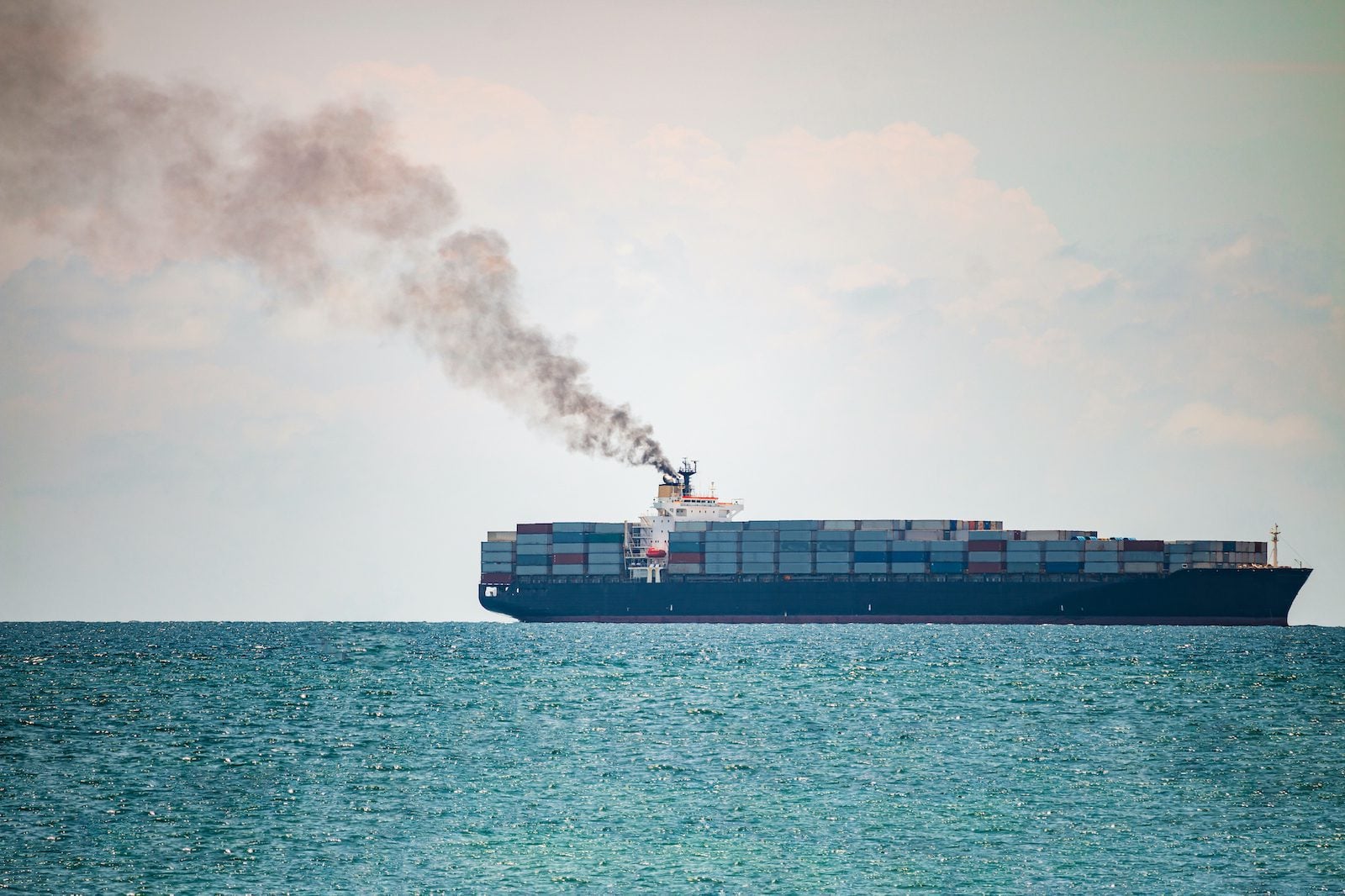
BRUSSELS/LONDON, April 24 (Reuters) – EU countries have decided to continue advocating for a global price on CO2 emissions from shipping during U.N. talks next week. This could potentially lead to more disagreements with the United States regarding the proposal.
Last year, governments at the International Maritime Organization (IMO) chose to postpone the climate initiative for a year after the Trump administration strongly opposed it, even threatening sanctions and visa restrictions on delegates who supported it.
Despite this setback, European nations are still trying to bring the plan back to life, as outlined in the EU's negotiating position for the upcoming discussions, which Reuters has reviewed.
The document states that EU countries “shall oppose any attempts” to exclude the climate measures from the agenda during the meeting.
While EU countries are open to modifying the original carbon pricing plan to gain more support, some officials express doubts about reaching a compromise, mainly due to the strong opposition from the U.S.
Norwegian Environment Minister Andreas Bjelland Eriksen believes the IMO still has an opportunity to reach a historic agreement but suggests exploring “different approaches” to avoid repeating last year's failure.
“Additionally, we should consider whether we can implement some measures now and potentially postpone other parts of the regulation to a later date,” he mentioned to journalists.
A total of 57 countries, including China and significant shipping nations like Liberia, voted to delay the carbon pricing at an October meeting, while 49 aimed to finalize a deal.
Supporters of the proposal included several European nations, Brazil, and small island states at risk from climate change.
A coalition made up of the world’s leading ship registries – Liberia, Panama, and the Marshall Islands – along with oil tanker companies like Saudi Arabia’s Bahri, called on IMO members to consider alternatives to the original carbon pricing plan during next week’s meeting.
“Support for the framework in its current form has continued to erode” since last year's IMO meeting, they stated.
The IMO's decision last year created divisions within the EU, as Greece and Cyprus, which have large shipping industries, abstained from voting instead of backing the EU-supported climate proposal.
Greece, Malta, and Italy did not support the new EU negotiating position, which was passed with a strengthened majority of EU countries, according to officials.