
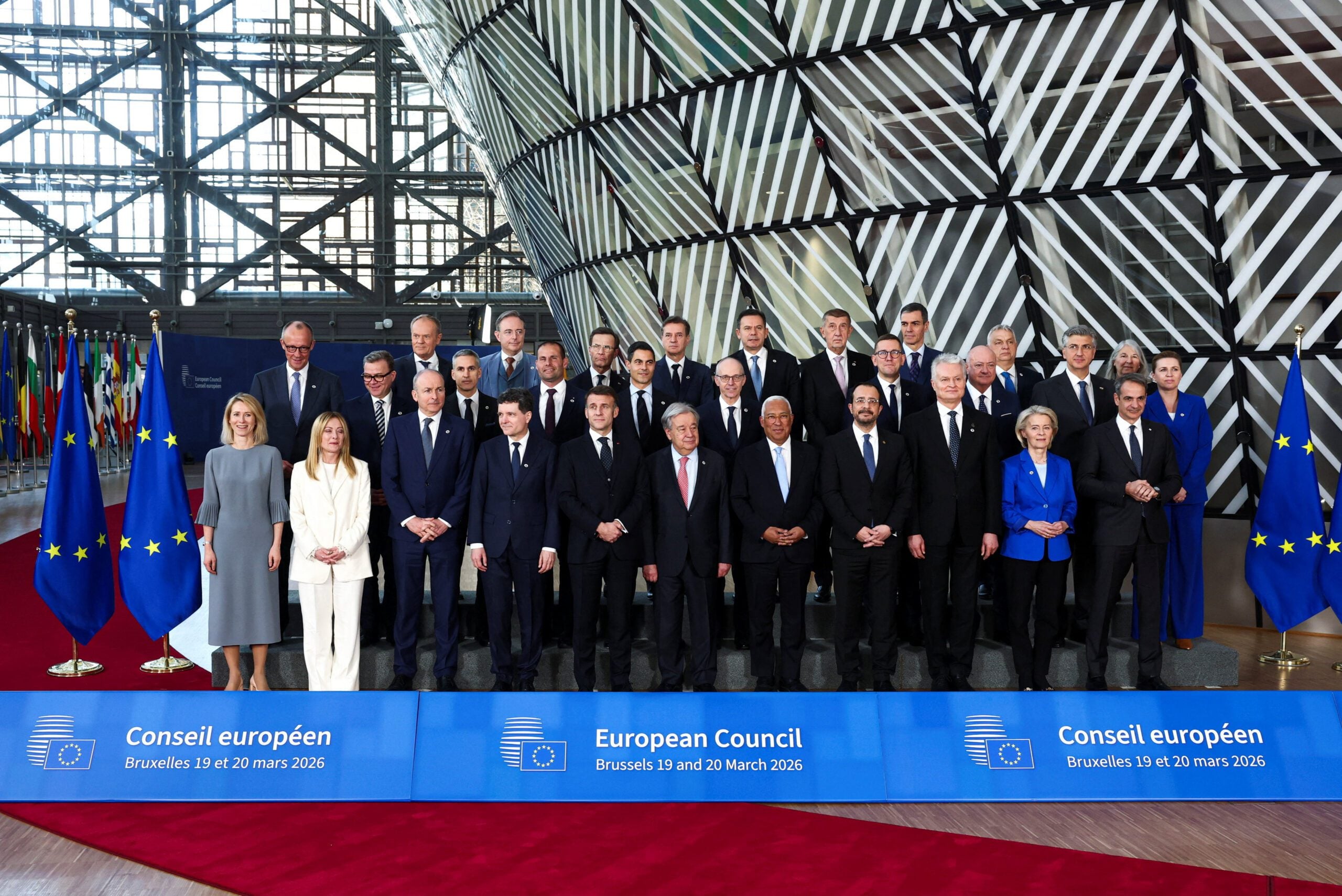
Mar 20, 2026 – The European Union is preparing for a lengthy energy price crisis after a crucial gas plant in Qatar was severely damaged by Iran. This incident has raised fears of a prolonged supply shortage.
During a summit in Brussels on Thursday, EU leaders voiced their worries about the worsening economic situation and called for a “moratorium” on strikes against energy facilities amid the ongoing conflict between the US, Israel, and Iran. Italian Prime Minister Giorgia Meloni emphasized the seriousness of the energy crisis during the discussions.
Cypriot President Nikos Christodoulides stated in an interview that if the situation does not deescalate, all countries will be negatively affected, suggesting that the economic repercussions could be severe.
Gas prices surged to their highest levels in three years on Thursday, and the European Central Bank warned that a prolonged disruption could push inflation in the eurozone to 6.3%, potentially leading to a brief recession. According to the European Commission, the recent price hikes have already added €7 billion ($8.1 billion) to Europe’s energy costs in just two weeks.
This troubling outlook comes at a time when Europe is just starting to tackle its slow economic growth and complicated relationships with the US and China. These recovery plans rely on reducing energy prices, which are currently much higher than those faced by competitors, excluding the impact of the conflict with Iran.
The recent events highlighted Europe’s vulnerability to global markets and the limited options available to the EU in the short term. Eurogroup President Kyriakos Pierrakakis described the situation as "worrisome" and indicated that various scenarios were being discussed.
The spike in energy prices was triggered by an Iranian missile strike on the Ras Laffan gas complex in Qatar, damaging major facilities that contribute significantly to the country's liquefied natural gas exports. Repairing the affected facilities is expected to take three to five years, as reported by QatarEnergy's CEO Saad al-Kaabi.
French President Emmanuel Macron noted that if production capacities are destroyed, the consequences of the war will last longer.
The EU's Oil Coordination Group expressed growing concern, acknowledging for the first time that the Middle East crisis may affect energy supplies, not just prices. They emphasized the importance of monitoring diesel and jet fuel supplies due to higher dependence in these areas.
At the summit, EU leaders urged their executive arm to quickly propose temporary measures to address the rising fossil fuel import prices. However, some proposed solutions, such as cutting electricity taxes, could lead to significant financial losses for countries already dealing with high deficits.
A group of 10 EU nations, including Italy and Poland, has suggested easing the emissions trading system to alleviate industry burdens, but this might reduce essential revenue and hinder investments in renewable energy.
Christodoulides stressed that any energy price control measures should be “tailor-made, targeted, and temporary.”
In their final discussions, leaders called for a broad review of the emissions trading system by July, ensuring that pollution limits on approximately 10,000 facilities remain intact.
German Chancellor Friedrich Merz clarified that these adjustments are not fundamentally changing the emissions trading system.
As the Strait of Hormuz remains a focal point of disruption due to Iranian threats, concerns about global supply chains are growing. The key issue is how long the conflict will last and how quickly the strait will become operational again afterward.
The World Trade Organization warned that global trade could face further slowdowns if high energy prices persist, predicting a significant impact on forecasts for goods and services trade in 2026.
The EU's economy chief, Valdis Dombrovskis, echoed these warnings, estimating that prolonged energy price increases could cut economic growth in 2026 by up to 0.4 percentage points.
In Frankfurt, ECB President Christine Lagarde advised governments to avoid excessive economic interventions at this stage, recommending that responses to the energy price shock should be temporary, targeted, and tailored.