
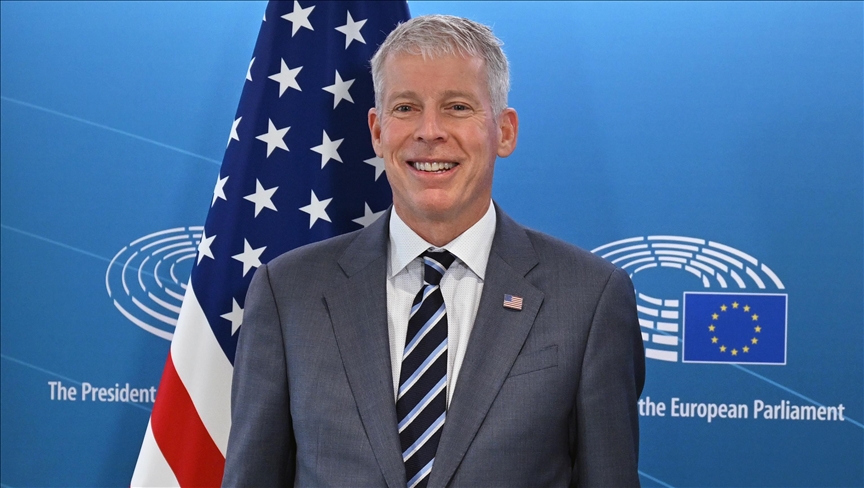
U.S. Energy Secretary Chris Wright has removed a social media post where he claimed that the United States Navy successfully escorted an oil tanker through the Strait of Hormuz. This has raised new questions about whether the Navy has started convoy operations in the area, as the U.S. aims to restore oil supply affected by increasing tensions with Iran.
Earlier on Tuesday, Wright stated that the Navy had escorted a tanker through this crucial maritime route to "ensure oil continues flowing to global markets" amid ongoing U.S. military actions against Iran. However, this post was later deleted, and no further explanations were given at the time.
The now-deleted message briefly sparked speculation that the U.S. had begun escorting commercial ships through the strait, which would mark a significant escalation in maritime security as the conflict is now in its second week.
Traffic through the Strait of Hormuz has dramatically decreased since missile and drone attacks on merchant vessels, combined with the sudden withdrawal of war-risk insurance, led to a near halt in commercial shipping.
According to vessel-tracking data from industry analysts, incoming traffic to the Persian Gulf has almost completely stopped in recent days. Only a few Iran-related vessels and some bulk carriers have been seen moving through the area, while most commercial ships are either anchored or taking shelter on either side of the strait.
Additionally, electronic interference and issues with AIS (Automatic Identification System) have made it harder to monitor real-time movements of vessels. Maritime security officials report that widespread GNSS and GPS interference is impacting navigation and tracking systems, and some ships are intentionally turning off their transponders while passing through high-risk waters.
The confusion surrounding Wright’s deleted post comes as the Trump administration is implementing various measures to restore confidence in shipping in the region.
Last week, Washington revealed a $20 billion maritime reinsurance program, organized by the U.S. International Development Finance Corporation and the U.S. Department of the Treasury. This program aims to provide war-risk insurance for vessels operating in Gulf waters after reinsurers withdrew coverage.
Officials mentioned that the program, which is being managed alongside the United States Central Command, could cover losses of up to $20 billion on an ongoing basis for vessels transporting oil, LNG, gasoline, jet fuel, and other goods through the region.
President Donald Trump has suggested that the U.S. Navy could start escorting tankers through the strait "as soon as possible" if necessary, reminiscent of convoy operations during the late-1980s Tanker War.
For the time being, however, the status of any escort missions remains uncertain. With insurers evaluating risks, electronic interference disrupting tracking systems, and ongoing missile and drone threats, commercial shipping through the Strait of Hormuz is at a fraction of its usual levels.