
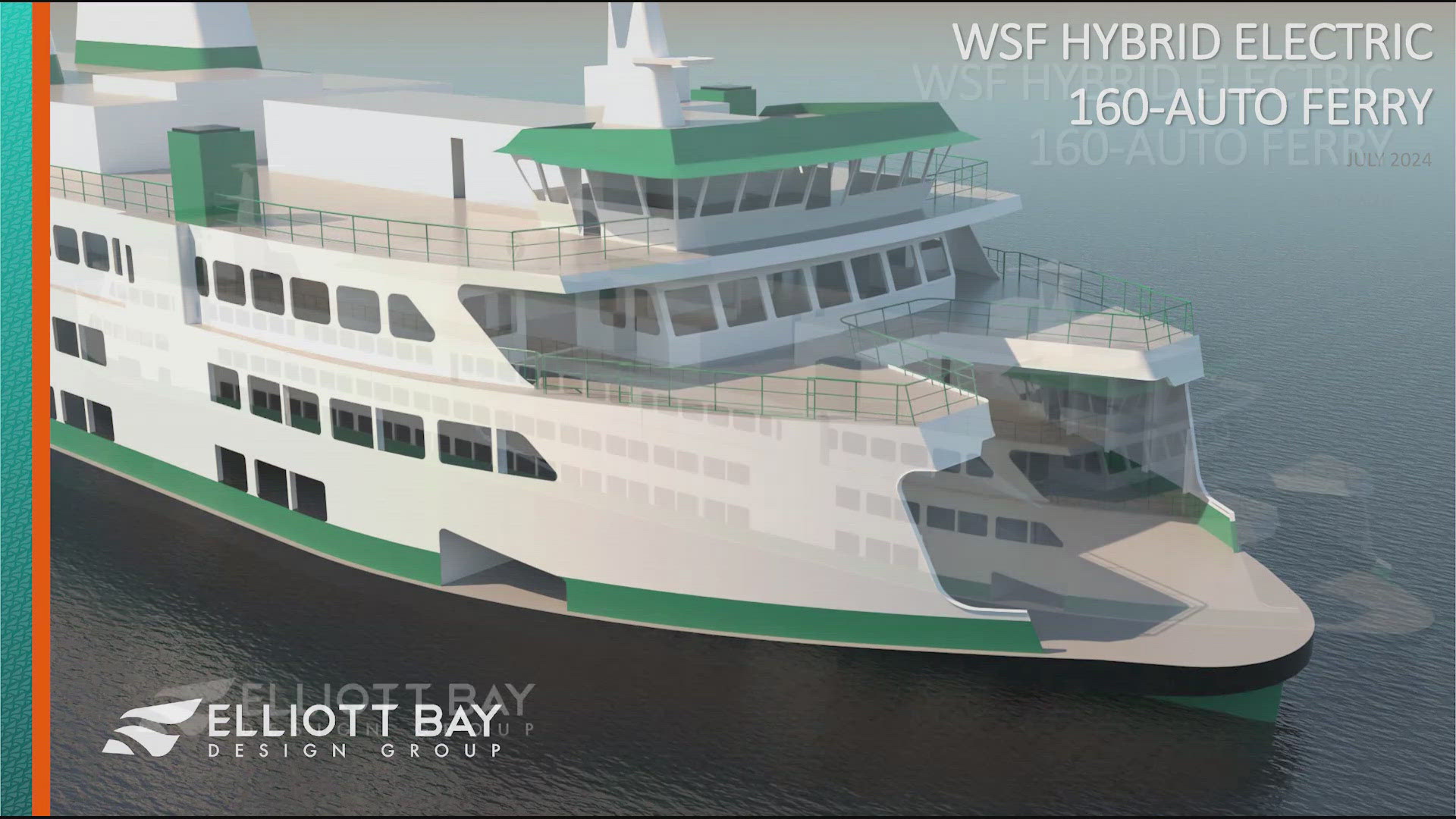
Eastern Shipbuilding Group has begun work on new hybrid-electric ferries for Washington State Ferries. The state has officially decided to add a third vessel to its order, which is part of a total $714.5 million shipbuilding program.
Leaders from Eastern Shipbuilding Group and Washington State Ferries celebrated this milestone with a steel-cutting ceremony at the shipbuilder's site in Panama City, Florida.
David Sowers, the Program Administrator for System Electrification at WSF, announced at the event that the state will proceed with the construction of a third ferry designed to carry 160 vehicles. This expands the initial firm order from two ferries to three.
“This is the first time in ten years that Washington state is building new ferries,” Sowers stated. “We have restored our ferry system to full domestic service, and now we are taking a significant step to rebuild our fleet.”
According to the construction timeline, the first ferry is expected to be delivered in 2030, followed by the second in 2031, and the third in 2032.
These new ferries will play a key role in Washington's plan to replace its aging fleet while reducing emissions through battery-electric propulsion and onshore charging.
“Eastern Shipbuilding Group is proud to start construction on these vessels and to work with Washington State Ferries on this important ferry modernization program,” said Joey D’Isernia, CEO of Eastern Shipbuilding Group. “Our team is dedicated to building safe, reliable, and high-quality ferries that will serve Washington communities for many years.”
In July 2025, Washington Governor Bob Ferguson chose Eastern for the program after the state's first competitive ferry construction bid in over 25 years. Eastern received the go-ahead for two ferries with an option for a third just a month later.
Eastern's bid was 6% lower than WSF's engineering estimate and was also significantly less than the only other competing bid.
The new ferries will be around 409 feet long and 83 feet wide, with the capacity to transport 160 standard passenger vehicles and up to 1,500 passengers. They are designed for a service speed of 17 knots when fully loaded and will be compatible with existing WSF terminals.
The hybrid-electric design will feature battery storage and shore charging, reducing dependence on diesel power as WSF works towards electrifying the largest ferry system in the U.S.
“Today’s steel cutting represents an exciting moment where all the planning turns into real progress,” said Steve Nevey, Washington State Deputy Secretary of Transportation for WSF. “These new hybrid-electric ferries will help restore the reliability and resilience our customers rely on, while also building a cleaner and more modern fleet for the future.”
This new construction initiative is part of WSF's wider efforts to stabilize and modernize a fleet that has faced challenges with vessel availability in recent years.
Washington has also been working on hybrid-electric updates for existing ferries. The Wenatchee was the first of the Jumbo Mark II ferries to undergo this conversion, but the state decided to postpone conversions of two additional large ferries until after the 2026 FIFA World Cup to keep more vessels available for service.
The three new ferries from Eastern will start providing additional capacity for WSF by the end of the decade, with deliveries planned for consecutive years through 2032.