
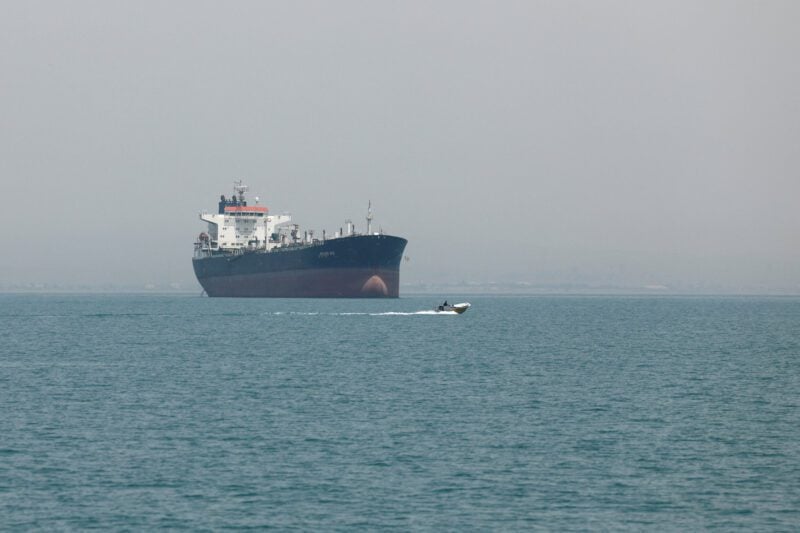
DUBAI/RIYADH, Aug 5 (Reuters) – A new agreement between Iran and Oman could allow Iran to control ships entering the Gulf through the Strait of Hormuz, according to an Iranian source and two regional officials. This news suggests a significant concession to Iran.
However, the sources stated that despite U.S. President Donald Trump's claims of an imminent deal to reopen the strait, key details still need to be finalized.
“Some form of control over Hormuz has been conceded,” one regional source told Reuters.
Another source mentioned that there are still discussions about how "control" would be defined. Gulf negotiators are insisting that regional countries oversee ship inspections and that any fees should be voluntary.
The senior Iranian source mentioned that the proposed agreement would allow Iran to manage ships heading into the Gulf through the strait, but a major issue remains regarding Iran’s role in overseeing ships going the other way.
Washington has not yet responded to the news about this proposed agreement.
U.S. officials have consistently stated that they will not accept any arrangement that allows Iran to control access to this crucial global trade route for energy supplies. Nevertheless, Trump and his senior officials have suggested a deal is close to ending the conflict he initiated in February, a war that most U.S. voters currently oppose.
OIL PRICES RISE AFTER RED SEA ATTACK
Oil prices saw a slight increase on Wednesday after the Iran-aligned Houthi movement in Yemen announced it had attacked a Saudi-flagged tanker in the Red Sea. This marks yet another attack on shipping in the Middle East that disrupts global energy supplies.
Despite this, global crude prices remain near their lowest levels since early July, having dropped significantly in recent days after Trump called off pending strikes on Iran, citing ongoing talks.
Although there are no direct discussions between Tehran and Washington, Iran has been in talks with Oman, which controls the opposite side of the strait. Iran rejected a prior Omani proposal last week, claiming it offered too little influence.
TRUMP SAYS TALKS ARE 'MOVING ALONG NICELY'
Trump proclaimed on Fox News that negotiations were progressing well and confirmed that an extensive discussion had occurred on Tuesday.
He stated, “The Strait of Hormuz is going to be open very soon. If they back out again, they will face serious consequences.”
Over the past weekend, Trump cited these negotiations as the reason for delaying plans for “massive attacks” on Iran, a trend he has repeated throughout the ongoing conflict.
The senior Iranian source downplayed the expectation of a quick deal, noting that Iranian Foreign Minister Abbas Araqchi is currently on vacation.
“Talks are continuing, but it’s premature to say that an agreement with Oman has been finalized,” the Iranian source stated.
Another Iranian official added, “The details are crucial. A single tweet from Trump could derail everything.”
Allowing Iran any control over access to the strait would indicate a significant shift in the regional power dynamics in favor of Tehran as a result of the war initiated by the U.S. and Israel. Prior to the conflict, the strait was open to all ships without fees.
Trump, who initially declared that “Operation Epic Fury” would end only with Iran’s unconditional surrender and his approval of its leadership, is now under pressure from voters to find a solution to a war that is widely opposed.
The senior Iranian official noted that Iran is seeking a fee of 5% to 7% on cargo prices from ships using the strait. Oman is considering lower fees of about 3%, while Washington prefers no fees at all.
Making fees nominally voluntary could provide a resolution to this deadlock, though an implied threat from Iran may deter shippers from transit without payment.
Months of U.S. military efforts, including a two-week strike campaign in July, have not diminished Iran's control over the strait. U.S. commanders advised Trump in July about dwindling ammunition supplies. Reports indicate that the U.S. Army has nearly exhausted its stock of long-range precision missiles.
Whenever the U.S. ramped up military actions, Iran and its allies, including the Houthi fighters in Yemen, have responded strongly. The Houthis control significant areas of Yemen and also a critical shipping route at the mouth of the Red Sea.
On Wednesday, the Houthis announced they struck a Saudi tanker in the Red Sea again, part of their campaign to enforce what they call a blockade on Saudi oil shipments through the main route that circumvents the Strait of Hormuz.
Additionally, on Tuesday, an Indian-flagged ship was sunk near Yemen, according to Indian officials. All 14 crew members, 13 of whom are Indian, were rescued. Rival forces for control in Yemen blamed the Houthis for this attack.