
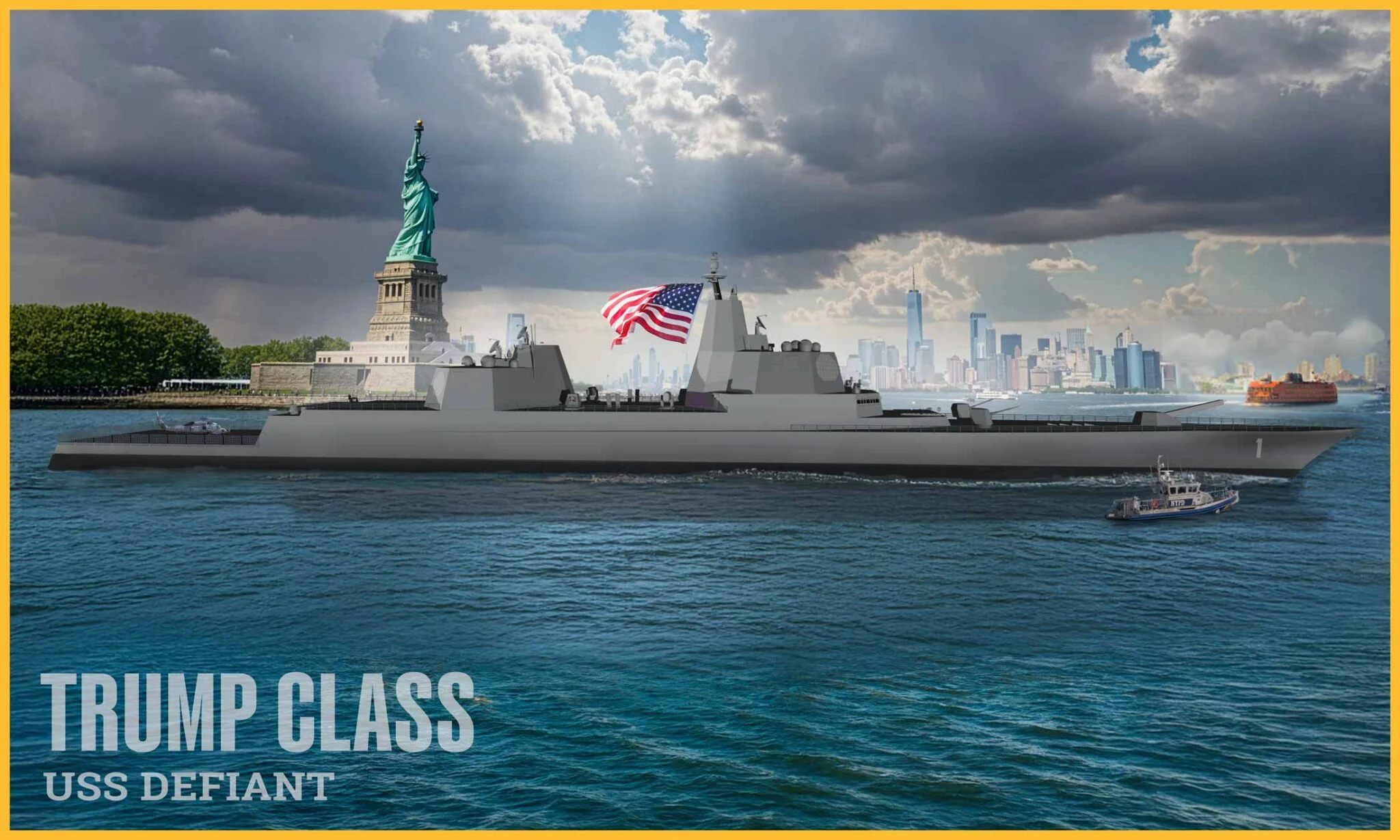
The U.S. Navy's Fiscal Year 2027 Shipbuilding Plan reveals important details about the new battleship program initiated during the Trump administration. This program focuses on a nuclear-powered surface combatant that is equipped with hypersonic weapons, high electrical generation capacity, and future-directed energy systems.
Within the Navy's FY2027 Shipbuilding Plan, there is a detailed description of the next-generation battleship program, referred to as BBGN, which stands for guided missile nuclear battleship. The Navy aims to acquire three of these ships during the FY2027-FY2031 defense plan period.
This shipbuilding plan confirms several previously hinted details from Navy officials and the Trump administration. The most notable confirmation is that the new battleship will be nuclear-powered, a fact that earlier communications had not explicitly stated.
The design for the future battleship aims to provide "high-volume, long-range offensive fires" while acting as a secure command-and-control platform for distributed naval warfare. The Navy states that the vessel will have significantly enhanced power generation, advanced modules for hypersonic weapons, large missile storage, electronic warfare systems, high-energy lasers, and modern naval guns.
According to the report, "The nuclear-powered Battleship is designed to give the Fleet a major boost in combat power through longer endurance, higher speed, and support for advanced weapon systems essential for modern combat."
The Navy believes this vessel will address a crucial gap in contemporary naval warfare by providing the necessary combat strength and sustained firepower needed in potential conflicts with similar adversaries.
Adm. Samuel Paparo, commander of U.S. Indo-Pacific Command, highlighted, "Fires is the king of battle. Wars are won by forces that combine capacity and killing power — this ship delivers that."
Earlier Navy concept images gave more insight into the battleship's future role and features. One official image portrayed a stealthy and heavily armed surface combatant outfitted with 128 Mk41 vertical launch cells, 12 Conventional Prompt Strike hypersonic missiles, dual 300-kilowatt laser weapons, SPY-6 radar systems, advanced electronic warfare capabilities, and a 32-megajoule railgun that can fire hypervelocity projectiles.
The rendering also showcases a large command-and-control area suitable for a fleet commander, complete with a flight deck and hangar designed for V-22 Ospreys and future vertical lift aircraft. The overall design resembles a larger stealth destroyer or arsenal ship more than a classic Iowa-class battleship.
Interestingly, earlier concept images suggested a conventionally powered design using gas turbines and diesel engines, indicating a shift to nuclear propulsion as the program progressed.
The concept aligns with the FY2027 shipbuilding plan's focus on long-range strike warfare, distributed maritime operations, directed energy weapons, and future power demands for energy-intensive systems.
Unlike the Arleigh Burke-class destroyers, which the Navy states have reached their growth limits, the battleship is designed with substantial potential for future enhancements in power generation, weaponry, and computing capacity. The Navy also notes that the ship will be constructed using modular techniques and distributed manufacturing, partly inspired by commercial shipbuilding practices and methods used in foreign shipyards.
This initiative builds on earlier statements from Navy and administration officials, dating back to late 2025, when President Donald Trump announced the battleship program as part of his broader "Golden Fleet" naval expansion strategy. At that time, officials described the upcoming vessel as a significant next-generation surface combatant intended to replace the DDG(X) concept, aiming to become "the most lethal surface combatant ever built."
While the plan does not provide specific cost estimates, ship displacement, crew size, or a timeline for construction, the introduction of this program signifies one of the most significant changes in U.S. naval planning in decades.
The latest Shipbuilding Plan from the Navy outlines a comprehensive 30-year strategy to expand the fleet, including a substantial $65.8 billion request for shipbuilding in FY2027 alone. The plan proposes acquiring 34 manned ships and five unmanned platforms next year, while the broader five-year defense strategy aims for 122 manned vessels and 63 unmanned systems.
The Navy believes this effort is vital to reversing years of stagnation, as the fleet currently consists of 291 battle force ships—well below the mandated requirement of 355.