
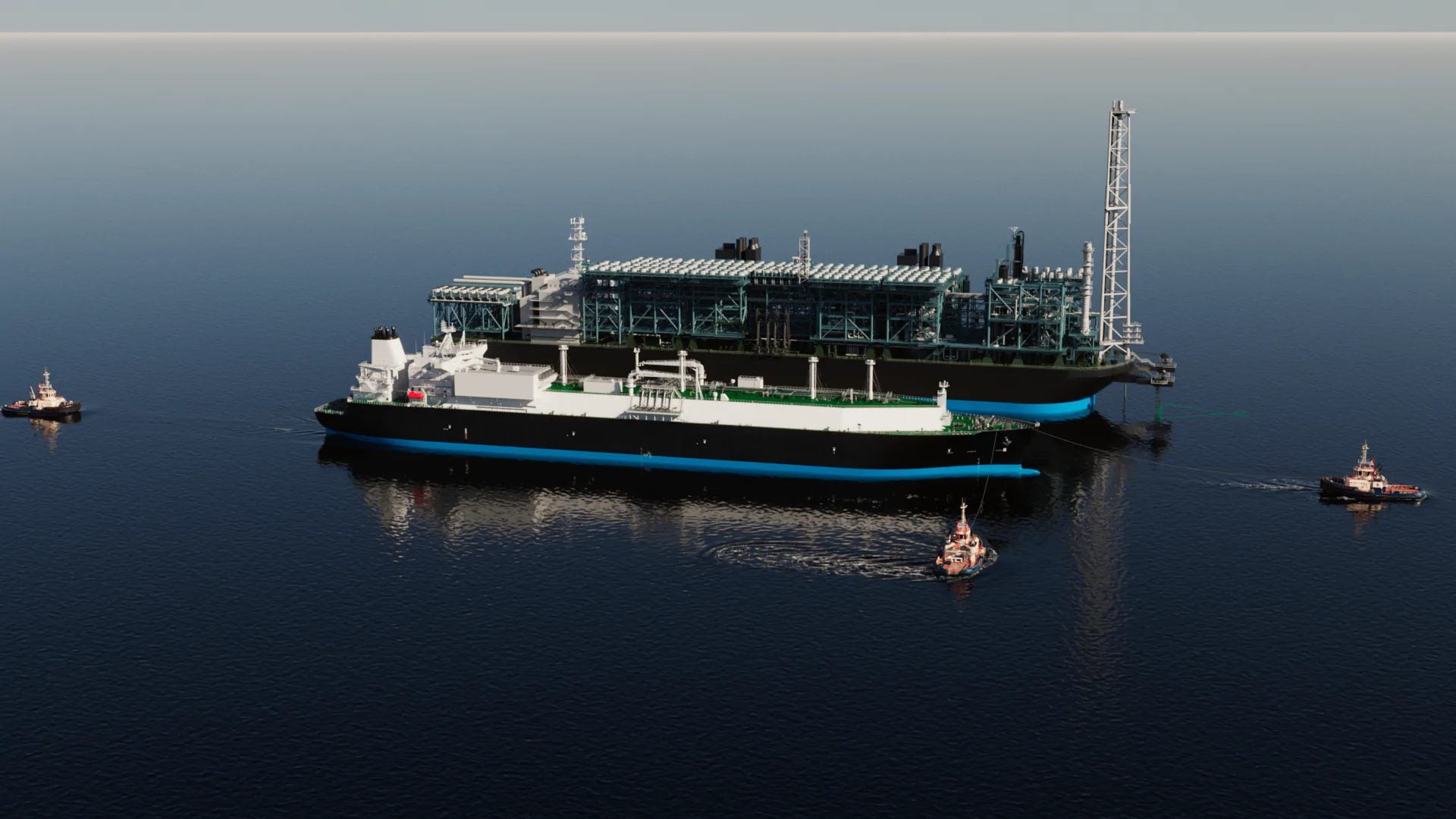
Delfin Midstream is progressing with its plans for a second floating LNG export vessel near the Louisiana coast. The company has announced a new partnership with MidOcean Energy and has authorized the purchase of key long-lead equipment as it aims for a final investment decision later this year.
On Wednesday, the Houston-based developer issued a Limited Notice to Proceed (LNTP) to Siemens Energy for essential equipment for the proposed FLNG2 vessel. This includes four SGT-750 gas turbines and mixed-refrigerant compressors. By securing this equipment before making a final investment decision, Delfin hopes to lower schedule risks and maintain manufacturing capacity.
In addition, MidOcean Energy, an LNG company managed by EIG, has signed agreements that could allow it to acquire up to a 50% equity stake in the FLNG2 project, depending on a favorable final investment decision (FID) and other standard closing conditions. If this happens, MidOcean would receive a corresponding share of the LNG produced by the facility.
This announcement follows Delfin’s recent achievement of reaching FID on its first U.S. floating LNG vessel, FLNG1, in early June, which unlocked around $5 billion for the initial phase of what is projected to be the first offshore LNG export terminal in U.S. waters.
Similar to FLNG1, the new vessel is expected to have a production capacity of 4.4 million tonnes per annum (mtpa) and will use the same liquefaction equipment from Siemens Energy. By maintaining a similar design, Delfin aims to speed up construction and minimize execution risks.
The vessel is set to operate offshore Louisiana at the Delfin Deepwater Port, connecting to the existing offshore natural gas pipeline infrastructure as part of the project’s phased development.
Delfin’s CEO Dudley Poston noted that securing the Siemens Energy equipment is a significant step towards achieving FID for the second vessel.
“This milestone highlights the commercial readiness of our floating LNG platform,” Poston stated. “Securing manufacturing slots for crucial long-lead equipment with Siemens Energy is a key advancement in reducing the project schedule risk as we work towards FID for the second vessel.”
MidOcean’s CEO De la Rey Venter expressed that the company sees this project as aligned with its strategy to build a diverse global LNG portfolio.
“The repeat-design approach of the project offers an appealing risk-return profile and significant execution advantages for all stakeholders,” Venter said.
Beyond FLNG2, both companies are also working together on development efforts for a potential third floating LNG vessel, FLNG3.
This latest announcement comes just weeks after Delfin approved the first phase of the project and days after a federal appeals court dismissed a legal challenge regarding the project’s deepwater port license, clearing another obstacle for the long-planned offshore LNG development.
Located about 40 miles off the Louisiana coast, the Delfin project will utilize floating liquefaction vessels linked to existing offshore pipeline infrastructure, instead of building a traditional onshore LNG export terminal. Once all three planned vessels are operational, the project is expected to export up to 13.2 million tonnes of LNG annually.