
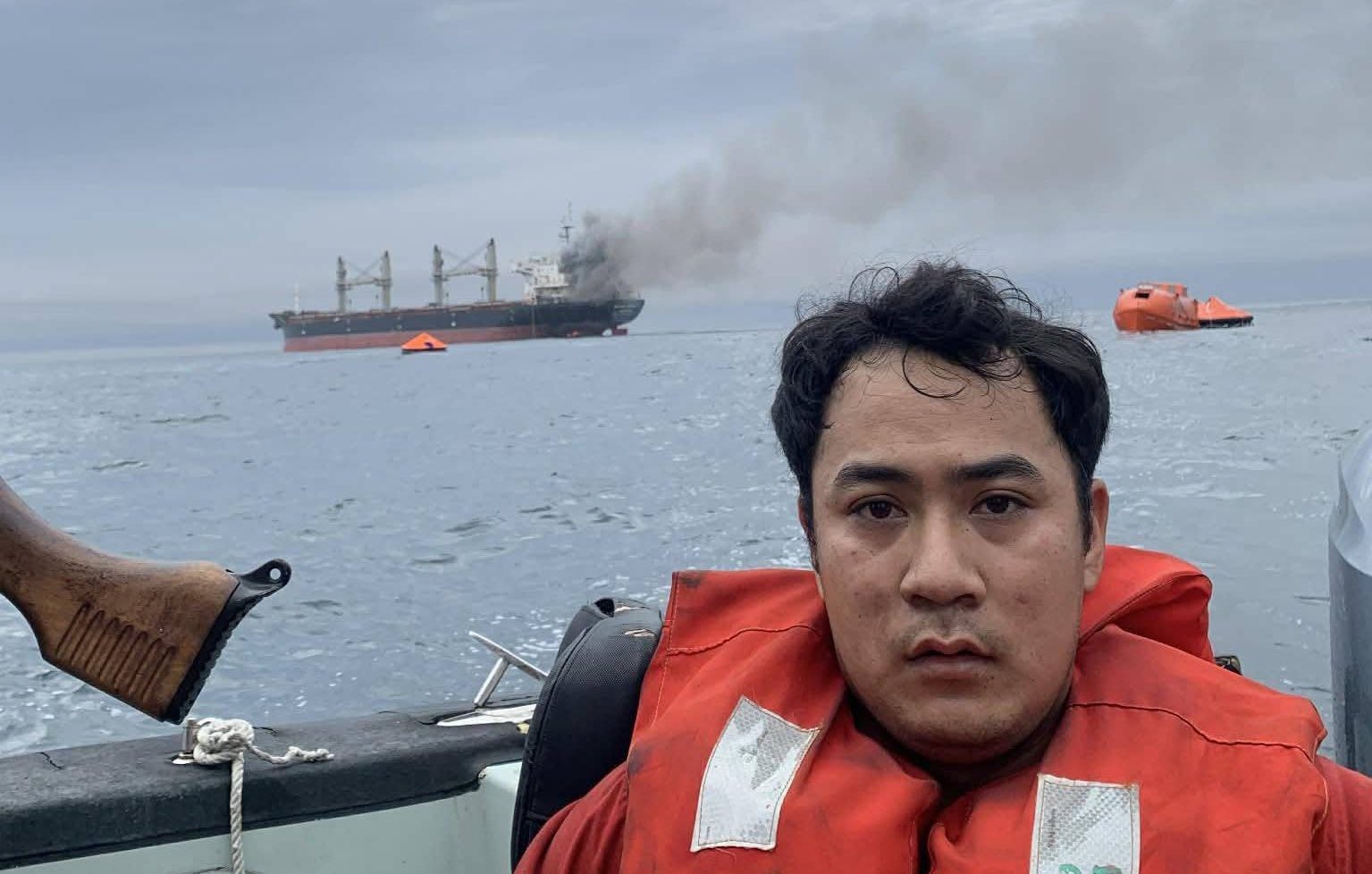
There are around 1.8 million seafarers worldwide who spend most of their careers at sea, quietly transporting the goods that keep the global economy running. This year, many of these seafarers have found themselves in the middle of geopolitical conflicts.
As the maritime industry celebrates the International Maritime Organization's Day of the Seafarer on June 25, thousands of merchant sailors are stuck in some of the most dangerous waters in the world. Areas like the Strait of Hormuz, the Red Sea, and the Black Sea have seen commercial shipping increasingly caught up in local conflicts, making crews navigate through not just rough waters, but also missiles, drones, naval mines, and military checkpoints.
This year's theme is "Carrying world trade. Carrying the risks." The IMO is leading an unprecedented effort to evacuate over 11,000 seafarers and hundreds of ships left stranded in the Persian Gulf due to ongoing conflicts that have nearly halted commercial traffic through the Strait of Hormuz.
The evacuation effort highlights a reality that many seafarers have faced for months: while ships can often be rerouted or delayed, crews often have to stay on board, waiting for authorities to decide when it's safe to move.
"To all seafarers: thank you," said IMO Secretary-General Arsenio Dominguez in a message for the occasion. "Your work is crucial for the global economy and the daily lives of people worldwide. Even though it may often go unnoticed, your safety, security, and well-being are our top priorities."
The humanitarian impact of maritime conflicts is impossible to ignore this year. The IMO has confirmed numerous attacks on merchant vessels since the fighting began in the Persian Gulf, leading to the deaths of 14 seafarers. Many others have spent months unable to leave the region as security has worsened.
UN Secretary-General António Guterres emphasized that recent events show the increasing dangers faced by civilian mariners.
"When nations clash, seafarers often find themselves caught in the middle," said Guterres. "Recently in the Strait of Hormuz, tens of thousands of seafarers have been stranded while trying to keep the world supplied with fuel and food. Mariners should never be treated as victims or pawns in geopolitical disputes."
These words have become more urgent as the situation in the Strait of Hormuz remains unstable, even after a U.S.-Iran agreement aimed at restoring commercial navigation. Although the IMO has started organizing the movement of stranded ships, merchant vessels are still receiving conflicting orders from Iranian authorities. Just this past Thursday, a cargo ship was hit by an unknown projectile off the coast of Oman, damaging its bridge but not injuring anyone on board.
This incident serves as a harsh reminder that even with political agreements, seafarers continue to face operational risks.
Outside of the Persian Gulf, commercial vessels in the Red Sea are operating under heightened security conditions, with many operators opting for routes around the Cape of Good Hope, which adds weeks to voyages. In the Black Sea and Sea of Azov, sailors are navigating waters affected by ongoing war, military restrictions, and changing security risks.
These crises have changed the risk profile for modern shipping. Captains and crews now routinely consider military activity, electronic interference, drone threats, and updated security advice when planning voyages, along with weather and navigation challenges.
The increasing threats faced by merchant mariners reflect a larger shift in the industry. Allianz Commercial's Safety and Shipping Review 2026 stated that shipping has entered "a new equilibrium" where geopolitical tensions, contested sea routes, and fragile supply chains have replaced the previously stable operating environment.
The report argued that conflicts in the Strait of Hormuz, the Red Sea, and other areas have fundamentally altered the risk landscape for the industry, forcing crews to operate in a climate of constant uncertainty where safe navigation can no longer be assumed.
This year's Day of the Seafarer campaign aims to bring these experiences to light. Through personal testimonials, seafarers are sharing what it’s like to work in conflict zones, illustrating the uncertainty, stress, and resilience needed to keep delivering goods under unprecedented conditions.
For the maritime industry, one message is clear: seafarers are vital to global trade, and their willingness to work in dangerous conditions should never be taken for granted.
As governments strive to secure sea routes and restore freedom of navigation, the challenge for the industry goes beyond protecting ships and cargo. It also involves ensuring that the people aboard those vessels are never treated as collateral damage in conflicts they did not start.