
Container freight spot rates for transpacific and Asia-Europe routes saw slight increases this week, with no major price hikes from carriers and steady demand.
According to this week’s World Container Index (WCI) from Drewry, the Shanghai-Rotterdam route rose by 5% compared to last week, approaching $5,000 at $4,933 for a 40ft container. Meanwhile, the Shanghai-Genoa route increased by 2%, reaching $6,463 per 40ft.
Next week will be a critical test for the Asia-Europe peak season, as several new FAK (Freight All Kinds) price increases are set to be implemented in both North Europe and the Mediterranean.
MSC aims for a rate of $7,700 per 40ft in both regions, while CMA CGM targets $7,000 for North Europe and between $7,900 and $8,500 for the Mediterranean.
However, with only four blank sailings scheduled for Asia-Europe next week, freight forwarders have doubts about whether these new price levels will hold. Some have reported that carriers are already offering discounts and that there is plenty of space available on vessels departing from Asia.
“Carriers have started to lower their rates to North Europe, with spot rates for sailings in early July not exceeding $6,000 per 40ft,” said Linerlytica, a consulting firm, this week.
“Carriers on Asia-Europe routes are still trying for another rate increase in mid-July, but the situation seems unstable, with a wide range of rates seen in the spot market.”
“Some carriers are offering rates as low as $4,800 per 40ft, while competitors are asking for $6,000-$6,500,” the firm added.
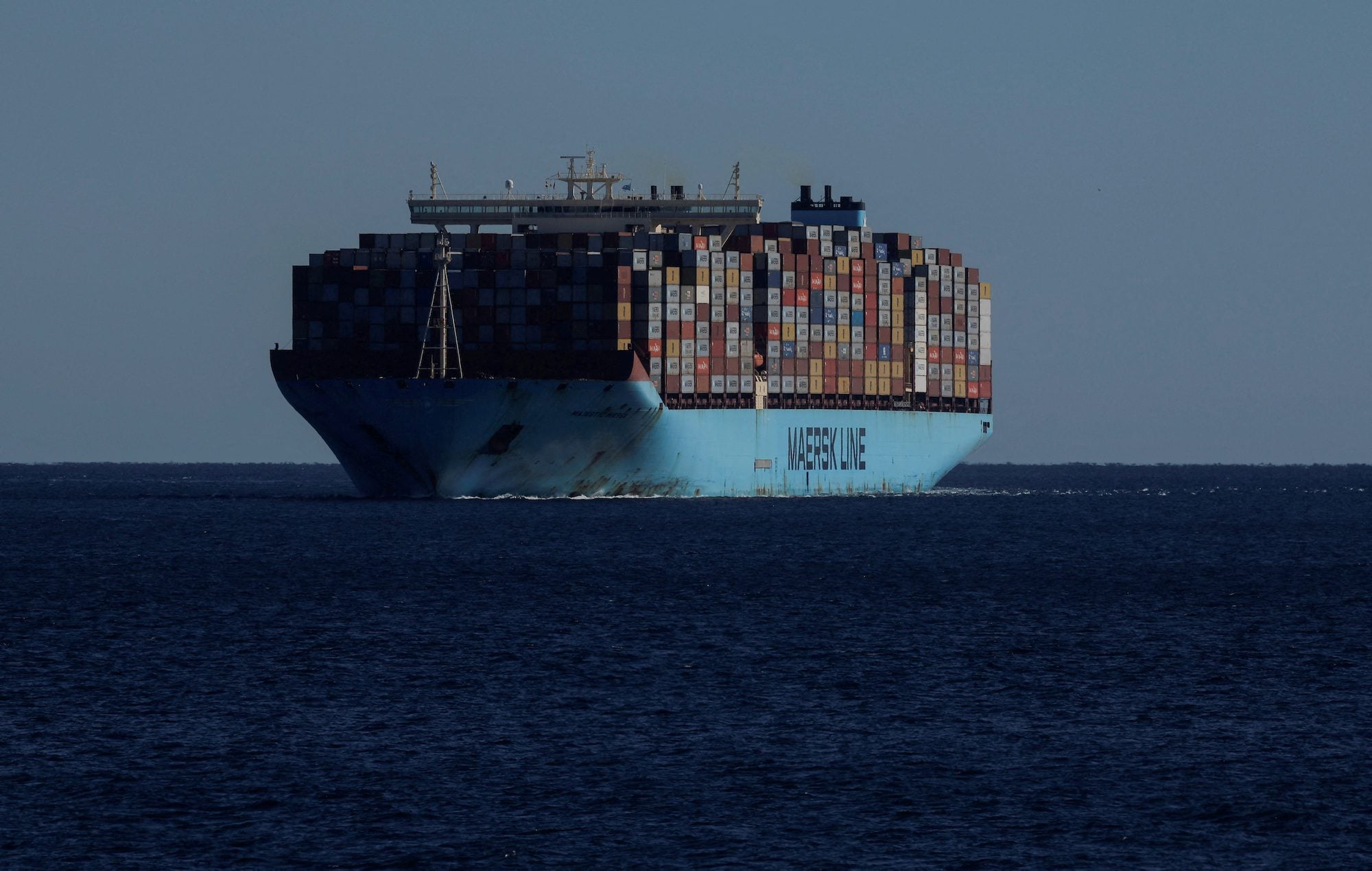
On the supply side, a significant milestone was reached this week as the 18,300 TEU Majestic Maersk successfully passed through the Bab Al Mandeb strait, heading toward the Suez Canal.
The ship, part of Gemini’s Asia-Med Loop 3, is expected to reach the Suez Canal on July 12 for a northbound transit. The important aspect is that the ship is navigating on the main leg of the route, and carriers have indicated that Suez transits will resume in both directions on this service.
“This joint decision with Hapag-Lloyd comes after careful evaluations of the security situation in the Red Sea region and marks a step towards a gradual return to the trans-Suez route,” Maersk announced earlier this week.
The Asia-Med Loop 3 (Maersk AE15 / Hapag-Lloyd SE3) will follow this port rotation: Qingdao-Kwangyang-Ningbo-Tanjung Pelepas-Port Said-Damietta-Colombo-Singapore, connecting Mediterranean gateway ports with Gemini’s Egyptian transshipment hubs.
The return to Suez is expected to free up at least two vessels for redeployment elsewhere.
Additionally, Maersk revealed that its US East Coast-Middle East MECL services, run by its US subsidiary outside the Gemini Cooperation, will also fully resume Suez transits this month.
Meanwhile, on transpacific routes, WCI reports that the Shanghai-Los Angeles rate increased by 2% from the previous week, ending at $6,482 for a 40ft container, while the Shanghai-New York rate remained unchanged at $7,904 per 40ft.
Similar to Asia-Europe, planned general rate increases (GRIs) and peak season surcharges (PSSs) set for July 15 will test how much demand remains during peak season.
Freight Right, a US west coast forwarder, noted that “some carriers have begun offering small reductions of around $100–$200 week by week,” indicating that another round of GRIs and PSSs “might entirely halt demand.”
“The outlook in the short term suggests that the market is likely to stay stable or gradually decline, rather than increase. It seems we have reached a peak, and without a rebound in volume, carriers may struggle to maintain current rates for long,” Freight Right commented.
“However, a sharp decline isn’t guaranteed,” they added. “Carriers are expected to manage the decline carefully and may avoid aggressive cuts unless booking activity weakens further.
“The next one to two weeks will be crucial in determining whether August will bring a significant peak season or if the market will settle into a softer summer pattern.”